Cerebras Shares Jump After Revenue Beat and New Microsoft Deal
AI chipmaker Cerebras beat third-quarter revenue forecasts, raised its outlook and disclosed a deal with Microsoft, sending its shares higher after hours.
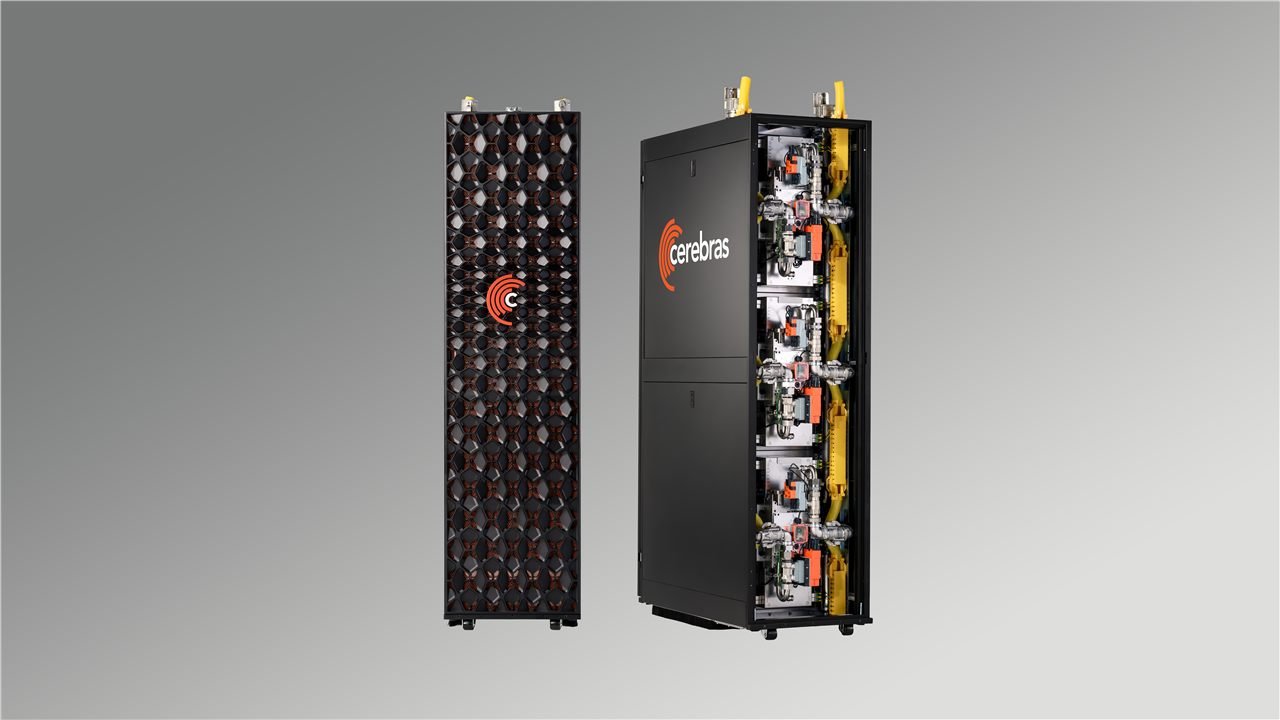
Cerebras Systems, a Sunnyvale, California-based maker of artificial intelligence chips that pitches itself as a challenger to Nvidia, reported third-quarter revenue above Wall Street forecasts on Thursday and disclosed a new agreement with Microsoft. Its shares rose sharply in extended trading. CNBC put the gain at about 17%, and TheStreet reported moves of roughly 11% to 14% at points during the evening.
The report was the company’s third since it listed on the Nasdaq in May. It landed on a turbulent day for the AI chip industry: Nvidia said earlier on Thursday that Jensen Huang, its co-founder, had resigned as chief executive.
What the numbers showed
Cerebras said core revenue, the measure it highlights for investors, reached $230.9 million in the quarter. CNBC reported that was up 70% from $135.7 million a year earlier and ahead of the $214.7 million analysts surveyed by LSEG had expected. Growth slowed from the second quarter, when core revenue rose 103% year over year, according to CNBC.
Revenue under standard accounting rules (GAAP) was $210.8 million, the Associated Press reported. The company posted a net loss of $161.2 million, or 67 cents per share. Excluding non-recurring costs, it earned 13 cents per share on an adjusted basis, according to the AP.
Outlets compared the loss with forecasts differently. The AP said three analysts surveyed by Zacks Investment Research had expected a loss of 13 cents per share, so the company beat on that basis. TheStreet compared the GAAP loss with a consensus of 66 cents and called it a slight miss. CNBC said it was not immediately clear how the 67-cent loss compared with the 14-cent loss analysts had expected.
A stronger outlook
Cerebras raised its forecasts. For the fourth quarter it expects revenue of $310 million to $330 million. CNBC said analysts had expected about $271 million. The AP reported full-year revenue guidance of $940 million to $960 million. The company also forecast a fourth-quarter core gross margin of 47% to 49%, compared with the 42.1% analysts had projected, according to CNBC.
The company expects revenue to roughly triple in 2027, implying about $2.85 billion, CNBC reported. That is slightly below the $2.92 billion LSEG analysts had been expecting.
TheStreet reported that executives on the earnings call expected hardware sales to rise to nearer half of core revenue in the fourth quarter, up from about 37% in the third. They said that growth would come as Cerebras sells chips to large cloud operators for their own data centers.
The Microsoft agreement and other partners
Cerebras said it signed the Microsoft deal in October. It did not disclose financial terms, and TheStreet noted it was not clear whether the arrangement covers hardware sales, cloud capacity or both. Andrew Feldman, co-founder and chief executive of Cerebras, said the company believes “revenue begins to show up in Q1 ’27,” CNBC reported.
Microsoft becomes the latest big cloud provider to work with Cerebras, after Amazon and Oracle. TheStreet said the Oracle partnership, announced Oct. 27, should help speed up fourth-quarter revenue growth.
Feldman argued that the cost of graphics processors (GPUs), the chips that dominate AI computing, and the long wait to get them create “opportunity for us,” according to CNBC. He also said Cerebras is weighing financing options to keep up with demand.
Risks investors are watching
The company still depends heavily on OpenAI, the maker of ChatGPT. TheStreet reported that OpenAI accounts for more than half of Cerebras’ remaining performance obligations, meaning contracted revenue the company has not yet recognized. The AI developer has a “take-or-pay” commitment for 750 megawatts of computing capacity. TheStreet also noted delays in fulfilling that commitment and analyst concerns about exposure if it were canceled, and it cited a backlog of about $26.1 billion.
Other concerns include slowing growth in Cerebras’ cloud business and a short-seller report published in October by Culper Research, which argued the company’s chips have a disappointing lifespan.
The stock has struggled since its listing, though outlets gave different figures. CNBC said shares had fallen about 47% since the May debut, while TheStreet put the decline at about 68%. Both figures were reported before Thursday’s after-hours gain.