Dow Surges 1,500 Points as Democrats’ Sweep Sends Oil Tumbling
The Dow jumped about 2.9% at midday Wednesday after Democrats won both chambers of Congress, as oil fell more than 8% and defense and AI stocks slid.
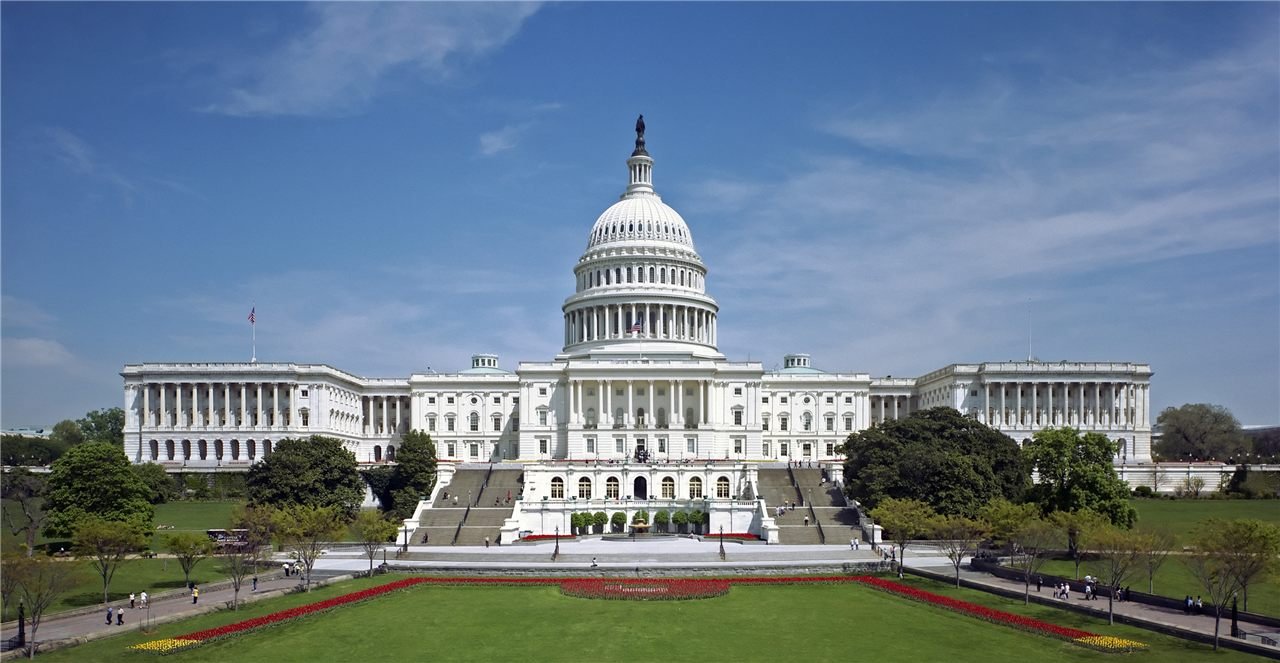
U.S. stocks rallied sharply on Wednesday, Nov. 4, 2026, after Democrats won control of both the House and the Senate in the midterm elections. Oil prices fell steeply on bets that a Democratic Congress will push the White House to wind down the war with Iran. By noon Eastern time the Dow Jones Industrial Average was up 1,524 points, or 2.9%, the Associated Press reported. The S&P 500 was up 1.8% and the Nasdaq Composite had gained 2.1%.
CNBC’s live coverage put the Dow’s gain at about 1,514 points around the same time, with the S&P 500 up 1.7% and the Nasdaq up 1.9%. The small differences come from snapshots taken minutes apart. CNBC said the rally pushed the blue-chip index back above 53,000 for the first time since Sept. 8, after it opened about 1,022 points higher.
What drove the rally
Investors pointed to several factors. Uncertainty about the vote had cleared. President Donald Trump said he would accept the results. Traders also bet on divided government. Trump told The New York Times he was “absolutely willing” to accept the outcome, CNBC reported, and told The Wall Street Journal that his administration would work with Democrats.
Many strategists said a split between the White House and Congress tends to lower the odds of sweeping policy changes. Jay Woods, chief market strategist at Freedom Capital Markets, told CNBC that “there will be gridlock and historically this is good for the market.” Andrew Slimmon of Morgan Stanley Investment Management said markets “don’t like a party with too much power.” Brian Jacobsen, chief economic strategist at Annex Wealth Management, put it more simply in comments to the AP: “Earnings trump elections.”
Energy markets moved the most. Vice President JD Vance blamed the war with Iran, which had driven fuel prices higher, for the Republican losses. Traders took that as a sign Washington may move to end the conflict. Brent crude, the international benchmark, fell 9.2% to $94.11 a barrel, according to the AP. That put it below $100 for the first time in nearly a month. CNBC reported that U.S. crude fell more than 8%. Peter Boockvar, chief investment officer at One Point BFG Wealth Partners, told CNBC the results would add “even more pressure to end the war.”
Winners and losers
Investors sorted stocks by what a Democratic Congress might change, and the swings within the market were large:
- Clean energy: First Solar rose 9.4% and Enphase Energy gained 9.8%, the AP reported, on expectations of stronger support for renewables.
- Health care and discount retail: Hospital operator HCA Healthcare climbed 9.8% and Dollar Tree rose 10%. CNBC said the consumer staples sector hit an all-time high.
- Defense: Lockheed Martin fell 6.6%, Northrop Grumman 4.6% and General Dynamics 2.5%, as investors priced in pressure to scale back the war.
- Oil producers: ExxonMobil dropped 4.8% and ConocoPhillips 5.9% as crude prices slid.
- AI infrastructure: CoreWeave, a cloud provider that rents out AI computing power, fell 9.2%, and Nvidia slipped 1.3%. Trump Media & Technology Group, the president’s social media company, sank 12.2%.
The pressure on AI-linked stocks reflected worries that Democrats could restrict data center construction. CNBC noted that Gina Hinojosa, the Democratic candidate for governor of Texas, has pledged an immediate moratorium on new data centers in the state. CNBC added that Texas accounts for about 27% of U.S. data center capacity, citing Wells Fargo. Other large tech names held up better. Alphabet gained 4.2%, according to the AP.
Bonds, the dollar and metals
Treasurys strengthened too. The yield on the 10-year note fell to about 4.90% from 4.95% late Tuesday, the AP said. CNBC reported that traders at JPMorgan expected Wall Street to focus on “reduced deficit spending” under a Democratic Congress. JoAnne Bianco, an investment strategist at BondBloxx, told CNBC that a more divided policy environment should make deficits harder to expand.
CNBC reported that the U.S. dollar index fell 0.39% to 101.32. Spot gold rose 2.93% to $4,043.45 an ounce, and silver climbed 4.44% to $51.98.
What comes next
Not every analyst expects a smooth period. Carsten Brzeski, global chief of macro at ING Bank, told the AP that one risk is that Trump becomes “an angry duck” and revives fights over tariffs and NATO defense spending. A more hopeful scenario, he said, is a “tame duck” who slows disruptive policies.
Historical patterns are also in focus. A CNBC analysis found that the S&P 500 has risen in the year after each of the last 11 midterm elections, from 1982 through 2022, with an average gain of 13.7%. Past results do not guarantee how markets will perform this time. For now, attention is turning back to corporate earnings, the course of the Iran conflict and whether lower oil prices bring relief at the gas pump.