Drought Drives Southwest Hydropower to Record Summer Low, EIA Says
Southwest hydropower output from April to August was 28% below its 10-year average, the EIA said, as Lake Powell and Lake Mead fell to record lows.
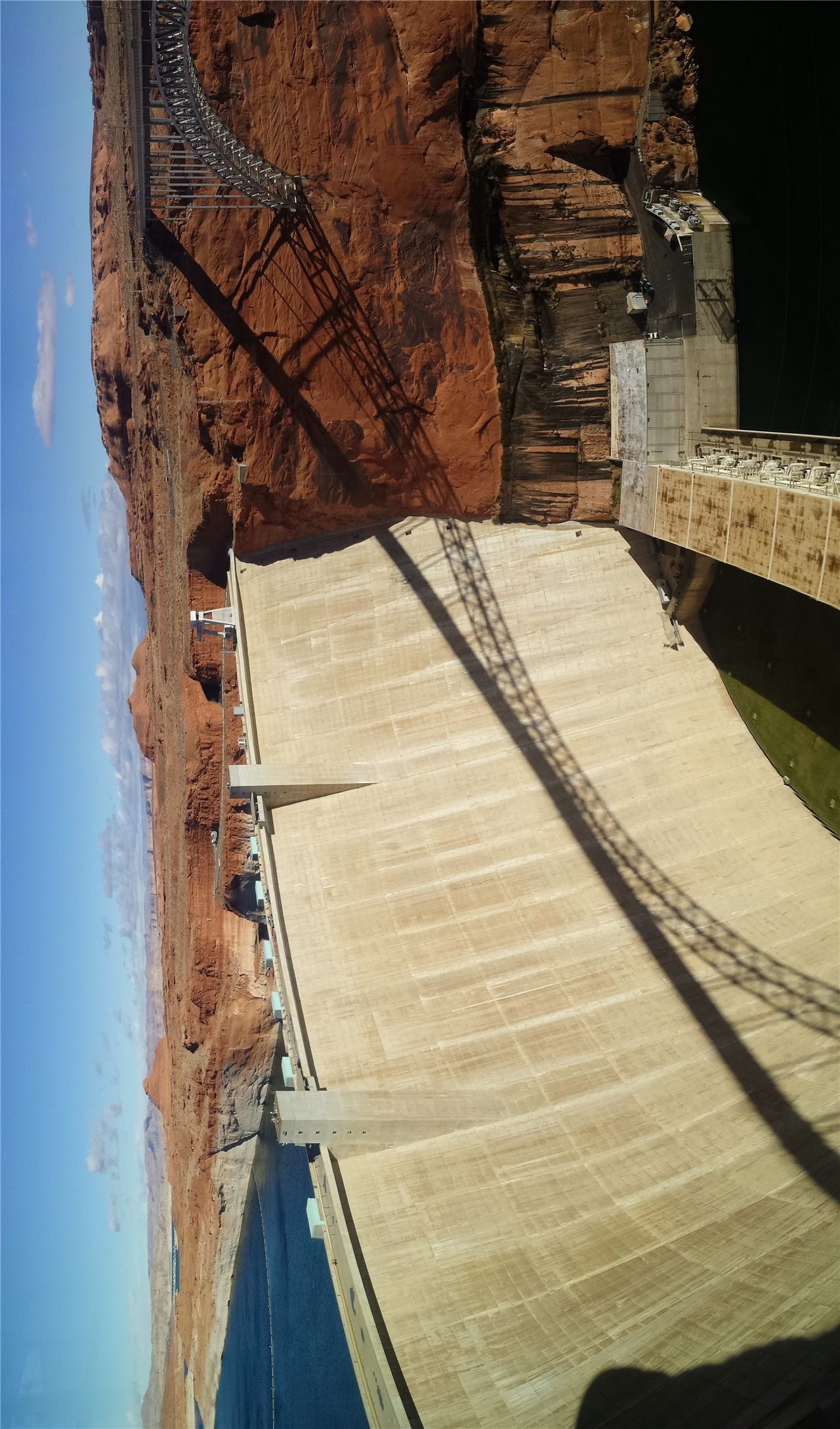
Hydropower generation in the U.S. Southwest fell to its lowest summer level on record this year, as a long-running drought in the Colorado River Basin drained the region’s two largest reservoirs to within reach of the point where their dams can no longer produce electricity. Output from April through August was 19% lower than in the same period of 2025 and 28% below the 10-year average, the U.S. Energy Information Administration (EIA), the statistical arm of the Department of Energy, said in an analysis published Nov. 13.
The agency expects the weakness to persist. Its latest forecast calls for 2026 to be the region’s weakest hydropower year in more than a decade, with little improvement in 2027.
What happened
The EIA defines the Southwest electricity region as Arizona, New Mexico and small parts of Nevada and California. Its figures come from Form EIA-923, a monthly survey of power plant operations. Most of the region’s hydropower comes from two federal dams on the Colorado River: Glen Canyon Dam, which holds back Lake Powell on the Arizona-Utah border, and Hoover Dam, which forms Lake Mead near Las Vegas. Phoenix public radio station KJZZ reported that the two plants produce up to 90% of all hydropower generated along the river.
Both reservoirs reached record lows this year. By the end of September, Lake Powell stood at 3,518 feet, just 28 feet above its minimum power pool of 3,490 feet, the level below which water can no longer be sent through the dam’s turbines. That left it less than 1% above the threshold, according to the EIA. Lake Mead was at 1,038 feet, about 9% above its 950-foot minimum.
To keep Lake Powell from slipping below the power threshold, federal water managers released extra water from Flaming Gorge Reservoir, upstream in the Upper Colorado River Basin, and cut releases from Lake Powell to hold its elevation at or above 3,510 feet, the EIA said. The Interior Department has also finalized a decision requiring California, Arizona and Nevada to collectively reduce their water use by 1.25 million acre-feet a year over the next two years, Newsweek reported.
Why it matters
Hydropower is traditionally one of the cheapest sources of electricity in the West, Newsweek noted, and dams can be switched on quickly to meet peaks in demand. When output falls, utilities lean more heavily on natural gas, solar power and electricity imported from other regions. Some experts have warned that a prolonged drought could raise costs for utilities and their customers over time.
The share of the Southwest’s electricity that comes from dams has already halved. The EIA expects hydropower to supply about 4% of the region’s generation in 2026, down from a peak of 8% in 2011. MIT Technology Review reported that Glen Canyon and Hoover together produced nearly 7 terawatt-hours of electricity in 2025, enough to serve more than 2 million people.
Background
The Colorado River supplies water to about 40 million people across seven states: Arizona, California, Colorado, Nevada, New Mexico, Utah and Wyoming. Snowfall in the Rocky Mountains provides roughly 85% of the river’s annual flow, according to MIT Technology Review, which noted the region has been in drought for 27 years. The magazine pointed to a 2022 scientific review finding that climate change affects hydropower through higher temperatures, warmer winters with less snow, and more erratic rainfall.
The problem is not limited to the United States. The International Energy Agency has estimated that a worldwide shortfall in hydropower accounted for about 40% of the 1.1% rise in global energy-related emissions in 2023, Technology Review reported.
What comes next
The EIA’s November Short-Term Energy Outlook projects Southwest hydropower output of about 6.13 billion kilowatt-hours in 2026, which is 9% below 2025 and 24% below the 10-year average. It expects roughly 6.1 billion kilowatt-hours in 2027, about 0.5% lower still.
There are some signs of relief. The agency said this year’s El Niño, a Pacific climate pattern that often brings wetter weather to the southern U.S., could deliver above-normal precipitation. Heavy rain in October and early November lifted Lake Powell more than 20 feet from its mid-September low, according to Technology Review, though KJZZ noted the lake remains below where it stood a year ago. The EIA cautioned that a single wet year is unlikely to undo the effects of several years of water scarcity.
Outlets describe the size of the summer drop slightly differently. KJZZ put the shortfall at nearly 30% below the 10-year average, while the EIA’s own analysis gives the figure as 28%.