NASA Sends Ohalo III Crop-Growing System to Space Station
A Northrop Grumman cargo ship set to launch Sunday will carry Ohalo III, a NASA prototype meant to become the first working crop production system in space.
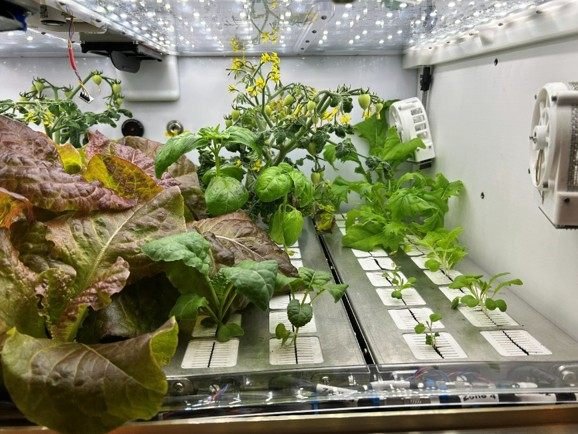
NASA is preparing to send a new plant-growing chamber called Ohalo III to the International Space Station, a prototype the agency describes as a “first-of-its-kind space crop production system” designed to help astronauts one day grow their own food on the Moon and Mars. The hardware is packed aboard Northrop Grumman’s 25th commercial resupply mission, known as NG-25 or CRS-25, which NASA is targeting for launch no earlier than 10:47 a.m. EST on Sunday, Nov. 29, from Florida.
What is launching
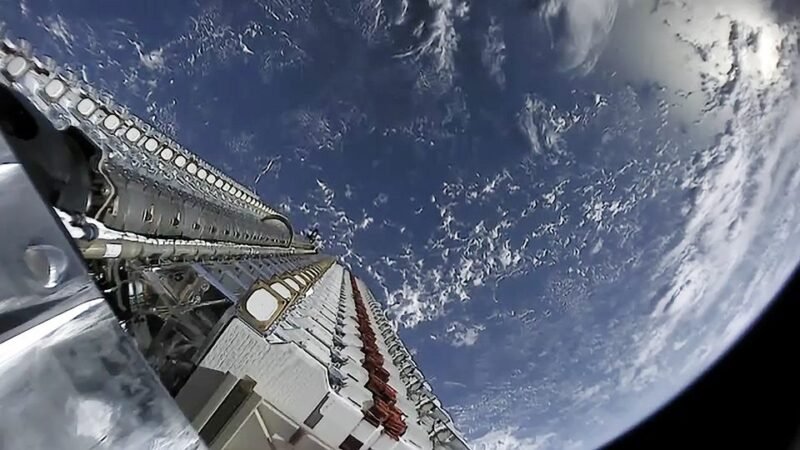
According to a NASA media advisory, the cargo ship will ride a SpaceX Falcon 9 rocket from Space Launch Complex 40 at Cape Canaveral Space Force Station. The spacecraft is a Cygnus XL, the larger version of Northrop Grumman’s uncrewed cargo vehicle, and the company has named it the S.S. James “Jim” A. Lovell after the former NASA astronaut who flew on Gemini VII, Gemini XII, Apollo 8 and Apollo 13, the last of which he commanded.
Both NASA and Northrop Grumman say the vehicle will carry about 11,000 pounds of scientific investigations and supplies. If the schedule holds, NASA astronauts Jessica Watkins and Luke Delaney will use Canadarm2, the station’s Canadian-built robotic arm, to capture the Cygnus XL at about 2:35 a.m. EST on Tuesday, Dec. 1. Ground controllers will then attach it to an Earth-facing port on Unity, one of the station’s connecting modules. NASA said the spacecraft is expected to remain at the station until May 2027 before leaving with trash and burning up on reentry.
Launch dates for cargo missions often shift because of weather or technical checks. Northrop Grumman’s own mission page lists only a “late November” target, while NASA’s advisory gives the specific Sunday window.
How Ohalo III works
Ohalo III comes out of NASA’s Biological and Physical Sciences Division and has been under development at Kennedy Space Center in Florida since 2019, Engadget reported. The project scientist is Matthew Mickens of Kennedy Space Center, according to NASA’s investigation page, which calls the goal “the first operational crop production system in space.”
Astronauts have grown plants on the station for years, but mostly as small-scale experiments. Ohalo III is a larger technology demonstration. During this flight, researchers plan to test two things in microgravity, where water does not drain or settle the way it does on Earth:
- Water delivery: getting the right amount of water to plant roots without it floating away or pooling.
- Volume optimization: making the best use of the very limited space aboard a spacecraft.
The chamber also supports multi-cropping, meaning several different plants can grow together in one unit. A NASA photo of the system on the ground shows red romaine lettuce, a Twiggy Orange tomato, Prospera basil, amara mustard and mizuna mustard sharing the same rig.
Why it matters
Today, station crews rely on shelf-stable packaged food that is shipped up on cargo flights. NASA notes that this approach becomes harder to manage as missions travel farther from Earth, because there is less room to store food and far fewer chances to resupply. A trip to Mars could last years, making a steady supply of fresh produce a practical concern for crew health, nutrition and morale.
NASA says Ohalo III is meant to close knowledge gaps about how productive, nutritious, safe and reliable space-grown crops can be, with the aim of informing “safe, nutritious, and reliable crop production strategies for future Moon Base habitats and Mars missions.” The agency’s investigation page also mentions a quality-of-life goal: fresh crops could help combat “menu fatigue,” the boredom that comes from eating the same limited foods over long missions.
The research could pay off on Earth too. NASA lists potential benefits for controlled-environment agriculture such as vertical farms and indoor growing operations, as well as water delivery and recovery techniques that could support precision agriculture and water conservation.
Other science on board
Ohalo III is one of several investigations on the flight. NASA’s science office said the mission will also carry a miniature fluid-handling system designed to keep lab-grown human brain tissue models alive in orbit. It builds on an earlier experiment that sent brain models called miBrains to the station, and the work could help identify neurological risks of spaceflight. NASA’s launch advisory adds that other experiments aboard the Cygnus will study drug delivery for cancer and osteoarthritis, predicting cancer spread, treatments for muscle loss and radiation sensing.
What comes next
NASA plans to stream the launch live on its website, with coverage starting before the 10:47 a.m. window opens. Once the cargo is unloaded, crew members will set up Ohalo III and begin the tests that NASA hopes will turn space farming from a series of experiments into a dependable food source for deep-space crews.