Rivian Beats Estimates and Lifts 2026 Outlook as R2 Becomes Top Seller
Rivian's revenue rose 38% to $2.155 billion as its new R2 SUV became its best seller, though the automaker still lost $913 million in the quarter.
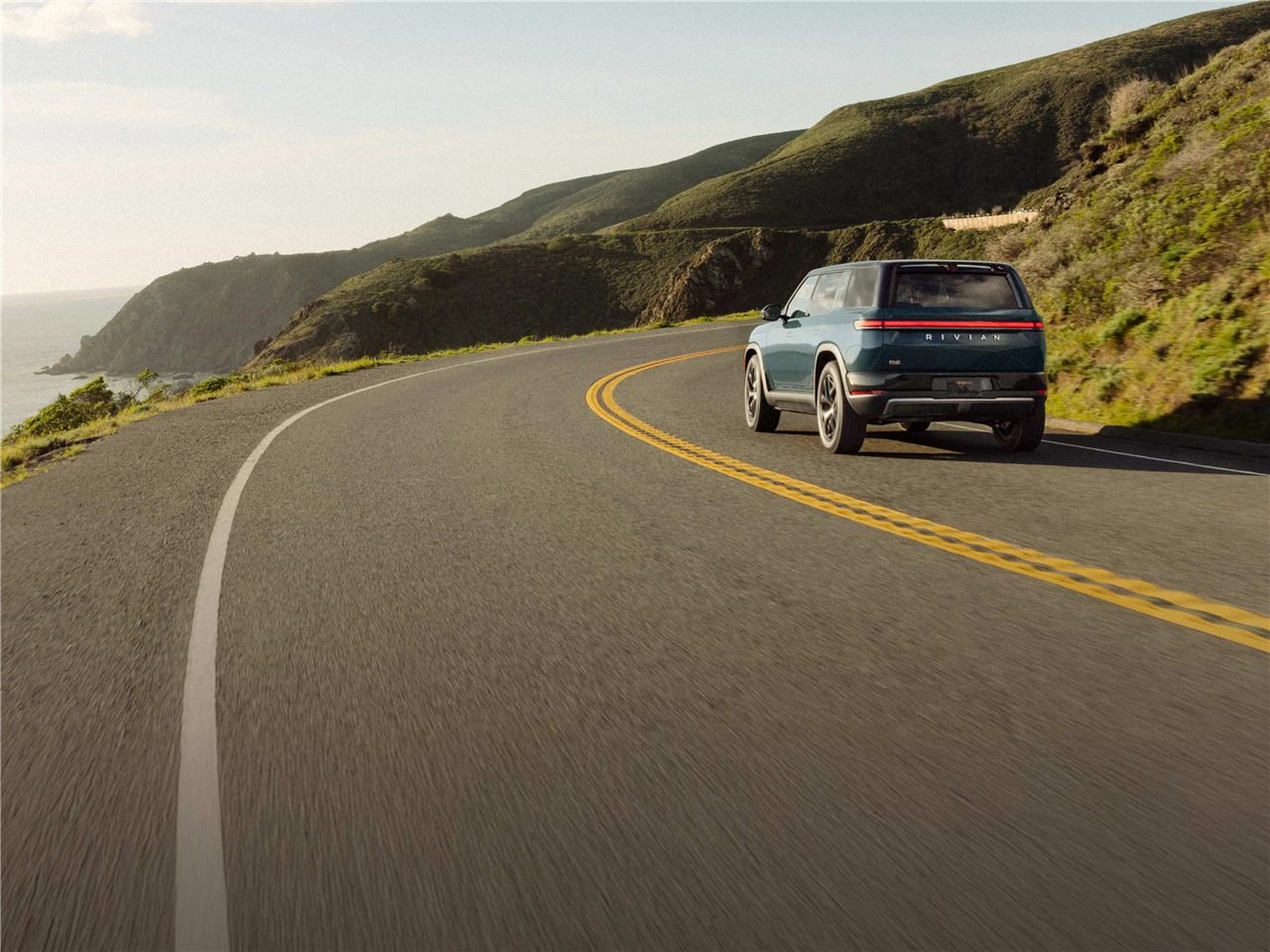
Rivian Automotive, the California-based electric vehicle maker, reported third-quarter revenue of $2.155 billion on Thursday, up 38% from a year earlier, as its new R2 SUV became its best-selling model in its first full quarter on the road. The company also improved its 2026 forecasts for deliveries, losses and capital spending. It remains far from profitable, however, posting a net loss of $913 million and burning through more than $1.1 billion in free cash flow.
What happened
Rivian said in its earnings release that it delivered 19,248 vehicles in the three months through September, up 46% from 13,201 a year earlier, and built 19,751 at its plant in Normal, Illinois. Electrek, a publication that covers the electric vehicle industry, described both as quarterly records. The R2 outsold both the older R1 models and the EDV, the electric delivery van Rivian builds for Amazon.
RJ Scaringe, Rivian’s founder and chief executive, said in the release that the company “had great results” with the R2 taking the top spot by volume.
The results came in ahead of Wall Street’s expectations, although published consensus figures differ. Electrek put the revenue consensus at about $2.02 billion, while StockStory, a financial research site, cited $2.06 billion. Electrek reported an adjusted loss of 48 cents a share against expectations of about 61 cents. StockStory, using the unadjusted measure, reported a loss of 63 cents against a forecast of 72 cents. StockStory said the shares rose 4.8% to $12.05 immediately after the release.
Why the numbers need a closer look
The overall gross profit of $176 million came entirely from Rivian’s software and services business, which earned a gross profit of $256 million on revenue of $605 million. Selling vehicles still lost money, with an automotive gross loss of $80 million, narrower than the $130 million loss a year earlier but wider than the $36 million loss in the second quarter.
Several items outside ordinary car sales helped the quarter:
- The joint venture with Volkswagen Group supplied $354 million, about 59% of software and services revenue, for electrical architecture and software work. Electrek reported that Rivian expects to recognize this revenue through about mid-2028.
- Regulatory credits, which automakers can sell to rivals that need them to meet emissions rules, added $81 million to automotive revenue.
- Rivian also booked an expected refund of tariffs imposed under the International Emergency Economic Powers Act. Electrek described this as a one-time benefit and did not give an amount.
There were encouraging signs on costs. Rivian said the R2 ramp added about $120 million in extra cost of revenue, while cost of goods sold per vehicle delivered fell by about $12,000 from the prior quarter, according to a transcript of the earnings call published by TradingKey. Scaringe told analysts that the vehicle’s cost structure “comes down quite considerably” as volume grows.
The new forecasts
Rivian narrowed its delivery target for 2026 to between 67,000 and 70,000 vehicles, raising the low end from 65,000. It now expects an adjusted loss before interest, taxes, depreciation and amortization of $1.75 billion to $1.85 billion, about $100 million better at the midpoint. Planned capital spending falls by about $300 million at the midpoint, to between $1.40 billion and $1.50 billion, a change Electrek reported Rivian attributed to the timing of spending rather than savings.
The target implies a steep climb. With 41,807 vehicles delivered through September, Rivian needs 25,193 to 28,193 in the fourth quarter, which Electrek noted would be a record by a wide margin. Scaringe said a second R2 production shift has started, but cautioned on the call that the company can “only ramp as fast as our slowest ramping supplier.”
What comes next
Cash remains the central question. Free cash flow was negative $1.124 billion, compared with negative $421 million a year earlier, and cash and short-term investments stood at $5.502 billion at the end of September. Rivian said total liquidity would be $7.095 billion including a $1 billion term loan from Volkswagen Group received in October. Electrek reported that a milestone expected by year-end would unlock a further $250 million equity investment from Uber.
The company is also changing finance chiefs. Claire McDonough, the chief financial officer, said on the call that she was stepping down to return to the East Coast, with Derek Mulvey taking over on an interim basis. Mulvey told analysts that the R2 should make up the majority of fourth-quarter deliveries, while signaling that automotive gross profit should not be expected to turn positive for the full quarter.
Further ahead, Rivian is building a plant in Georgia that Electrek said would add 300,000 vehicles of annual capacity in its first phase. The company plans to detail its self-driving work at an event on December 9.