Sila Lands Panasonic Anode Deal Worth Over $1 Billion
US battery materials maker Sila will supply silicon-carbon anodes to Panasonic Energy in a multiyear deal it says could top $1 billion.
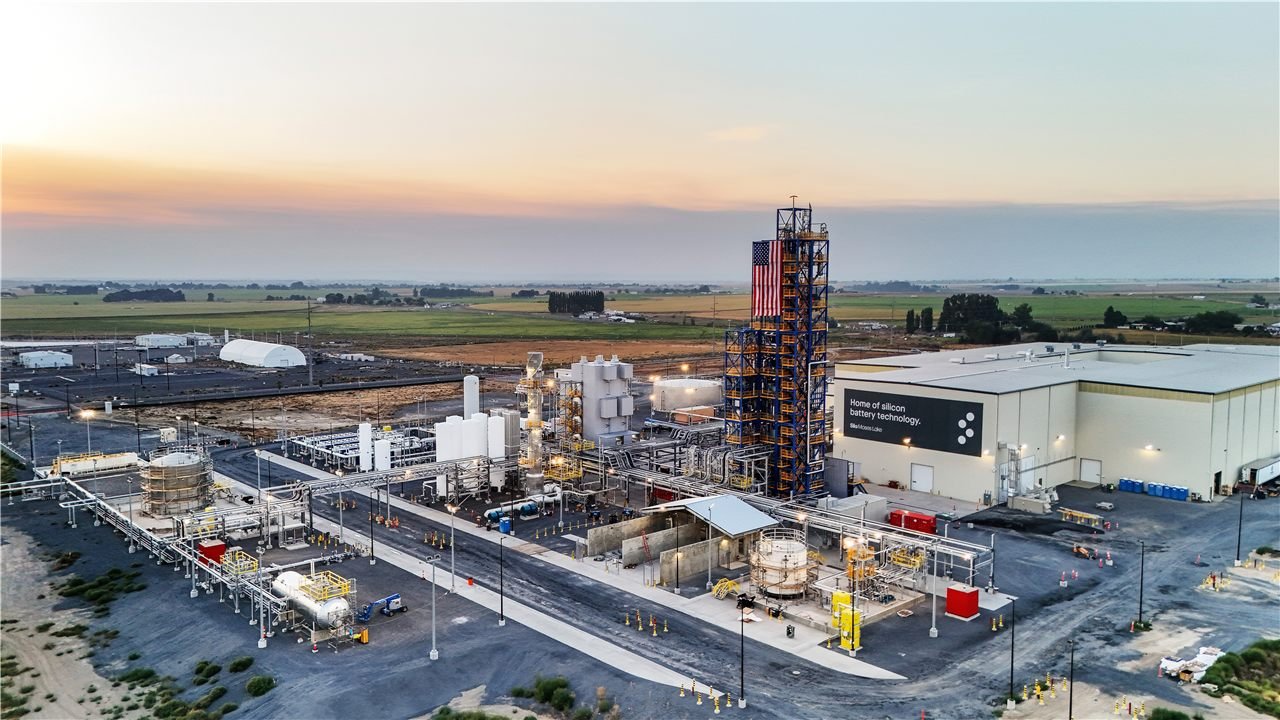
Sila, a US maker of battery materials, has signed a multiyear agreement to supply its silicon-carbon anode material to Panasonic Energy, the battery arm of Japan’s Panasonic. Sila says the deal could be worth more than $1 billion over time. The material will come from Sila’s factory in Moses Lake, Washington, and go into battery cells made at Panasonic’s US plants, according to the companies and reports by MIT Technology Review and the German trade publication electrive.
MIT Technology Review described the contract as Sila’s first mass-market deal. It comes at a time when several US startups working on next-generation batteries have struggled to stay in business.
What the deal covers
Under the agreement, Sila will provide Titan Silicon, its own anode material. The anode is the battery electrode that stores lithium while a cell charges. Most lithium-ion batteries today use graphite anodes. Sila says its material weighs about one-fifth as much as graphite and takes up about half the space, so a battery can hold more energy for the same weight and volume. According to electrive, Sila says Titan Silicon can raise energy density by about 20% compared with leading graphite cells. That could mean longer driving ranges for electric vehicles and faster charging.
Several key terms have not been made public:
- Gene Berdichevsky, Sila’s cofounder and chief executive, told MIT Technology Review that Panasonic has committed to buy tens of thousands of tons of material, but the company has not disclosed the exact volume or the price.
- Electrive reported that financial terms, delivery quantities and a start date for full-scale production were also not released.
- Processing Magazine reported that supplies will begin only after the facility and its materials pass Panasonic’s qualification process.
The two companies also said they plan to work together on intellectual property. Berdichevsky called the agreement “a major commercial milestone for Sila,” electrive reported. Yasuaki Takamoto, chief executive of Panasonic Energy North America, praised the speed of Sila’s work, saying its progress at Moses Lake “from groundbreaking to production” had been “exceptional.” He also linked the partnership to Panasonic’s US manufacturing plans and its push to strengthen the North American battery supply chain.
Why it matters
The deal gives Sila a large, steady customer as it tries to grow. MIT Technology Review reported that the Panasonic contract is expected to help Sila raise output to at least 10 times its current level. Sila expects the expansion to support about 500 manufacturing and construction jobs at Moses Lake.
The agreement also fits a wider US effort to reduce dependence on China for battery materials. China controls more than 90% of graphite production and most of the anode market, MIT Technology Review noted. Washington has long sought to build domestic sources of such materials, as it has with rare earth minerals, and the Trump administration has stepped up those efforts.
For Panasonic, a major supplier of cells for electric vehicles, the deal secures a US-made material for its American plants. Electrive reported that Panasonic opened its second US cell factory in De Soto, Kansas, in July 2025. Together with its Nevada plant, the company aims to reach 73 gigawatt-hours of annual US production capacity.
The news also stands out against a difficult backdrop. Two US battery companies once valued at more than $1 billion, 24M and ESS Tech, have declared bankruptcy and shut down within the past year, according to MIT Technology Review.
Background
Sila was founded in 2011. Its material first reached consumers in 2021, in fitness wearables made by Whoop. The company announced its Moses Lake factory in 2022 and received $100 million from the US Department of Energy as part of Biden-era grants for the domestic battery supply chain.
The sources differ slightly on the plant’s timeline. MIT Technology Review said the factory opened in September 2025, while electrive reported that it was commissioned in April 2025 and has been producing since that autumn. Electrive said the plant’s first expansion phase is meant to supply enough material for about 2 gigawatt-hours of battery cells a year.
Sila has raised significant funding this year. Electrive reported that the company raised $300 million from private investors in July and, in August, received a conditional loan commitment of up to $1.4 billion from the Defense Department’s Office of Strategic Capital to expand Moses Lake. Panasonic first agreed to buy anode material from Sila in December 2023.
A shift in focus
MIT Technology Review noted that Sila’s announcement talked about electric vehicles, North American supply chains and the growing power needs of artificial intelligence, but did not mention climate or emissions. That reflects a broader change in how battery companies describe their work, with more emphasis on geopolitics and industrial policy. Berdichevsky told the publication that the politics had shifted around the company more than its motivations had, and that energy efficiency remains at the heart of its work.
Key questions remain, including when deliveries will start and how much material Panasonic will ultimately buy once qualification is complete.