SpaceX’s First Profit as a Public Company Lifts Nasdaq, AI Stocks
SpaceX shares jumped about 10% after a $4.4 billion third-quarter profit, pulling the Nasdaq and AI-linked stocks higher on Wednesday.
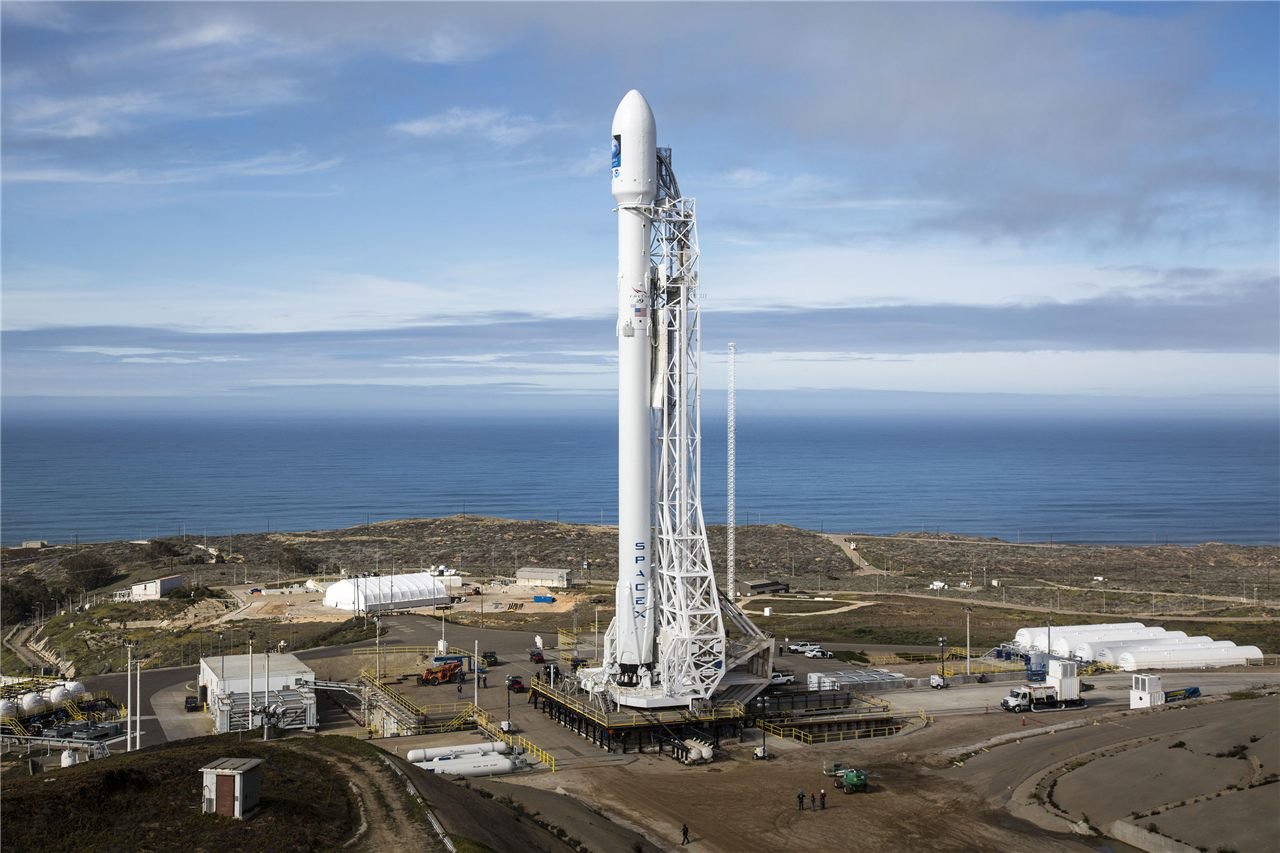
U.S. stocks rose on Wednesday, Oct. 21, 2026, with the technology-heavy Nasdaq out in front, after SpaceX reported its first quarterly profit since going public in June and gave fresh energy to the rally in companies tied to artificial intelligence. Shares of the rocket and satellite company, which trades on the Nasdaq under the ticker SPCX, climbed about 10% by midday, Benzinga reported.
How the market moved
The gains built as the session went on. Shortly after the opening bell, the S&P 500 was up 0.3%, the Dow Jones Industrial Average 0.2% and the Nasdaq Composite 0.7%, according to Seeking Alpha. By midday, Benzinga data showed the Nasdaq 100 up 1.3% at 29,863, the S&P 500 up 0.5% at 7,753 and the Dow up 151 points, or 0.3%, at 52,647. The Russell 2000, an index of smaller companies, added 0.2% to 2,783.
Large technology names did much of the lifting. Meta Platforms rose 2.4%, Nvidia 1.9% and Apple 1.3%, while Tesla, the electric-vehicle maker also run by SpaceX chief executive Elon Musk, gained 3.5% ahead of its own quarterly report, Benzinga said. The VanEck Semiconductor ETF, a fund that tracks chipmakers, advanced 1.8%. Not everything joined in: Alphabet fell 2.2%, and a communication services sector fund slipped 0.8%.
Bond yields edged higher. The 10-year Treasury yield rose 0.8 basis points to 5.12% and the 2-year yield stood at 4.80%, Seeking Alpha reported, keeping borrowing costs at levels investors are watching closely.
What SpaceX reported
SpaceX said revenue for the quarter ended Sept. 30 reached $14.6 billion, up 161% from $5.6 billion a year earlier, according to a summary of the company’s results published by TeslaNorth. Net income came to $4.4 billion, or 35 cents a diluted share, compared with a net loss of $1.1 billion a year earlier. Adjusted EBITDA, a measure of earnings before interest, taxes, depreciation and amortization, rose to $8.8 billion from $2.2 billion. Seeking Alpha said both earnings and revenue topped Wall Street’s expectations.
The biggest engine was the company’s Super Intelligence segment, its artificial intelligence business, formerly called the AI division. Its revenue jumped 830% to about $7.6 billion, making it SpaceX’s largest unit, and it posted a segment operating profit of $431 million. Connectivity, which includes the Starlink satellite internet service, brought in $5.2 billion, up 69%, with consumer revenue up 57% and enterprise and government revenue up 91%. The Space segment, which includes rocket launches, generated $1.8 billion.
The growth is coming at a steep price. Capital spending totaled $19.6 billion in the quarter, $16.4 billion of it on the Super Intelligence business, and $48.1 billion over the first nine months of the year, TeslaNorth reported.
Analysts and the outlook
Benzinga reported that SpaceX projected first-quarter 2027 revenue of $33 billion to $37 billion, far above Wall Street estimates of about $23 billion. TeslaNorth noted that the written results release itself did not include numeric guidance and that the company planned to discuss its outlook on its earnings webcast. JPMorgan raised its price target on the stock to $500 from $240, according to Benzinga.
Wednesday’s move was on track to be the stock’s biggest one-day gain since Aug. 7, when it rose 15.8%, and added roughly $200 billion in market value, Benzinga said. The effects spread to other companies:
- EchoStar, a satellite and wireless company that holds a stake in SpaceX, rose 8.1%.
- AT&T fell 6.3% even after reporting third-quarter revenue of $32.32 billion, above the $31.67 billion analysts expected, and raising its full-year adjusted earnings outlook to about $2.40 a share. Benzinga linked the decline to investor concern about competition from Starlink.
Other movers and what comes next
Server maker Super Micro Computer climbed 9.6% after lifting its fiscal first-quarter revenue forecast to $18.5 billion to $19.5 billion, from $14.5 billion to $15.5 billion. Netflix dropped 5% even though adjusted earnings of 87 cents a share beat the 82-cent estimate; its fourth-quarter revenue forecast of $13.4 billion came in slightly below the $13.5 billion consensus, and Needham, an investment bank, downgraded the stock to hold, according to Benzinga.
Attention now turns to Tesla’s results after the close, where analysts expect adjusted earnings of 45 cents a share on revenue of $28.06 billion, Benzinga said. Investors were also watching the Atlanta Fed’s Business Inflation Expectations report, a survey of how much companies expect their costs to rise. With 10-year yields above 5% and AI companies spending tens of billions of dollars a quarter on computing capacity, the durability of the rally remains an open question for the market.