SpaceX Targets Nov. 13 for First Attempt to Catch Both Starship Stages
SpaceX aims to launch Starship Flight 15 on Nov. 13 and try, for the first time, to catch both the booster and the ship at its Texas launch tower.
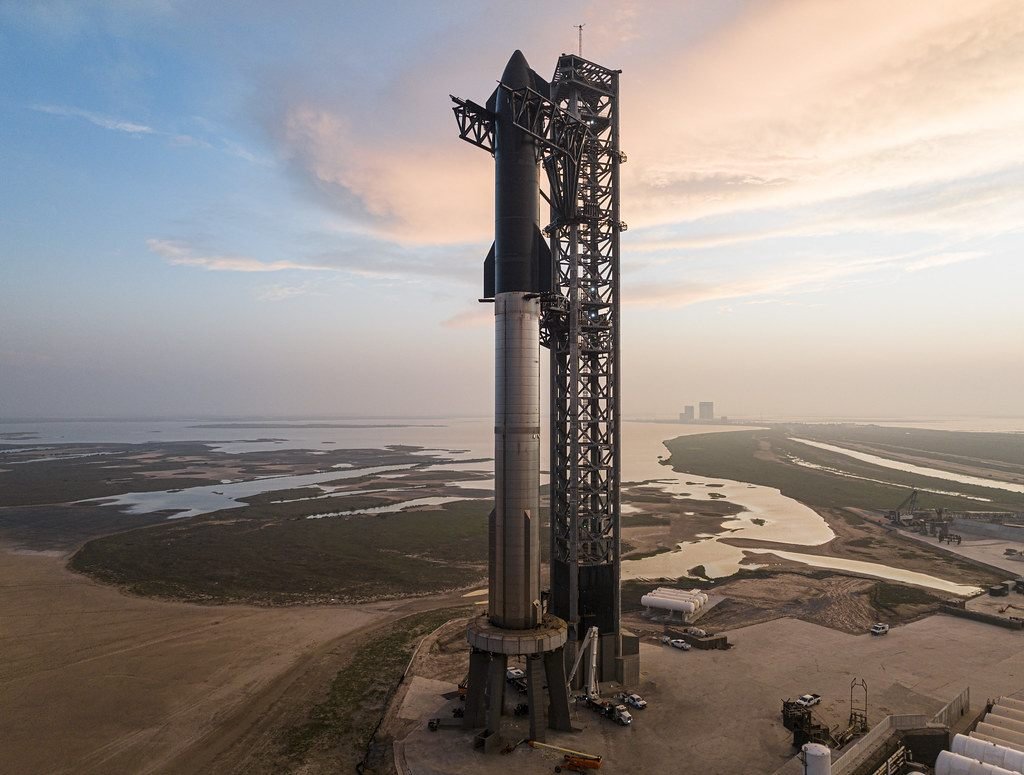
SpaceX is aiming to launch the 15th test flight of its Starship rocket as early as Friday, Nov. 13, and to try something it has never done before: catching both stages of the giant vehicle with its launch tower after flight. The company said on Nov. 7 that the mission is “targeting to launch as early as Friday, November 13, pending regulatory approval,” meaning the Federal Aviation Administration (FAA), the U.S. agency that licenses commercial launches, still has to sign off.
If the date holds, a 75-minute launch window opens at 5:45 p.m. Eastern time, Engadget reported. Weather could also push the flight back.
What SpaceX is trying to do
Starship has two parts: the Super Heavy booster, the first stage that lifts the rocket off the pad, and the upper stage, which SpaceX calls Ship. SpaceX has caught a returning Super Heavy booster three times using the mechanical “chopstick” arms on its launch tower at Starbase, the company’s launch site in South Texas. It has never tried to catch Ship, which flies higher and faster than the booster and must survive the intense heat of reentry from orbit.
Under the plan described by Engadget and by the Canadian tech site TeslaNorth, the tower arms would grab the booster a few minutes after liftoff. Ship would then spend most of a day in orbit before coming back to the same tower. Engadget said Ship is expected to circle Earth about 14 times over a flight of more than 22 hours, while TeslaNorth, describing SpaceX’s mission overview, put the orbital coast at about 21 hours.
According to NASASpaceflight, a site that closely tracks the program, the flight will use Booster 22 and Ship 42, and both vehicles were in final checkouts as of Nov. 6. Interesting Engineering reported that SpaceX fired all 33 Raptor engines on Booster 22 for about 15 seconds in a full-duration static fire test on Oct. 25.
The mission profile, as summarized by TeslaNorth, includes several decision points:
- Ship launches on a path that would bring it down over a cleared area of the Indian Ocean if something goes wrong before orbit.
- After a go-ahead from flight controllers, a single engine burn puts Ship into orbit, where it is set to release Starlink V3 internet satellites, including three modified to photograph the vehicle’s heat shield.
- If problems arise during the coast, the mission can end early with a splashdown in precleared Pacific areas near Hawaii or off Chile.
- If cleared, a deorbit burn sends Ship back over the Pacific, across northern Mexico and southern Texas, and toward Starbase, where it would flip upright and slow nearly to a hover before the tower arms close around it.
Engadget reported that SpaceX will attempt the Ship catch only if the vehicle can deorbit into one of several predetermined areas and conditions are optimal. TeslaNorth said the return is allowed only if Ship meets flight-readiness conditions that SpaceX developed and the FAA approved. Residents of Cameron County, Texas, may hear sonic booms during the return, which SpaceX says do not present a health risk.
Why it matters
If both catches succeed, it would be the first time every part of an orbital rocket has come back to Earth intact and been recovered, according to TeslaNorth. Full reuse is central to SpaceX’s argument that Starship can sharply lower launch costs and fly with airplane-like turnaround times.
Outside observers have urged caution. Interesting Engineering noted that a successful catch on its own would not prove that Starship can be quickly inspected, refurbished and flown again. The upper stage’s heat-shield tiles have been a persistent challenge; in earlier flights SpaceX deliberately removed some tiles to stress-test the vehicle during reentry before ocean splashdowns.
The stakes extend beyond SpaceX’s own satellite business. NASA has selected a modified version of Starship to serve as a lunar lander for its Artemis program, which aims to return astronauts to the Moon. Before that can happen, the vehicle must show additional capabilities, including transferring propellant between spacecraft in orbit, which SpaceX plans to test on a future mission, Interesting Engineering reported.
Background and what comes next
The previous flight, Flight 14 on Sept. 28, was the first time Starship reached orbit. Interesting Engineering reported that it deployed 26 Starlink V3 satellites, but a Raptor engine shut down early during ascent and SpaceX shortened the mission. Engadget said Ship spent about two hours in orbit instead of the planned 10.
Elon Musk, SpaceX’s chief executive, said on the company’s Oct. 20 earnings call that SpaceX would try to catch both stages on Flight 15, and he showed a video simulating the attempt, according to Engadget. Gwynne Shotwell, SpaceX’s president and chief operating officer, said on the call that the company expected its FAA license for the flight to cover return-to-launch-site operations and tower catches for both stages, Interesting Engineering reported, citing Ars Technica. None of the outlets reviewed reported that the license had been issued as of Nov. 10.
SpaceX plans to stream the flight, including any Ship catch attempt, on its account on X.