UK Signs Record £8.7 Billion Submarine Maintenance Deal With Babcock
Britain awarded Babcock its largest-ever contract, a five-year deal to keep nuclear submarines in repair and get them back to sea faster.
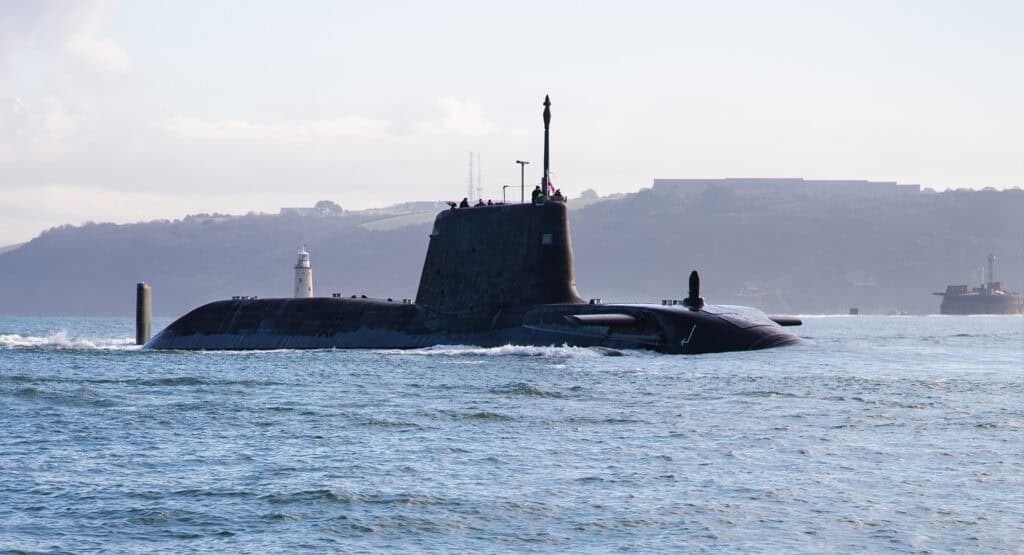
Britain’s Ministry of Defence has awarded Babcock International, the British defense engineering company, a five-year contract to maintain the Royal Navy’s submarine fleet. The government says the deal is the biggest procurement decision of the current Parliament, and it comes after years of concern that repair backlogs were keeping submarines out of service. Babcock values the package at £8.7 billion (about $11.4 billion): a core contract of roughly £8 billion plus a framework agreement worth up to £700 million. The company says it is the largest contract in its history.
What happened
Wes Streeting, Britain’s defense secretary, announced the deal on Thursday during a visit to HMNB Devonport, the naval base and dockyard in Plymouth, southwest England, the Evening Standard reported. Babcock will carry out maintenance at Devonport and at Faslane, the Scottish base on the River Clyde that is home to Britain’s nuclear-armed submarines, according to The Guardian.
Streeting said in a statement that the country’s nuclear submarines “are the cornerstone of our national security,” Reuters reported. He added that the government would prioritize the nuclear deterrent “even when we have to move funding from other departments.” Speaking to Times Radio, he said the deal would let the yards operate around the clock, describing dry dock capacity as one of the main limits on how quickly submarines can be turned around.
The core contract runs until 2029. Babcock said the arrangement could last as long as 15 years in total, Reuters reported, and The Guardian said an extension would be covered by a separate memorandum of understanding.
Streeting also told the BBC that the contract includes financial incentives, so that Babcock earns more the more efficient and productive it is, according to Reuters. He acknowledged that the defense ministry had made procurement mistakes in the past and said it had learned from them.
Jobs and market reaction
The defense ministry says the contract will create about 3,000 skilled jobs and around 2,500 apprentice and graduate roles, mostly in Plymouth, the Glasgow and Clyde area, and Bristol. Prime Minister Andy Burnham described the total as 5,500 new jobs, Reuters reported, a figure that appears to count both groups together. “Keeping the public safe will always be my top priority,” Burnham said.
Harry Holt, Babcock’s chief executive, said the deal would “increase submarine availability” and build up the skills and infrastructure the Royal Navy’s submarine force will need for years to come, The Guardian reported. Holt ran Babcock’s nuclear division before he was promoted to the top job in July.
Babcock shares rose about 6% after the announcement, Reuters said. The Guardian put the Thursday morning gain at 7%, taking the stock to nearly £11, its highest level since August but still well below the record of almost £15 reached earlier this year.
Why it matters
Since 1969 Britain has run a policy called Continuous At-Sea Deterrence, under which at least one of its four Vanguard-class submarines, each armed with Trident nuclear missiles, is on patrol at all times. Faults and overrunning refits have kept some of those boats in dry dock for months, so the submarines still in service have had to stay at sea for longer.
Earlier this month HMS Vengeance, one of the four, returned from a record deployment. The Guardian said it lasted 217 days underwater, and the Evening Standard described it as a record seven-month patrol. Reuters reported that Royal Navy submarines have had to carry out unusually long deployments because there are not enough maintenance facilities.
General Sir Gwyn Jenkins, head of the Royal Navy, said the investment would help tackle “the delays that hold us back” and get submarines back “beneath the waves” sooner, the Evening Standard reported. Earlier this month he had said the navy needed to improve its submarine maintenance, according to The Guardian.
Background and what comes next
The contract is part of a wider push to put Britain’s armed forces on a war footing. Last month, citing the growing threat from Russia, Streeting said the country had to be ready to fight or deter military action within 1,000 days, Reuters reported. That goal is constrained by a tight budget, and the government has struggled over the past two years to find extra money for defense.
For Babcock, the deal adds to an order book that already includes infrastructure work at Devonport. It also brings scrutiny. The company is building five Type 31 frigates for the Royal Navy at Rosyth in Scotland, a program on which it has faced cost problems, The Guardian noted.
Spending on the deterrent remains contested at home. Some politicians, including members of the Green Party, oppose spending on Trident and argue that it should be scrapped, The Guardian reported. The government argues that faster maintenance is essential to keep the patrols going without wearing out crews and boats.