AI Data Centers Build Their Own Gas Plants as Grid Waits Stretch
US data center developers have announced more than 100 off-grid gas plants totaling over 115 gigawatts, raising emissions and price concerns.
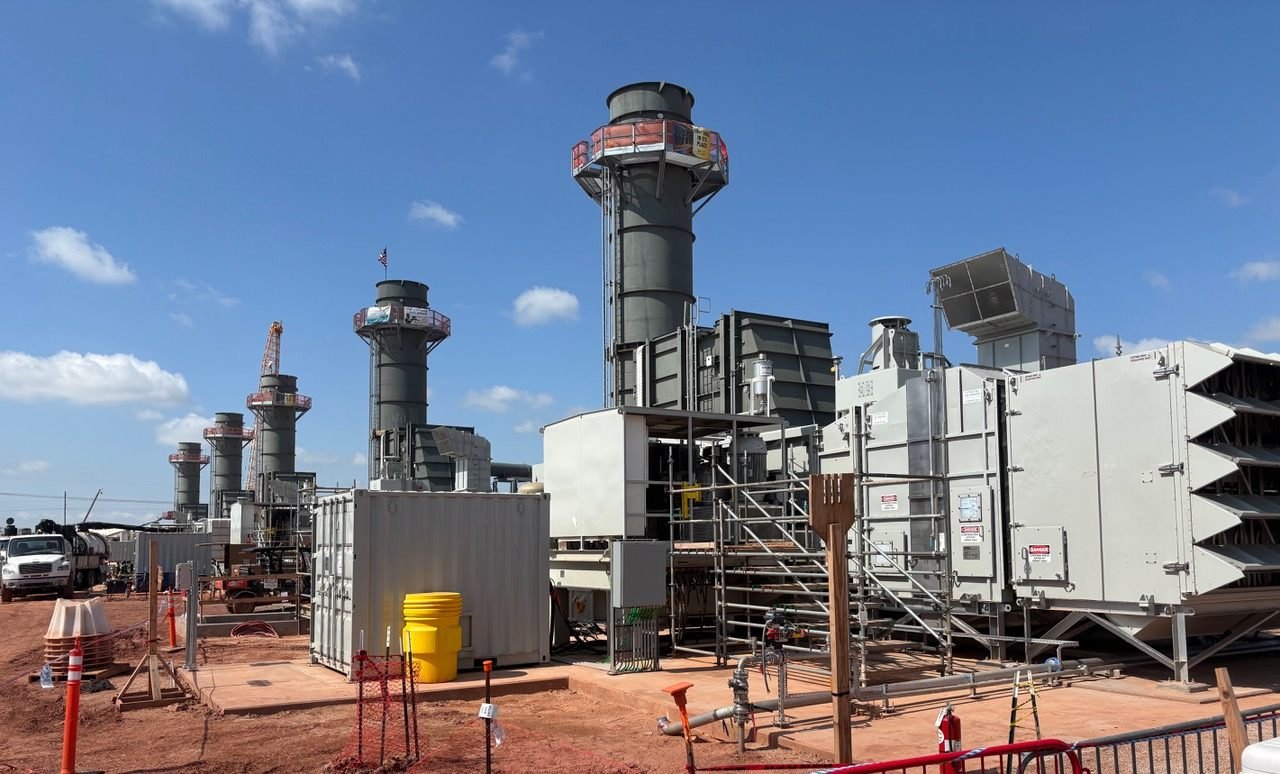
Data center developers racing to power the artificial intelligence boom are increasingly skipping the electric grid and building their own natural gas power plants, a shift that analysts warn could lock in fossil fuel use and raise emissions for years. More than 100 of these so-called behind-the-meter gas plants have been announced at US data centers, with a combined planned capacity of over 115 gigawatts, MIT Technology Review reported on Tuesday, citing data from Cleanview, a market intelligence company that tracks power infrastructure.
That planned capacity is more than double California’s peak electricity demand, according to the report. Only a small fraction of it exists so far: as of October, about 4.9 gigawatts were operating and 15.8 gigawatts were under construction, Cleanview’s figures show. Most of the announcements have come since the start of 2025.
Why developers are going off the grid
The main driver is time. Hooking a large facility to the grid starts with a request to a local utility or regional grid operator, followed by studies that can run for years and, often, costly upgrades such as new transmission lines or larger transformers. MIT Technology Review reported that the wait can stretch as long as a decade.
“The biggest motivator for on-site power right now from data centers is speed,” Musfika Mishi, an associate at BloombergNEF, the energy research arm of Bloomberg, told the publication. Building a private plant generally costs more than connecting to the grid, but developers have been willing to pay a premium to get their computers running sooner.
Mark Daly, head of data centers and emerging tech at BloombergNEF, made a similar point in a Nov. 11 statement, saying the economics of AI are making speed to power one of the most important constraints on developers. BloombergNEF has tracked 181 gigawatts of announced gas-fired generation proposed alongside data centers worldwide, more than 90% of it in the United States. The firm cautioned that the pipeline signals potential scale rather than a forecast of what will be built.
The best-known example is Elon Musk’s AI company xAI, which has run dozens of gas turbines at its data center campus in Memphis since 2024, some of them reportedly without permits. The site has drawn regulatory scrutiny and legal challenges. Bloomberg News, in an August analysis republished by Fortune, reported that projects in BloombergNEF’s data are spread across 22 states, with more than a third in Texas, and that OpenAI and Anthropic are among the backers. It also described a site in Pecos County, Texas, that Cleanview identified as being developed by Amazon, and a gas plant Chevron is building for Microsoft nearby. Amazon and Microsoft told Bloomberg their climate goals have not changed.
The climate and cost stakes
Analysts say a plant built as a temporary bridge may not stay temporary. “Even though data centers say that it’s a grid-bridging solution, the probability that it is going to be in use much longer is a real risk,” Mishi said. BloombergNEF’s report reached a similar conclusion, finding that once these plants are running, their economics could encourage owners to keep generating.
The emissions estimates are large, though they vary by tracker and date:
- BloombergNEF estimates that if every announced on-site gas plant for US data centers were built and run under its assumptions, they would emit about 345 million metric tons of carbon dioxide equivalent a year.
- That is 152 million metric tons more than if the same data centers drew average US grid power, which BloombergNEF said equals about 10% of US power-sector emissions in 2025.
- Bloomberg News’ earlier analysis, based on 99 plants and 126 gigawatts tracked at the time, estimated the plants could raise US power-sector emissions by about 20%.
Part of the problem is equipment. With nuclear and renewables supplying about 40% of US electricity, a grid connection is generally cleaner than an on-site gas plant. And Mishi said very few planned behind-the-meter projects will use efficient combined-cycle turbines, opting instead for cheaper single-cycle units that emit more. BloombergNEF noted the picture differs in some emerging markets, such as India, where coal-heavy grids can make a grid connection dirtier than on-site gas.
Going off the grid also does not shield other consumers. Matthias Fripp, director of global policy research at the think tank Energy Innovation, said building private gas plants is “probably a bad way” to meet demand because it can still raise other people’s bills. Higher gas demand could push up prices for the roughly 60% of US households that use gas for heating and cooking, according to MIT Technology Review.
What comes next
Because most announced capacity is not yet under construction, the final scale of the buildout remains uncertain. Brendan Pierpont, director of electricity at Energy Innovation, called private plants a very expensive way to bridge what he described as a five-to-seven-year gap until data centers can connect to the grid. Researchers at the group have argued that pairing data centers with renewables and battery storage could meet rising demand more cheaply, while BloombergNEF has urged governments to speed up grid connections. Its new report reviews policies for doing that in 17 markets.