Ex-OpenAI Engineer Accused of Bugging Office Granted $1 Million Bond
A federal judge ruled that Abdulrahman Alfozan, accused of hiding a recording device in an OpenAI conference room, can be released on a $1 million bond.
A federal judge in San Francisco ruled Tuesday that Abdulrahman Alfozan, a 35-year-old Saudi national and former OpenAI engineer accused of hiding a recording device in one of the artificial intelligence company’s executive conference rooms, can be released from custody on a $1 million bond. He has not been convicted of any crime, and his lawyer says he will fight the charge. CNBC reported that Alfozan is expected to be released Wednesday and fitted with an ankle monitor, according to his attorney.
What happened in court
Magistrate Judge Alex Tse of the U.S. District Court in San Francisco granted the release request after a hearing, CNBC reported. Federal prosecutors had opposed it. In a court filing, they argued that Alfozan remains a flight risk because of his “considerable resources and ties to Saudi Arabia,” and said his request “blithely dismisses the seriousness” of the charge he faces.
His attorney, David Rizk, filed the release motion last week. According to CNBC, the motion argued that prosecutors had admitted they “found no new evidence” to support the idea that Alfozan was stealing trade secrets or working as an unregistered agent of Saudi Arabia. Prosecutors countered that the defense seemed to assume, without support, that the government’s investigation was finished.
After the hearing, Rizk said in a text message that the defense was grateful the court “made the right decision” and looked forward to defending the case. OpenAI did not immediately respond to CNBC’s request for comment. Jury selection in the case is scheduled to begin on Jan. 20.
The allegations
Alfozan faces one count of using or attempting to use a device to intercept oral communications, according to the criminal complaint as described by The San Francisco Standard and Al Jazeera. Al Jazeera reported that the offense carries a maximum penalty of five years in prison, a $250,000 fine and three years of supervised release.
According to the FBI complaint, as summarized by Al Jazeera and The San Francisco Standard, the case unfolded over several weeks:
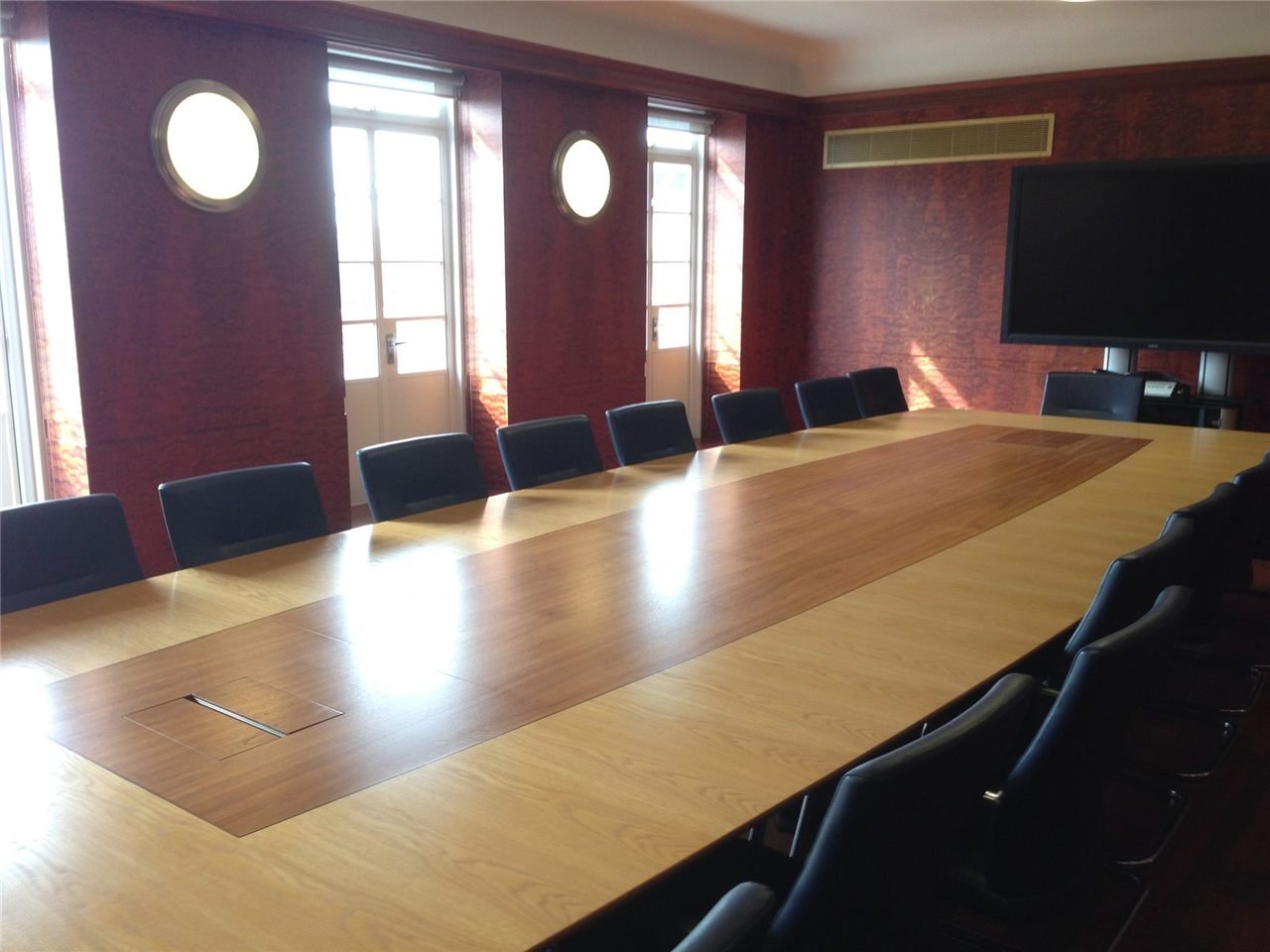
- Around Sept. 28, a thumb-sized device with a microphone was allegedly wrapped in toilet paper and plugged into a USB port on the back of a television in an executive conference room at OpenAI’s San Francisco offices.
- OpenAI staff found the device on Sept. 30. Its stored data was encrypted.
- OpenAI then placed a camera in the room, which allegedly recorded Alfozan entering and checking behind the television.
- On Oct. 5, a second, similar device was found in a bag he had left unattended, according to the Standard.
- OpenAI fired Alfozan, and he was arrested on Oct. 9, CNBC reported.
Prosecutors have also said they found hundreds of audio files on Alfozan’s personal computer, including what CNBC described, quoting the government, as “dozens of recordings” of meetings or conversations at OpenAI during September, many of which may involve trade secrets. The complaint also alleges he used an AI productivity tool to ask about building addresses, meeting rooms and calendars that he had no authority to access, Al Jazeera reported.
OpenAI said in a post on X in October that it had “no indications” the employee had improperly accessed or taken model weights, source code or customer data. Model weights are the learned numerical values at the core of AI systems such as ChatGPT. The company also said it had evidence he intended to place other listening devices in sensitive areas.
The defense and the Saudi connection
Officials have framed the case in security terms. Craig Missakian, the U.S. attorney in San Francisco, called it “a matter of national security,” the Standard reported, and Todd Blanche, the U.S. attorney general, said the alleged attempt “was taken extremely seriously.” Kash Patel, director of the FBI, said protecting American AI innovation is among the bureau’s top counterintelligence priorities.
The defense has pushed back on that framing. William Pernik, who represented Alfozan shortly after his arrest, told the Standard that the allegations seemed “wholly out of character” and stressed that the public record contained “an accusation, not a finding of guilt.” He noted that Alfozan was charged under a federal recording law, not with stealing trade secrets or acting as a foreign agent, and added that where a person was born “is not evidence of anything.”
Before joining OpenAI, Alfozan was a venture partner at Raed Ventures, a venture capital firm based in Riyadh, Saudi Arabia, Al Jazeera reported. CNBC reported that the firm lists Prince Khalid Bin Bader Al Saud, a member of the Saudi royal family, as a fellow partner. No source has said the prince is involved in the case. Al Jazeera reported that Alfozan has been a U.S. legal permanent resident since 2020 and that his LinkedIn profile lists MIT and the University of California, Berkeley, and past jobs at Meta and Microsoft. The outlet said it could not verify those details. Accounts also differ on when he joined OpenAI, with dates of June and July 2025 both reported.
What comes next
Alfozan will await trial under electronic monitoring if his release goes ahead as expected. The case comes as AI developers and U.S. officials increasingly treat research labs as targets for espionage, with companies and governments competing for talent and technology. The government’s evidence, and whether prosecutors bring any broader charges, are likely to be closely watched as the January trial date approaches.