Alibaba Moves to Spin Off AI Chip Unit T-Head in Hong Kong Listing
Alibaba won Hong Kong exchange clearance to pursue a separate listing of T-Head, its data center chip unit, but gave no date or deal size.
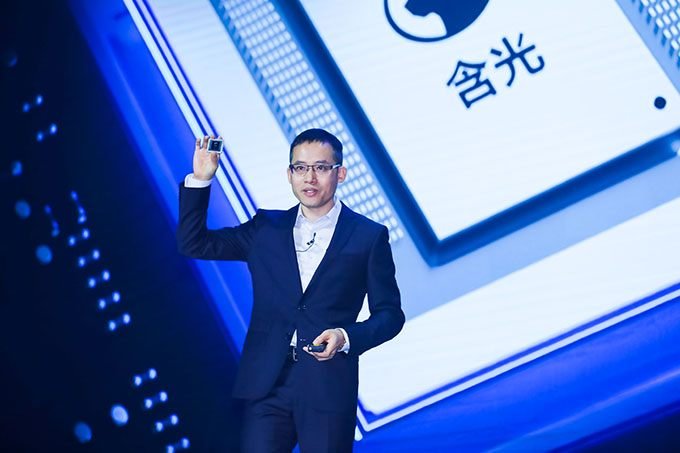
Alibaba Group said late Tuesday, Nov. 10, that the Hong Kong Stock Exchange has cleared it to pursue a spin-off and separate listing of T-Head, its in-house semiconductor business. The move would put one of China’s main domestic rivals to Nvidia’s artificial intelligence chips in front of public investors. In a regulatory announcement, also filed with the U.S. Securities and Exchange Commission, the Chinese e-commerce and cloud company did not give a listing date or say how much it hopes to raise. It also cautioned that the deal may never happen.
Alibaba’s Hong Kong-listed shares fell about 1% on Wednesday morning, CNBC reported. CNBC noted that the stock is down about 29% so far this year.
What Alibaba announced
According to the filing, T-Head (Shanghai) Technology Co., which Alibaba currently owns outright, confidentially submitted a listing application for its H shares to the Hong Kong exchange’s Main Board on Sept. 11. H shares are shares of mainland Chinese companies that trade in Hong Kong. The exchange has now confirmed that Alibaba may go ahead under its spin-off rules.
The planned offering would have two parts: a public offering to investors in Hong Kong and a placement with institutional and professional investors. Alibaba said the size and structure of the deal, and how far its own stake will be reduced, have not been decided. It expects T-Head to stay a subsidiary once the deal is complete.
Several steps remain. The listing needs approval from the exchange’s Listing Committee, and T-Head must complete a filing with the China Securities Regulatory Commission, the country’s securities regulator. Alibaba and T-Head must also make final decisions. “There is no assurance that the Proposed Spin-off will take place or as to when it may take place,” the company said.
Alibaba also obtained a waiver from a rule that normally requires a parent company to give its existing shareholders an assured entitlement to shares in a spun-off unit. According to the filing and a report by Investing.com, Alibaba argued that doing so would cost too much. It said one reason is that a U.S. public offering would require an SEC registration statement, and that Chinese legal restrictions would make a direct share distribution impractical. The company added that the spin-off is small compared with Alibaba’s total assets, revenue and net income.
Why Alibaba wants a separate listing
Alibaba describes T-Head as a leading provider of “full-stack data center chips” that power system-level computing in China. The company said a stand-alone listing would let investors value T-Head and the rest of the group separately. It would also give investors who want pure exposure to chips a way to buy in, and allow T-Head to raise equity and debt on its own. Alibaba added that a separate listing could raise T-Head’s profile with customers, suppliers and partners.
Alibaba has not confirmed a deal size. Chinese business outlet 36Kr cited media reports saying the offering could raise $2 billion to $3 billion, with a listing aimed for next year.
Alibaba does not report T-Head’s revenue on its own. In August, it combined the chip unit with its cloud business into a segment called AI Cloud and Computing Power Services. 36Kr reported that the segment’s quarterly revenue rose 45% from a year earlier to 48.44 billion yuan. Eddie Wu, Alibaba’s chief executive, said in March that T-Head’s annualized chip revenue had reached about 10 billion yuan, according to 36Kr.
The chips behind the pitch
T-Head was founded in 2018 to serve Alibaba’s own businesses. Its products now include:
- The Zhenwu line of AI accelerator chips
- The Yitian server processor
- Interconnect, networking and storage-controller chips
In September, Alibaba unveiled the Zhenwu V900. The company says it delivers three times the performance of the Zhenwu M890, which was released in May, CNBC and 36Kr reported. 36Kr said mass production is planned for the first quarter of next year. It also reported that more than 560,000 Zhenwu chips had shipped as of April, and that the chips had more than 650 customers as of early August.
A crowded and closely watched field
Alibaba is one of several Chinese companies, including Huawei, building homegrown AI chips as U.S. export controls limit China’s access to advanced American semiconductors. Baidu’s chip unit Kunlunxin has also filed confidentially for a Hong Kong listing. According to CNBC, news reports said this month that Baidu had delayed that listing. 36Kr reported that Baidu denied this and said the process is still at the confidential stage.
CNBC also noted that Chinese regulators have stepped up scrutiny of tech IPOs and the flood of money into the sector. Chinese tech stocks have trailed their U.S. peers this year.
The listing also comes as Alibaba faces questions about its chip supply. In May, short seller Culper Research alleged that Alibaba obtained restricted Nvidia chips by indirectly financing entities in Southeast Asia, CNBC reported. Alibaba did not immediately respond to CNBC’s request for comment on the claim, and the allegation has not been proven.
Alibaba said it will make further announcements as the plan moves forward. Its dual primary listings in Hong Kong and on the New York Stock Exchange are not expected to be affected.