Amazon Builds New Home Robot Team as Astro Fades From View
Amazon is hiring for a 'new-to-world robot product' for homes, CNBC reported, drawing on its Fauna Robotics deal after Astro's limited run.
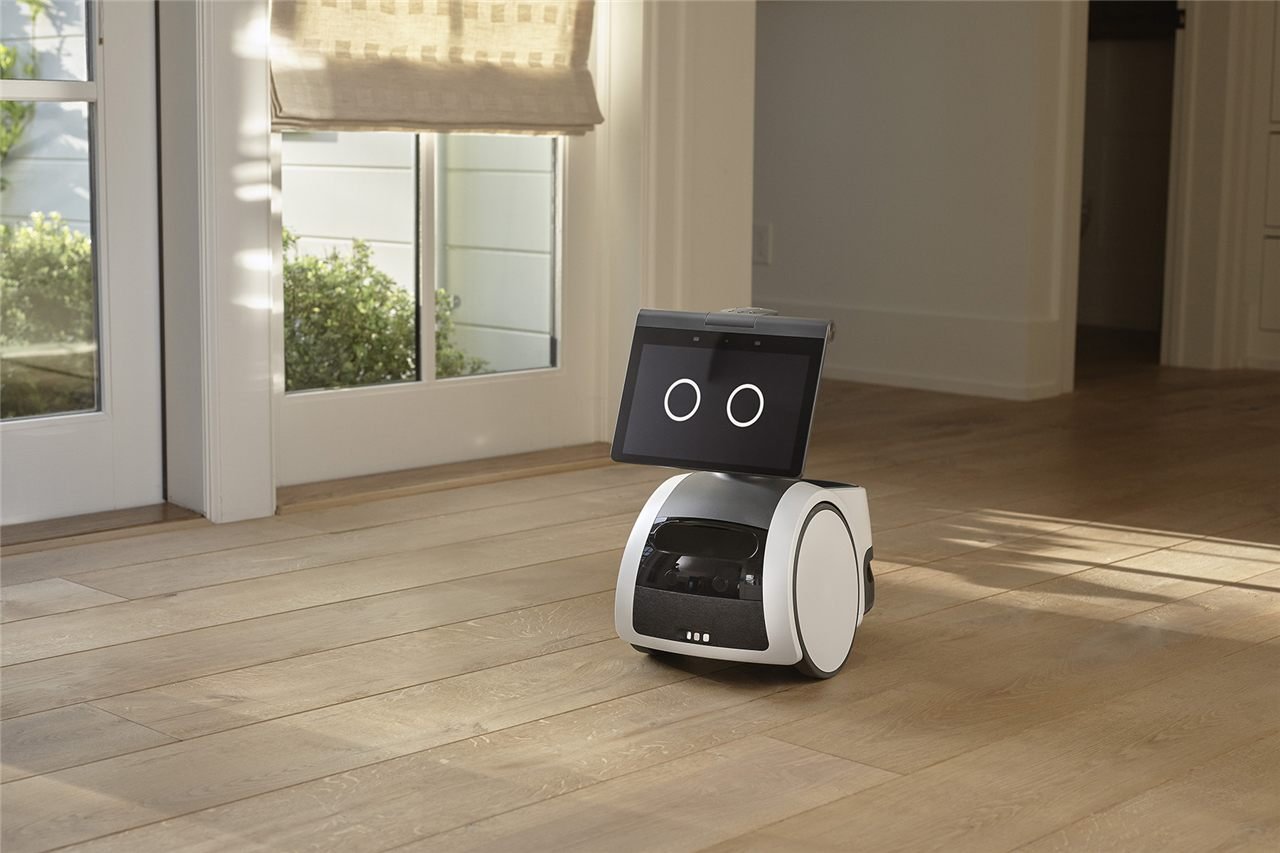
Amazon is putting together a new team to build a robot for people’s homes, CNBC reported Sunday. The effort comes nearly five years after the company launched Astro, a home robot that never reached more than a few thousand customers. Job listings reviewed by CNBC describe a “new-to-world robot product” meant to move through “dynamic home environments” and work “alongside family members.” The project builds on Amazon’s purchase earlier this year of Fauna Robotics, a New York startup that makes a small humanoid robot called Sprout.
What happened
According to CNBC’s review of job posts and LinkedIn profiles, Amazon spent several months staffing the project. Earlier this year it moved much of the former Astro team onto it and brought in a roboticist from the Massachusetts Institute of Technology. The engineering listing that described the home-navigating product has since been taken down. Other postings are still live. A June ad said the team wanted to “create robots that are not just functional, but delightful.” An October listing for a user experience designer described the job as defining “what it feels like to live with a Fauna robot.” Amazon is also hiring a field support engineer to handle customer support and on-site repairs, which suggests it expects to put hardware in real homes.
The work sits inside a new unit called the Personal Robotics Group. Some of its staff came from Lab126, the Amazon research division behind the Kindle e-reader, the Echo smart speaker and the Fire TV. Lab126 also built the Fire Phone, one of the company’s best-known flops.
Brad Glasser, an Amazon spokesperson, told CNBC that the company bought Fauna because it is committed to solving the problems holding back personal robotics. He said there is a big gap between how robots perform in a lab and how they cope in a living room or a lobby. He also said lessons from Astro have carried over into Amazon’s other robotics projects.
The Fauna deal and Sprout
Bloomberg first reported the Fauna acquisition in late March, and Amazon confirmed it around March 25. Interesting Engineering and eWeek both reported that financial terms were not disclosed. Rob Cochran, Fauna’s chief executive, and co-founder Josh Merel started the company in 2024 after working as engineers at large tech firms including Meta and Google. About 50 employees joined Amazon, and the startup now runs as “Fauna Robotics, an Amazon company,” Cochran said. According to Interesting Engineering, Fauna had raised at least $30 million from investors including Kleiner Perkins and Lux Capital.
Sprout came out in January as a developer platform. It is a two-legged humanoid about 3.5 feet tall and roughly 50 pounds, and it costs around $50,000. It can walk, pick up light objects such as toy blocks, hold a conversation and give high fives. CNBC said it has mostly been used by developers and by commercial and academic researchers. Bloomberg reported at the time of the deal that Amazon had no plans to use the robots in its own operations and was still working out how a product might reach consumers.
Why Astro fell short
Jeff Bezos, then Amazon’s chief executive, told top device executives in 2017 to build a home robot. The result, Astro, was unveiled in 2021. It was essentially an Alexa-powered screen on wheels that could map a house, recognize faces and patrol as a mobile security camera. It cost more than $1,000 and stayed invite-only. A business version launched in 2023 was discontinued less than a year later. A former Astro employee told CNBC that the high price and limited features made it hard to sell. Some owners have also complained about customer service and the lack of support for Alexa+, Amazon’s newer AI assistant.
Ken Washington, Amazon’s former vice president of consumer robotics, who left in 2023, told CNBC that executives had discussed giving Astro an arm. He said he had pushed for a robot that walks on two legs, but leadership disagreed.
A crowded and well-funded field
Amazon has invested heavily in robots for more than a decade, mostly in its warehouses. It bought Kiva Systems for $775 million in 2012, and by 2025 it was running more than one million warehouse robots. Its attempt to buy iRobot, the maker of the Roomba vacuum, fell apart in 2024 after pushback from regulators. Andy Jassy, Amazon’s chief executive, wrote in his 2025 shareholder letter that AI and robotics are among the “biggest inflections of our lifetime.”
Rivals are crowding into humanoid and home robots, and so is investor money. CNBC cited PitchBook data showing that venture investment in robotics and “physical AI” reached $33.4 billion in the first half of 2026, more than the $28.7 billion invested in all of 2025.
Tesla, Figure, Boston Dynamics, Apptronik, Unitree and 1X are all building humanoid robots. Apple is reportedly developing several home robots, including a tabletop device. Colin Angle, iRobot’s co-founder and former chief executive, started a new company, Familiar Machines & Magic, in May.
Experts say homes remain a hard place for robots to work. Jeff Burnstein, president of the Association for Advancing Automation, an industry trade group, told CNBC that houses are far more difficult than factories because of children, pets and stairs. Angle said robotics tools have improved dramatically in the past two years and described the technology inside Astro as primitive by comparison.
Amazon has not said when, or whether, a new home robot will go on sale. It also has not said whether the product will be based on Sprout’s humanoid design.