Tesla Launches Robotaxi Service in San Antonio, Its Largest Zone Yet
Tesla began offering robotaxi rides in San Antonio on Monday, adding another Texas city and its largest advertised service area so far.
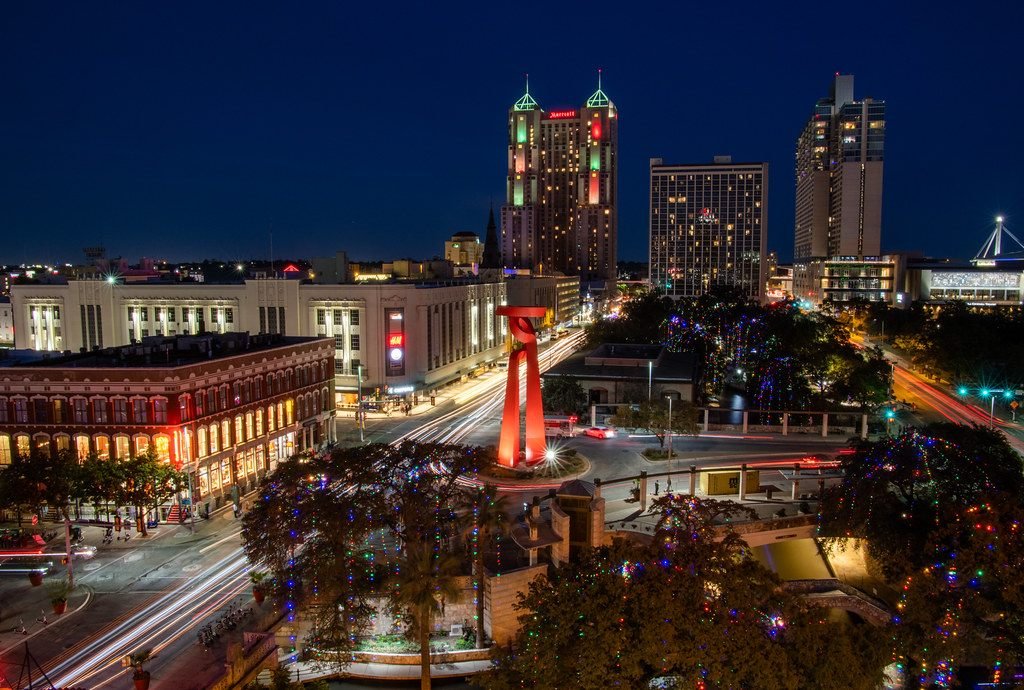
Tesla began offering robotaxi rides in San Antonio early Monday, adding another Texas city to its autonomous ride-hailing network. The company announced the launch in a short post on X, the social media platform, saying rides would be available starting at 5 a.m. local time. According to the Tesla-focused news site Not a Tesla App, the San Antonio service area covers about 275 square miles, which would make it the largest zone Tesla has opened at launch.
What happened
Tesla’s official robotaxi account posted shortly after midnight that the service would be “available in San Antonio starting tomorrow, 5am,” Not a Tesla App reported. Beyond that, the company said very little. TechCrunch noted that Tesla did not disclose operating hours or say which vehicles would be used. It also did not say whether human safety monitors would ride along, as they did when the service first started.
Outlets disagree on some details. Not a Tesla App described San Antonio as Tesla’s eighth “unsupervised” robotaxi city and said the launch uses Model Y vehicles. TechCrunch said Tesla had not confirmed whether the fleet would be Model Y crossovers or the Cybercab, the company’s two-seat vehicle built without a steering wheel or pedals. TechCrunch also said it was unclear whether safety staff would be on board.
Not a Tesla App said the service area covers all of downtown and nearly everything inside Loop 410, the city’s inner highway ring. It said the zone stretches north to Loop 1604 between Interstate 10 and US 281, and extends past State Highway 151 to the west and beyond Interstate 35 to the east.
Why it matters
San Antonio is one of the largest cities in the US. The launch adds to a footprint that has grown quickly over the past year as Tesla tries to show that its approach to self-driving can work at scale. That approach relies on cameras and end-to-end artificial intelligence rather than the lidar sensors and detailed maps used by rivals.
Advertised zone sizes may overstate how much ground the service really covers. Not a Tesla App pointed to a recent analysis that found Tesla’s actual pickup and drop-off areas in Texas were 22% to 41% smaller than advertised, though they still reached most residents.
Fleets also remain small outside Austin. TechCrunch, citing Texas registration data and the independent Robotaxi Tracker site, reported that Austin has more than 400 autonomous vehicles registered, while other cities have anywhere from a handful to a few dozen. Fort Worth has 24 and Miami has five. Based on Tesla’s earlier launches, TechCrunch said it expects San Antonio to start with a limited number of cars and expand slowly. The outlet also reported in July that Tesla’s own figures showed its robotaxis carried paying riders for fewer miles in the second quarter than in the first.
Background
Tesla began its robotaxi service in Austin in June 2025 with human safety operators on board. It removed those monitors in Austin in January 2026, TechCrunch reported, and has since expanded to Dallas, Houston, Fort Worth, Miami and Orlando. Not a Tesla App also lists Tampa. Fort Worth went live just one week before San Antonio, on Nov. 2. In the San Francisco Bay Area, Tesla runs a ride-hailing service with human drivers behind the wheel, because it does not hold the permits needed for driverless rides in California.
The San Antonio launch had been in the works for months. In July, the city’s Zoning Commission voted 8-2 to let Tesla charge and store robotaxis at a parking lot on Josephine Street in the Tobin Hill neighborhood, the San Antonio Report said. City staff had recommended against the change. Commissioner Melissa Loseff opposed it, saying, “I don’t think we need these in our city.” Commission chair Kin Yan Hui voted in favor but said the city’s development code should be updated as more autonomous vehicles arrive.
What comes next
Tesla faces direct competition in San Antonio from Waymo, the self-driving unit of Google parent Alphabet. Waymo also operates in Austin, Dallas and Houston. Waymo suspended San Antonio passenger service in April after flash flooding swept away one of its vehicles, according to the San Antonio Report. TechCrunch said Waymo recently resumed service after a pause of about five months.
On its third-quarter earnings call, Tesla named Las Vegas, Phoenix and Jacksonville, along with San Antonio, as its next robotaxi markets, Not a Tesla App reported. Those three have not yet launched. The site also said Cybercab rides are set to begin in Dallas this month, the vehicle’s first market outside Austin.