Ford Ships First US-Made Battery Cells Built With CATL Technology
Ford has begun shipping lower-cost LFP battery cells from its Michigan plant, using CATL-licensed technology that has drawn criticism in Washington.
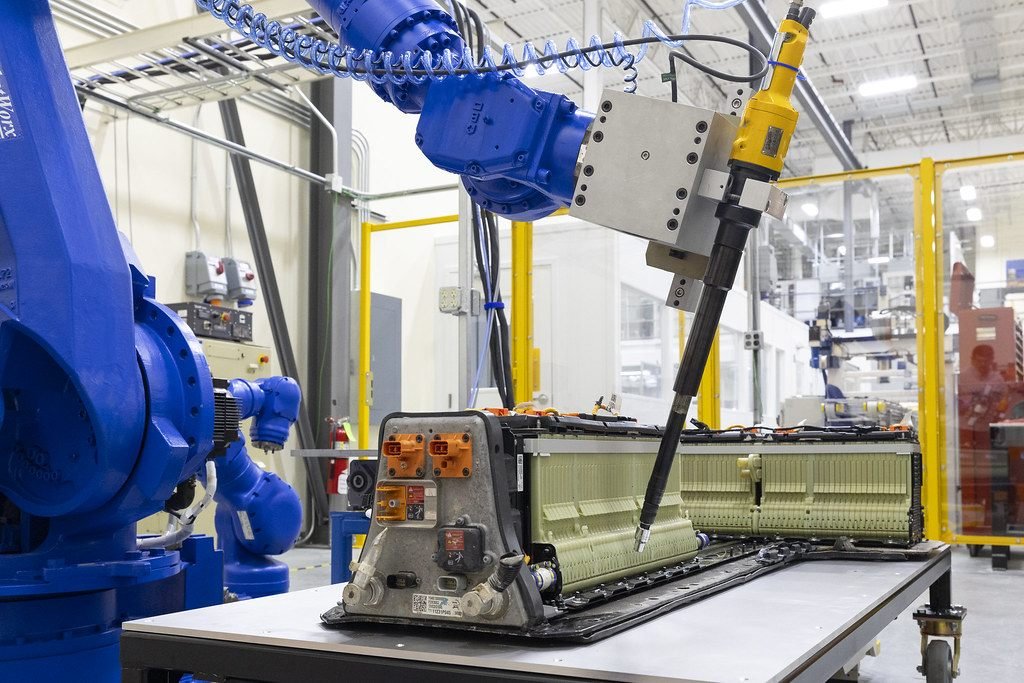
Ford Motor Co. has started making and shipping battery cells at its new plant in Marshall, Michigan, using technology licensed from Chinese battery giant CATL, the automaker said Wednesday. The milestone moves forward Ford’s plan for a cheaper electric pickup. It also keeps the company at the center of a political fight over Chinese involvement in American manufacturing.
Cell production at the roughly $3 billion facility began last month, CNBC reported, and the first cells are now leaving the plant. According to Reuters, they are headed to Ford’s assembly plant in Louisville, Kentucky, where they will power prototypes of the Fathom, a midsize electric truck.
What happened
The plant, which Ford calls BlueOval Battery Park Michigan, makes prismatic cells using lithium iron phosphate (LFP) chemistry. That type of battery avoids nickel and cobalt. It generally costs less than nickel-based batteries and is considered more durable, and a growing number of automakers are adopting it.
Ford says the highly automated, roughly 2-million-square-foot site can turn out 40 cells per minute. CNBC said that works out to about 20 gigawatt-hours a year of capacity, to be shared between electric vehicles and Ford’s energy storage business. That is a smaller target than the company once had: CNBC reported that earlier plans called for up to 40 gigawatt-hours a year before Ford and much of the auto industry scaled back their EV ambitions. Ford said the building has room to add capacity if demand calls for it.
The plant is still early in the process of certifying its manufacturing steps, and Ford expects to ramp up cell output in 2027, according to CNBC. The Fathom is expected to launch in the fourth quarter of that year.
Why the CATL deal matters
Contemporary Amperex Technology Co. Ltd., known as CATL, is the world’s largest maker of EV batteries. Rather than forming a joint venture, Ford licensed CATL’s technology and kept full ownership and operational control of the Michigan factory. CBT News, an auto-industry outlet, reported in June that CATL employees help with training and manufacturing know-how.
Alan Clarke, Ford’s vice president of advanced development projects, said licensing from CATL is the fastest way for Ford to build affordable EVs in the United States. Reuters quoted him as saying that “CATL being the biggest in the world” makes it the best partner for learning LFP production. CNBC noted that LFP chemistry was invented in the United States but has been commercialized mostly in China.
The arrangement is central to Ford’s push for a lower-cost EV lineup. Ford CEO Jim Farley has said the Fathom, the first vehicle on the company’s new Universal Electric Vehicle platform, can compete with Tesla and Chinese automakers.
Political scrutiny
The partnership has drawn criticism from some members of Congress and from the Trump administration. In September, Transportation Secretary Sean Duffy sent Farley a letter saying his department was “deeply alarmed” by Ford’s reliance on CATL-licensed technology at the Marshall plant, Reuters reported. CNBC said the letter expressed “profound concern” about Ford’s ties to Chinese companies.
Ford pushed back hard. It called the letter a “wrongheaded attempt to capture headlines” and said it was building batteries in the United States while other automakers still import them from China, according to Reuters. CNBC reported that the White House followed up the next day with praise for Ford’s domestic jobs and manufacturing. Ford, the largest producer of US-built vehicles, has long emphasized its American roots.
One open question is whether the plant qualifies for federal support. A Ford spokesperson told Reuters the company still expects to be eligible for a federal tax credit for battery manufacturing. That credit has restrictions on Chinese involvement, which is why lawmakers have watched the deal closely.
The timing is sensitive. CNBC noted that the announcement came as US scrutiny of American companies’ Chinese ties was growing and as President Donald Trump was meeting this week with Chinese leader Xi Jinping and Russian President Vladimir Putin.
What comes next
The Marshall site is smaller than originally planned in more than one way. CBT News reported in June that it employed more than 500 workers, with plans to reach 800 by the end of 2026 and about 1,700 over time. The plant had received more than 11,500 job applications.
Over the coming year, Ford will need to show that it can:
- certify its production processes and reach steady, high-volume output in 2027;
- deliver cells on schedule for a Fathom launch in late 2027;
- keep federal tax-credit eligibility despite pressure from Washington over CATL.
How well Ford handles those tests could decide whether licensing Chinese battery technology catches on with US automakers looking for cheaper EVs, or becomes a political liability.