Google picks Blue Origin to launch AI satellites in 2029
Google will use Blue Origin's New Glenn rocket to launch Project Suncatcher AI compute satellites, targeting the first quarter of 2029.
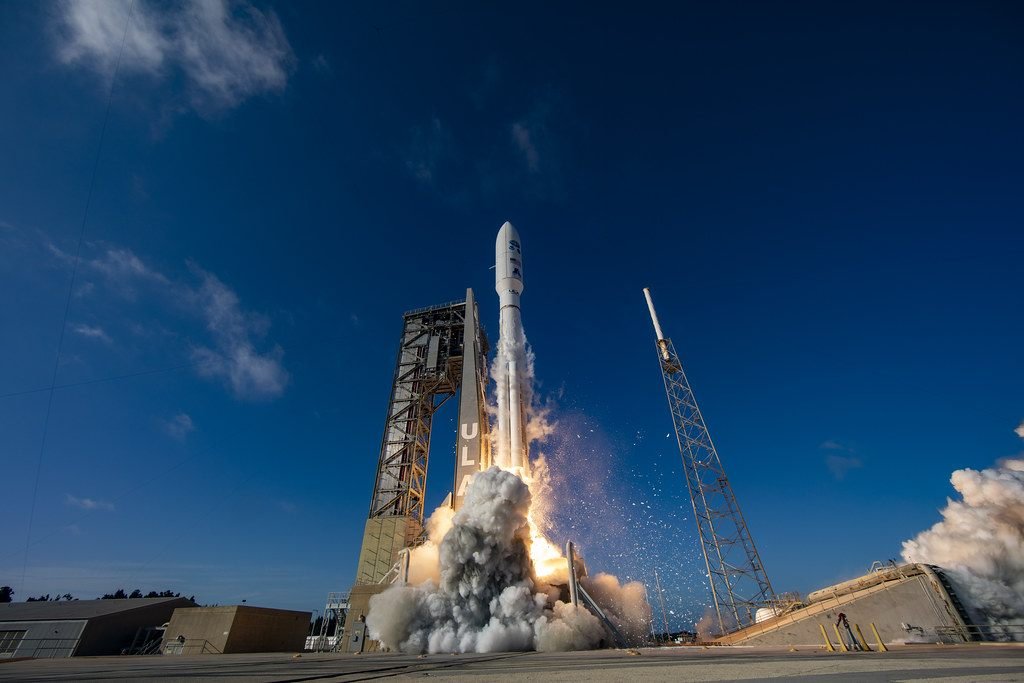
Google has partnered with Jeff Bezos’ space company Blue Origin to launch satellites that carry its AI chips, with the mission targeted for the first quarter of 2029. The companies announced the deal on Thursday, according to The Verge and a post on Google’s own research blog.
What happened
Blue Origin’s New Glenn, a heavy-lift rocket, will carry satellites equipped with Google’s Tensor Processing Units (TPUs), the company’s custom chips for machine learning, The Verge reported. Travis Beals, senior director of Paradigms of Intelligence at Google, wrote in the company’s blog post that the launch is the first heavy-lift mission for Project Suncatcher.
Google describes Project Suncatcher as a long-term “moonshot” to scale AI infrastructure in space by using the abundant solar power available in orbit. According to Google’s post, each satellite will have roughly the computing capacity of one data center rack. The New Glenn will place them in a sun-synchronous orbit, a path that keeps a satellite in a consistent relationship with the sun as it circles Earth, which suits solar-powered spacecraft.
Google called the launch a “crucial milestone” on its long-term roadmap and said it builds on existing work with other satellite and launch partners. The tech outlet Crypto Briefing described the arrangement as a launch services agreement and reported that it is Google’s first substantial commitment to heavy-lift launch capacity for the project, which had until now been mainly a research effort.
Why it matters
Project Suncatcher was introduced by Google in November 2025 as a research effort exploring constellations of solar-powered satellites linked by optical connections and carrying TPUs. Its earlier published roadmap included a learning mission with Planet, a satellite imaging company, to launch two prototype satellites by early 2027.
Booking a dedicated New Glenn launch signals that Google is moving from small test flights toward larger hardware. It also gives Blue Origin a high-profile commercial customer for a rocket that is still building its flight record. The deal comes as major technology companies look for new ways to power the energy-hungry data centers that run AI systems.
Crypto Briefing reported that the main technical challenges for orbital computing include removing heat without air and maintaining communications between satellites. Google’s blog post, as summarized here, did not detail how those problems will be solved.
What is not yet known
The Q1 2029 date is a target, not a guaranteed launch date, and schedules for new rockets and unproven spacecraft can change. Based on the sources reviewed, Google has not said how many satellites the New Glenn mission will carry or what the launch will cost. It also has not given a timeline for a fully operational constellation beyond the 2029 launch, Crypto Briefing reported.
It also remains to be seen whether computing in orbit can compete economically with data centers on the ground. Critics of the concept have noted that many aspects of Suncatcher rest on theoretical modeling rather than field validation, though Google has said early radiation tests of its TPUs gave promising results.
What comes next
Google and Blue Origin are expected to share more technical and schedule details as the mission approaches. Before the 2029 launch, Google’s earlier prototype missions with partners are intended to test how its chips and satellite designs hold up in orbit.