Gottheimer, a Key Democrat on AI, Disclosed New Chip Stock Purchases
Rep. Josh Gottheimer, who helps shape Democrats' AI agenda, disclosed new chip-related stock buys months after voting for a congressional trading ban.
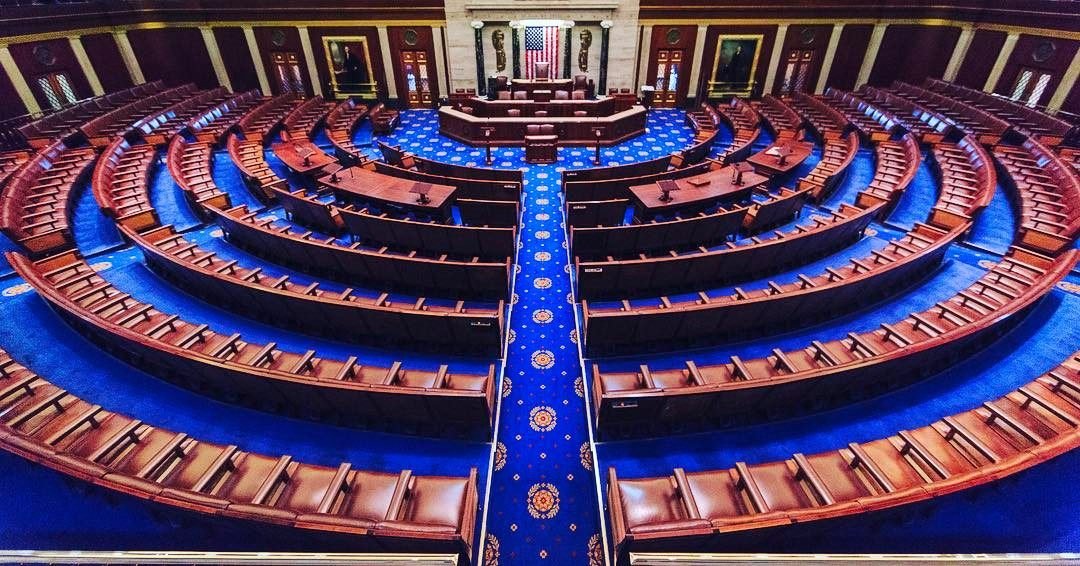
Rep. Josh Gottheimer, a New Jersey Democrat who is helping write his party’s plans for regulating artificial intelligence, disclosed new purchases of semiconductor-related stocks in October, months after he voted for a bill that would bar members of Congress from buying individual shares, CNBC reported on Saturday. The filings come as Democrats prepare to take control of Congress in January with new power to oversee and investigate the AI industry.
CNBC noted that there is no evidence of wrongdoing. Gottheimer’s office said an outside manager has controlled his investments since before he took office.
What the filings show
According to CNBC, Gottheimer’s latest disclosures include a purchase of Benchmark Electronics, an electronics manufacturer, on Oct. 12 valued at between $1,001 and $15,000, and a purchase of Applied Materials, a maker of chipmaking equipment, on Oct. 26 worth up to $15,000. The Applied Materials shares were bought in a Morgan Stanley account he holds jointly. Congressional disclosure rules require lawmakers to report trades in broad dollar ranges rather than exact amounts.
The network said the filings also listed three earlier purchases of Advanced Micro Devices (AMD), the chip designer, and separately disclosed an Applied Materials purchase in August followed by a sale in September. The five trades CNBC highlighted totaled between $5,005 and $75,000.
The October trades were not the first of their kind this year. Finbold, a financial news site, reported in June that Gottheimer had disclosed four purchases of AI chip-related stocks, including AMD, Micron Technology, Analog Devices and Fabrinet, made between May 1 and May 21. Each fell in the $1,001 to $15,000 range, according to that report.
The trades are small relative to the household’s overall wealth. CNBC reported that Gottheimer, who files jointly with his wife, Marla Tusk, general counsel at a political consulting firm, disclosed household assets of between $15.1 million and $59 million, including as much as $44.5 million in stocks. Citing Follow the Filings, a service that tracks congressional disclosures, CNBC said the household has made more than 1,100 securities transactions over three years.
The trading ban vote
In July, Gottheimer was one of 13 Democrats who joined all Republicans in passing the Stop Insider Trading Act, which cleared the House 232-198, CBS News reported. The bill, introduced by Rep. Bryan Steil, a Wisconsin Republican who chairs the House Administration Committee, would bar lawmakers, their spouses and dependent children from buying publicly traded stocks and would require advance notice of planned sales.
Republicans also attached an unrelated requirement for photo identification to vote in federal elections, which drew opposition from many Democrats. Others objected that the bill did not go far enough. CBS News reported that it would let members keep existing holdings and would not apply to the president or administration officials. Rep. Pramila Jayapal, a Washington Democrat, called it “a fake stock trading ban.” The measure has not become law.
CNBC also noted that roughly four years before that vote, Gottheimer supported legislation requiring lawmakers to place their investments in blind trusts, and pledged to set one up himself.
Gottheimer’s response
Haraden Bottomley, a spokesman for Gottheimer, told CNBC that the congressman handed control of his investments to a third party with “full investment discretion” before taking office in 2017. Bottomley said Gottheimer is still waiting for congressional approval of a blind trust and has set up an independent trust in the meantime.
Why it matters
Gottheimer, a former Microsoft executive, sits on a House Financial Services subcommittee that oversees AI in the financial sector, has introduced AI legislation and co-chairs a commission developing Democrats’ broader AI agenda, according to CNBC. That puts him in a position to influence rules affecting the companies whose shares appear in his filings.
The timing is sensitive. After the midterm elections, Democrats are set to gain the power to hold hearings and write legislation on AI. Reps. Maxine Waters of California and Greg Casar of Texas have introduced a resolution opposing taxpayer bailouts for AI companies, part of which was referred to Gottheimer’s committee, CNBC reported. Casar has called for AI executives to testify under oath, and other Democrats want to restrict or pause new data center construction.
Chip stocks have also been volatile. CNBC reported that the Nasdaq Composite fell 5.5% on Thursday, with Nvidia down more than 9% and AMD down about 17%. Benchmark Electronics dropped nearly 17% over Wednesday and Thursday to close at $59.34, about 25% below its price on the day of Gottheimer’s October purchase, before recovering somewhat on Friday.
What comes next
The question of whether lawmakers should own individual stocks is likely to resurface when the new Congress convenes. Competing proposals, including bipartisan bills that would bar members from owning individual stocks at all, remain stalled, according to CBS News. Meanwhile, scrutiny of lawmakers’ holdings in AI and chip companies may grow as Democrats move to regulate the sector.