Spain’s Hernández de Cos Picked to Succeed Lagarde as ECB President
Euro zone leaders backed former Bank of Spain chief Pablo Hernández de Cos to lead the ECB as inflation runs well above target.

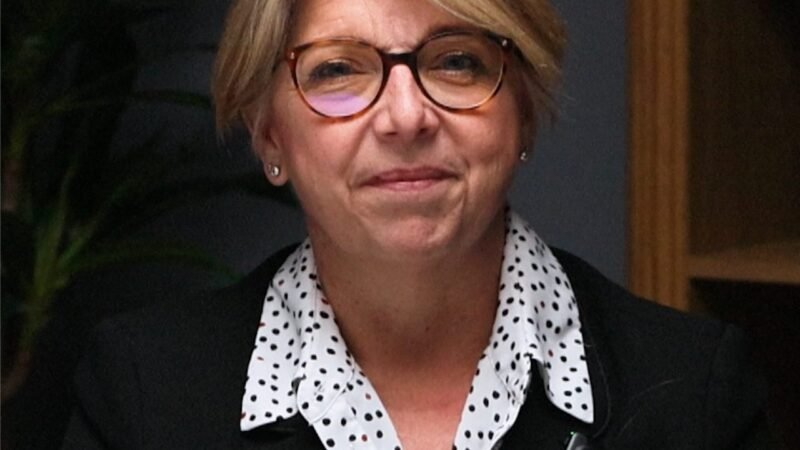
European leaders have chosen Pablo Hernández de Cos, the former governor of the Bank of Spain, to be the next president of the European Central Bank (ECB), the institution that sets interest rates for the 20-plus countries that use the euro. He would succeed Christine Lagarde, the ECB’s current president, when she steps down in February, and would be the first Spaniard to run the bank. CNBC, citing multiple media reports, said he won the backing of euro zone leaders at a European Council summit on Thursday, while The Wall Street Journal reported that he beat out Klaas Knot, the Dutch central banker who was the only other contender.
What happened
The decision caps months of maneuvering among the euro area’s largest economies over who would lead one of the world’s most powerful central banks. Knot, the former president of De Nederlandsche Bank, the Dutch central bank, was described by the Journal as the more conservative of the two candidates. CNBC reported that the Netherlands made a final push for Knot at the summit before leaders settled on Hernández de Cos.
The appointment is not yet formally complete. According to CNBC, it still requires consultation with the European Parliament and the ECB’s Governing Council, the body of national central bank governors and executive board members that sets monetary policy, though neither has the power to veto the choice. The Journal reported that EU leaders are expected to give their final seal of approval in December. The ECB presidency carries a single eight-year term, CNBC noted.
Lagarde, a former French finance minister who became the first woman to head the ECB, has said she will leave on Feb. 7, 2027, according to CNBC.
Who is Hernández de Cos
Hernández de Cos, 55, is a career central banker. He joined the Bank of Spain as a researcher in the 1990s and rose to become its governor, serving from 2018 to June 2024, CNBC reported. From 2019 to 2024 he also chaired the Basel Committee on Banking Supervision, the global forum that writes capital rules for banks. Since July 2025 he has been general manager of the Bank for International Settlements, the Switzerland-based organization often described as the central bank for central banks.
His policy record mixes support for easy money with an emphasis on discipline. CNBC said analysts regard him as moderately dovish, meaning more inclined to favor lower rates, but also pragmatic: he backed negative interest rates and the stimulus launched in 2019 under former ECB President Mario Draghi, yet supported strong rate hikes during the 2022 energy shock. The Journal noted that while he supported bond-buying programs that helped heavily indebted countries, he has repeatedly stressed the need for fiscal discipline. Asked in 2024 whether he was a hawk or a dove, he called himself an “owl,” CNBC reported.
Christian Kopf, head of fixed income and foreign exchange at the German asset manager Union Investment, told CNBC that the Spaniard’s views “may well be regime-dependent,” adding that choosing a career technocrat would signal that Europe will not waver on price stability.
Why it matters for households
The ECB’s decisions ripple far beyond Europe, influencing the euro’s value against the dollar, borrowing costs for European governments and companies, and global financial markets. Hernández de Cos would take over at a difficult moment. Euro area inflation rose to 4% in October, its highest level in more than three years, driven mainly by energy costs as the Iran war pushes up oil and gas prices, CNBC reported. That is double the ECB’s 2% target, and Kopf said core inflation is expected to stay above the goal through 2029.
Growth is also weak. CNBC described France’s economy as contracting and Germany’s as stuttering. The Journal highlighted volatility in France’s bond market amid worries about mounting debt and political gridlock, and pointed out that Hernández de Cos would take office about two months before France votes to choose a successor to President Emmanuel Macron. Leading candidates Marine Le Pen and Jean-Luc Mélenchon have both been critical of the ECB.
Some investors see the choice as a sign the bank would act forcefully in a crisis. Mike Bell, head of market strategy at RBC BlueBay Asset Management, told the Journal that with Hernández de Cos at the helm, markets will expect him to “step in” if things get really bad.
What comes next
The presidency was part of a broader package of senior ECB posts negotiated among Germany, France, Italy, Spain and the Netherlands for seats on the bank’s six-member executive board. Both outlets reported that:
- Markus Brunnermeier, a German economist and Princeton University professor, is expected to become the ECB’s chief economist.
- Laurence Boone, a French economist, is set to take over the ECB’s markets operations portfolio.
Beyond inflation and growth, the incoming president will inherit long-running projects such as a digital euro and deeper integration of Europe’s capital markets, CNBC noted. The ECB’s latest Financial Stability Review, published this month, also warned about the region’s exposure to the U.S. economy and to vulnerabilities tied to artificial intelligence.