National Trust Members Vote to Seek a New Bank to Replace Barclays
National Trust members voted 53,256 to 4,094 to put the charity's banking out to tender, after campaigners objected to Barclays' fossil fuel financing.
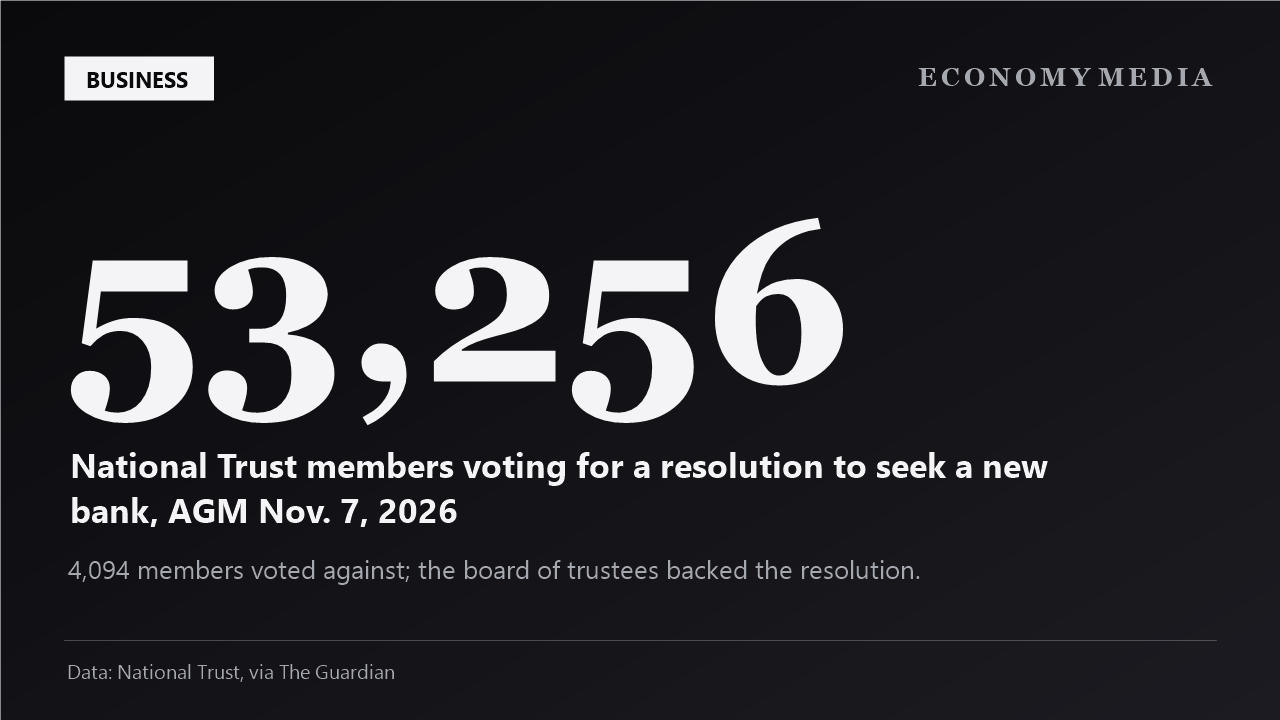
Members of the National Trust, the British conservation charity that looks after hundreds of historic houses and large areas of countryside and coastline, voted overwhelmingly on Saturday to start looking for a new bank. The move puts the charity’s long relationship with Barclays at risk after years of complaints from campaigners about the lender’s financing of fossil fuels. According to the Guardian, the resolution passed at the charity’s annual general meeting by 53,256 votes to 4,094, with the support of the board of trustees.
What happened
The resolution tells the Trust to begin a competitive tender for its banking arrangements. For the first time, any bank that bids will have to show a positive commitment to protecting biodiversity and tackling the climate crisis. The Telegraph reported before the meeting that the motion asked the charity to find a new bank “as soon as practicable” and in a way that fits its core values. It accused Barclays, the Trust’s main banking supplier, of funding fracking and methane gas pipelines in North America.
The vote does not end the relationship right away. Sandy Nairne, deputy chair of the Trust’s board of trustees, said the result “is not binding on the trustees,” the Guardian reported. He said the board would consider the outcome, along with the discussion at the meeting, when it makes future decisions. People familiar with the plans told the newspaper that the tender is not expected to start for at least a year.
The trustees also put limits on what members can expect. In its statement supporting the resolution, the board said the tender “must remain open to the major UK clearing banks.” It argued that no specialist ethical bank currently has the mix of cash handling, lending capacity, payments infrastructure and operating scale that an organization of the Trust’s size needs. That means Barclays, or another large high-street lender, could still win the contract.
Why it matters
The National Trust is one of Britain’s largest membership organizations, and how it manages its money has become a recurring flashpoint. The Trust has repeatedly said that the climate emergency and the loss of nature are the biggest threats to the places it protects. Supporters of the resolution argued that banking with Barclays clashes with the National Trust Act 1907, the law that sets out the charity’s duty to preserve places of historic interest and natural beauty for the nation.
Drew James, one of the people who proposed the resolution and a member of Christian Climate Action, a faith-based climate protest group, said the result “highlights a profound shift in NGO accountability,” according to the Guardian. He argued that it made little sense for the charity to hold its own bank to a lower standard than its suppliers and investments. The Guardian also reported that campaigners pointed to a wildfire in July at Dunwich Heath in Suffolk, a Trust site, that destroyed 104 hectares (256 acres) of ancient heathland. They estimate it will take 25 years to recover.
The board’s backing was a change from earlier years. A similar push failed in 2023, the Telegraph noted, and campaigners went on to stage protests at Trust properties in 2024. This time the trustees said they supported the resolution because they saw it as “a proportionate response” to an issue that many members care about. They added that the supporting statement written by the motion’s backers did not necessarily reflect the Trust’s own view.
The other side
Barclays defended its record. “It is our privilege to support and bank the National Trust,” a spokesperson said, according to both newspapers. The bank said it had facilitated more than $300 billion of sustainable and transition finance over the past three years, including clean energy projects in Britain and investment in climate technology.
Campaigners challenge that figure. The Guardian reported that they point to Barclays’ latest annual report, which says companies in the fossil fuel sector can access that financing as long as the money is not directly earmarked for oil and gas activity.
Some members opposed the motion altogether. Restore Trust, a group of National Trust members that has often criticized the charity’s leadership, said the vote showed the organization drifting away from its core mission. Its chair, Cornelia van der Poll, called the vote “a distraction from the National Trust’s charitable purpose,” both outlets reported. Neil Record, a Trust member and former Bank of England economist, told the Telegraph the charity was abusing its “national treasure” status to push ideological positions and had no business taking a stance on the oil industry.
What comes next
The Trust’s trustees now have to decide how and when to run the tender. Several questions remain open:
- When the formal tender will start, with insiders suggesting it may be at least a year away.
- How the new requirement on climate and biodiversity will be defined and measured.
- Whether Barclays will bid to keep the account, and whether it could meet the new standard.
The vote is also likely to add to a wider debate in Britain about whether charities and other nonprofits should apply their environmental goals to the banks and suppliers they use.