NYSE Owner’s Venture With OKX Sets Nov. 23 Start for 24/7 Token Stocks
OKXICE, the ICE-OKX joint venture, will open round-the-clock trading in tokenized U.S. stocks on Nov. 23, though 67 companies have opted out.
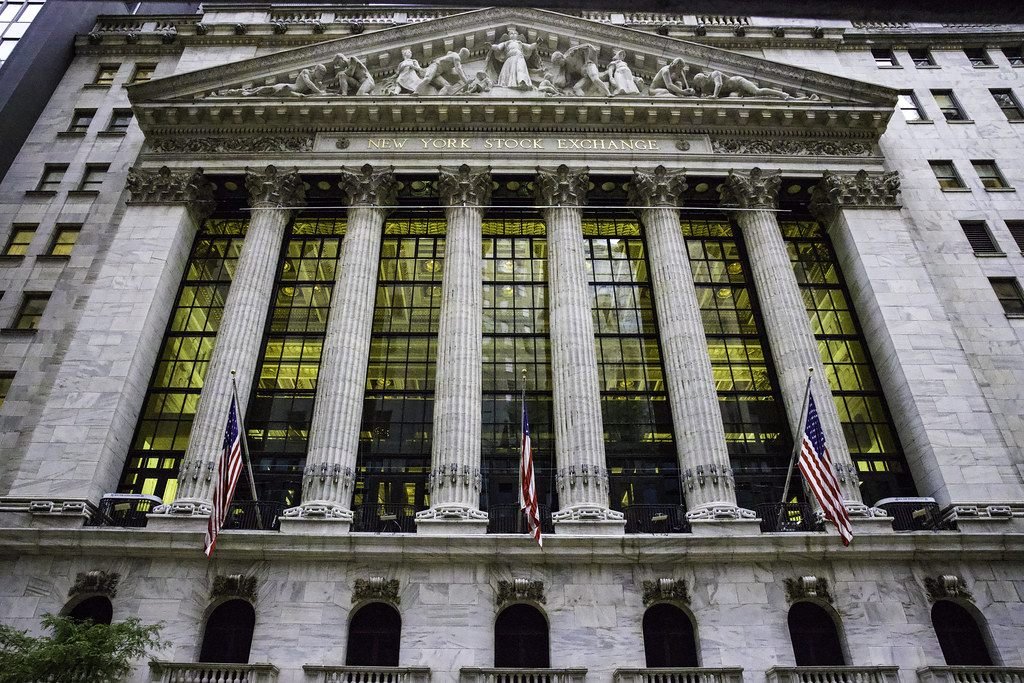
A joint venture between Intercontinental Exchange, the parent company of the New York Stock Exchange, and the cryptocurrency exchange OKX will begin round-the-clock trading of tokenized U.S. securities on Nov. 23. It will be one of the first venues to test a new federal framework that lets stocks trade on blockchain networks outside traditional exchange hours. The two companies announced the launch date on Wednesday, Nov. 11, and said more than 70 assets have been confirmed for the platform. A large group of well-known companies has declined to take part.
What happened
The venture, called OKXICE, will run what it calls a Tokenized Securities Venue. A tokenized security is a digital token recorded on a blockchain that represents ownership of a conventional asset, here shares of stock or exchange-traded funds. According to CoinDesk, the confirmed lineup includes shares of crypto exchange Coinbase Global, stablecoin issuer Circle Internet and bitcoin-holding company Strategy, including Strategy’s common and preferred stock. Also on the list are trading app Robinhood, digital asset custodian BitGo, tokenization firm Securitize and mortgage lender Better.com.
The biggest single block of listings comes from Direxion, a fund manager that CoinDesk said oversees about $70 billion in assets. It is supplying 59 exchange-traded funds. A spokesperson told CoinDesk that not all of the confirmed assets will be available on the first day of trading.
Access will initially be limited to eligible U.S.-based OKX customers who have passed identity checks and completed onboarding, The Block reported. Customers will also need an OKX product called a CeDeFi Wallet. The tokens will sit in customers’ self-custodial wallets, and the venture says it will not hold customer assets or private keys.
The mechanics differ from a conventional stock exchange. CoinDesk and Decrypt both reported that trades will run through liquidity pools on Uniswap v4, a widely used decentralized trading protocol, deployed on X Layer, OKX’s own network built on top of Ethereum. Prices will be set by automated market makers, which are software-driven pools, rather than by a traditional order book that matches buyers with sellers. Securitize is providing the tokenization infrastructure. Decrypt reported that each token is backed one-for-one by a real U.S. share and carries dividends, voting rights and other shareholder benefits.
Andrew Cuomo, the former New York governor who co-chairs OKXICE, said in comments reported by CoinDesk and Decrypt that the Securities and Exchange Commission “has created a real opening for American markets to lead the next era of finance.” Phong Le, chief executive of Strategy, described tokenizing the company’s preferred shares on the venue as “a natural next step,” according to Decrypt.
Why it matters
The launch is an early test of the SEC’s so-called innovation exemption, a five-year experimental framework introduced in September. It allows tokenized securities to trade on blockchain-based venues without those venues registering as traditional exchanges. Decrypt reported that the SEC unveiled the exemption after the Clarity Act, a proposed law on crypto market structure, stalled in the Senate. CoinDesk said OKXICE will be the second venue to launch under the exemption, after a platform built on the Canton Network, a blockchain aimed at financial institutions.
Having the owner of the NYSE involved gives the project unusual weight. Until now, tokenized stocks have mostly been offered by crypto-native firms, often to customers outside the United States.
The opt-outs
The framework lets companies keep third-party tokenized versions of their stock off a venue by objecting within 30 calendar days of notice. Many have used that option. A public notice dated Nov. 5 showed that 67 companies had objected, The Block reported, naming Meta Platforms, Home Depot, Netflix, Tesla and Costco among them. CoinDesk listed Apple, Microsoft, Nvidia, Amazon and JPMorgan Chase among those that opted out. By CoinDesk’s own count, 56 of the 62 companies in the venture’s original proposal, roughly 90%, objected.
The reasons vary. A spokesperson for Applied Optoelectronics, a maker of fiber-optic components, told the Wall Street Journal that the company was unsure how tokenization would affect its share price, liquidity and volatility, and worried that investors might misunderstand its role, according to The Block.
Rival exchange operator Nasdaq has also raised concerns, even though it is working on its own tokenization effort with crypto exchange Kraken. John Zecca, Nasdaq’s chief legal and regulatory officer, wrote in a Barron’s opinion piece published Nov. 10 that Nasdaq plans to opt its own stock out of such venues, The Block reported. He warned that the exemption allows tokenized securities to trade outside the regulated market framework, which he said could fragment the market.
What comes next
Trading is set to begin on Nov. 23, with the asset list rolling out over time. How much trading the venue attracts, and whether more issuers join or keep opting out, will help show whether 24/7 blockchain-based stock trading can reach beyond a niche of crypto-linked companies. Other market infrastructure is moving in the same direction. Decrypt noted that the Depository Trust & Clearing Corporation, which handles settlement for most U.S. securities trades, launched its own tokenization service in late October, and that Morgan Stanley said it was among the first banks to use it.