SpaceX Catches Starship Upper Stage From Orbit for the First Time
Ship 42 returned to Starbase after 14 orbits and was caught by the tower's arms, though the Super Heavy booster was lost over the Gulf of Mexico.
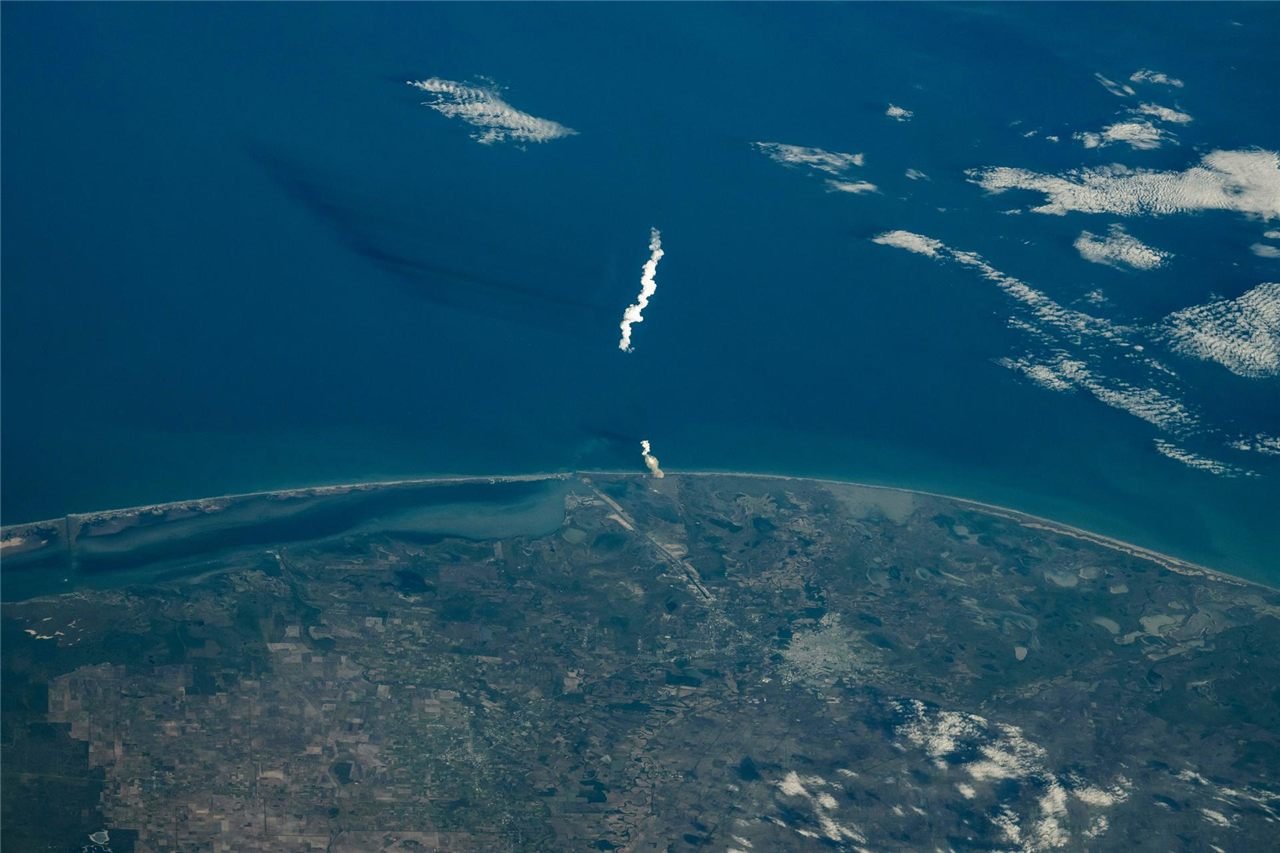
SpaceX caught the upper stage of its Starship rocket with the giant mechanical arms of its Texas launch tower on Saturday, the first time the company has brought the spacecraft back from orbit and snatched it out of the air. The vehicle, known as Ship 42, landed on the tower at the Starbase facility after circling Earth 14 times on the rocket’s 15th test flight, CNBC reported. The milestone came a day after the flight’s Super Heavy booster, the rocket’s first stage, failed to make its own planned return and was lost over the Gulf of Mexico.
What happened
Flight 15 lifted off from Pad 2 at Starbase on Friday evening, November 13, with a launch window that opened at 4:45 p.m. Central time, according to the SpaceX-focused news site Teslarati. It was the first time SpaceX had tried to recover both halves of the rocket by catching them with the tower, which the company nicknames Mechazilla, using a pair of arms known as chopsticks.
The booster portion of that plan fell apart within minutes. Dan Huot, a SpaceX spokesperson, said the booster had initially been cleared for a catch but aborted itself late in its coast phase after detecting a guidance, navigation and control problem. In remarks reported by Teslarati, he said, “We were initially go for a catch,” before the abort. In a separate account, Huot said the system “was doing what it was supposed to do” after determining the booster was not where it needed to be for a catch.
Reports differ slightly on the booster’s final moments. CNBC said it diverted toward an offshore splashdown and exploded before reaching the water, while Teslarati reported that it hovered over the Gulf before its flight termination system was triggered and it fell into the sea. Elon Musk, the chief executive of SpaceX, said the booster ran short of propellant because its engines slightly underperformed. He said the company plans more consistent Raptor V3.2 engines and a software change to shut the engines down earlier, leaving enough fuel for the trip back.
The upper stage, meanwhile, continued into an orbit of roughly 275 kilometers and released 26 of SpaceX’s newest Starlink V3 internet satellites. Three of those satellites carried cameras to photograph the ship’s heat shield, and SpaceX said the images showed it was in good condition, allowing flight controllers to drop a backup plan for an overnight ocean splashdown, Teslarati reported. After about 22 and a half hours in space, Ship 42 fired its engines, descended and was caught by the tower on Saturday. Musk later posted a video on X, the social media platform he owns, showing himself inspecting the recovered vehicle.
Why it matters
Catching the upper stage is central to SpaceX’s goal of a fully and rapidly reusable rocket, one that can be inspected, refurbished and flown again much like an airliner rather than discarded after each launch. The company has caught Super Heavy boosters three times before, most recently in March 2025, but until Saturday it had never recovered the ship itself this way. Teslarati described it as the first time any company had returned an orbital rocket’s upper stage to its launch site and caught it.
The achievement carries commercial and government stakes:
- Starlink: CNBC noted that Starlink, the company’s satellite internet service and its current profit center, already has more than 11,000 satellites in low Earth orbit. SpaceX says one Starship can carry up to 60 of the larger V3 satellites.
- NASA’s Moon program: SpaceX is under contract to use Starship to ferry astronauts and cargo between lunar orbit and the Moon’s surface for NASA’s Artemis program. That plan depends on refueling ships in orbit through several tanker flights, which requires vehicles that can fly again quickly.
- Investors: Adam Jonas, an analyst at Morgan Stanley, wrote before the flight that a double catch would likely be a material positive for SpaceX stock, according to Teslarati.
Background
Flight 15 was a clear improvement on SpaceX’s September mission, which reached orbit but ended after about three hours with a splashdown in the Pacific Ocean, well short of its planned 10 hours, after some engines shut down, Teslarati reported. Before Friday’s launch, Musk had put the odds of catching the ship on the first attempt at “more likely than not.” As of Friday morning, the company was still awaiting approval from the Federal Aviation Administration for a license change covering the ship’s return path over land.
The flight also briefly affected air travel. CNBC reported that the Hawaii Department of Transportation temporarily paused some West Coast flights because of debris risk. That pause was separate from a rare nationwide ground stop the FAA issued on Friday over a telecommunications failure. Both orders have since been lifted.
What comes next
Musk said the loss of the booster would not delay the company’s plans. “This booster loss does not change our timeline to reach high volume, fully reusable Starship flights,” he said, as quoted by Teslarati. He has said he expects Starship to reach a weekly launch cadence in the first half of 2027, and on a recent earnings call he described eventually moving to twice-weekly flights.
NASA aims to return astronauts to the Moon around 2028 and has contracted both SpaceX and Blue Origin, the rocket company founded by Jeff Bezos, to build landers. Musk has also long promoted Starship as the vehicle that could one day carry people to Mars. No date for the next Starship flight had been announced as of Saturday.