Tesla to Wind Down Cybertruck Production in 2027 for Cybercab
Musk says Tesla will wind down Cybertruck output in Texas around mid-2027 to make room for its Cybercab robotaxi as sales lag far behind plan.
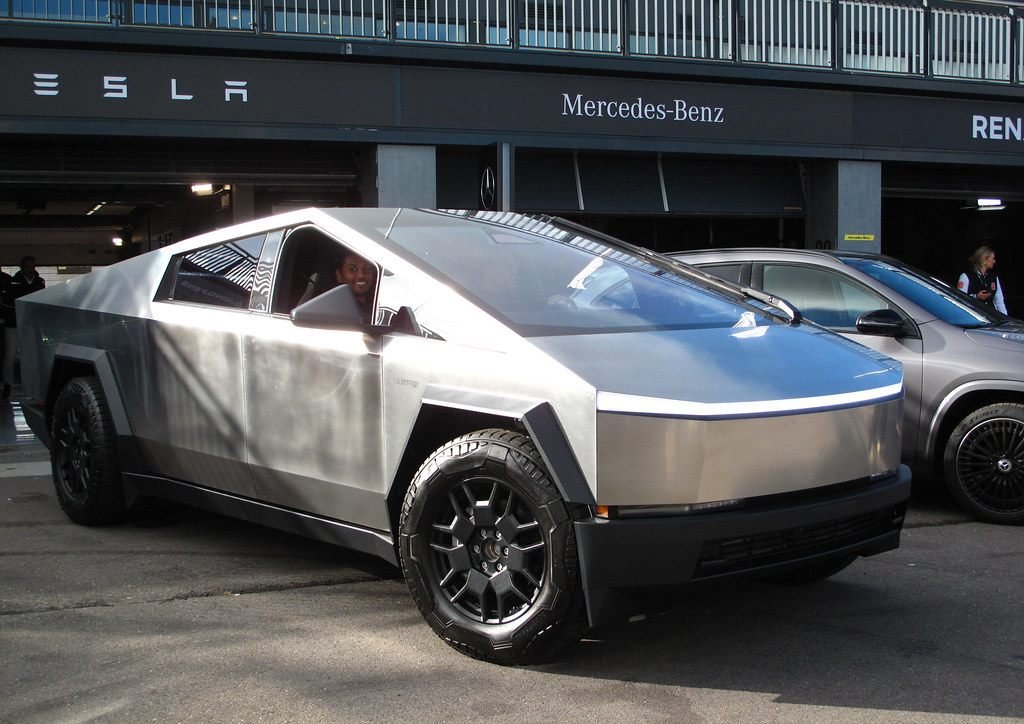
Tesla will wind down production of the Cybertruck around the middle of 2027, Elon Musk, the company’s chief executive, announced on Friday, ending the run of one of the most hyped and most polarizing vehicles of the electric-car era. In a short post on X, the social media platform he owns, Musk said the change at Gigafactory Texas, Tesla’s plant outside Austin, would make “room for increased Cybercab production,” referring to the company’s two-seat robotaxi.
The decision, reported by TechCrunch, the Associated Press and the electric-vehicle site Electrek, comes as sales of the angular stainless-steel pickup have fallen far short of the targets Musk once set for it.
What happened
Musk’s post said production “will be winding down” around mid-2027, according to the AP. Tesla has not said how long it will keep selling remaining inventory, or what the change means for parts and service for current owners, Electrek noted. It is also not entirely clear whether the model will be fully discontinued, although Musk agreed with an X user who described the news as the end of an era.
TechCrunch reported that the Cybertruck is the third product Tesla has dropped to free up resources for its artificial intelligence and robotics ambitions. Earlier this year the company ended production of the Model S sedan and Model X SUV and converted that factory space to build Optimus, its humanoid robot.
A truck that missed its targets
When Musk handed over the first Cybertrucks in late 2023, he predicted annual sales of roughly 250,000. Instead, Tesla has sold only tens of thousands in total over about three years. Electrek estimates that around 70,000 trucks have been delivered and that the program likely never generated positive cash flow.
Estimates of recent volumes vary because Tesla does not report Cybertruck deliveries separately; they are grouped under “Other Models” with the Model S, Model X and the Semi truck. Key figures from the coverage include:
- Kelley Blue Book, the car-pricing guide, estimated Tesla sold 20,237 Cybertrucks last year, about half the prior year’s total, and that sales through September fell another 28%, the AP reported.
- Tesla’s “Other Models” deliveries in the third quarter of 2026 were 8,295, down 48% from a year earlier. Electrek estimates 7,000 to 8,000 of those were Cybertrucks, a pace of about 30,000 a year, or roughly 12% of what the production line was planned for.
- Cox Automotive, an auto industry data firm, estimated quarterly sales fell from 14,416 in the third quarter of 2024 to 3,519 in the first quarter of 2026 and 3,744 in the second, according to Electrek.
Electrek also cited S&P Global Mobility data showing that SpaceX, Musk’s rocket company, bought 1,279 Cybertrucks in the fourth quarter of 2025, and that Musk-linked companies accounted for about 19% of US registrations that quarter.
Tesla tried to revive demand with cheaper versions. It introduced a rear-wheel-drive model in 2025 and withdrew it months later, then added a lower-cost dual-motor trim this summer. After a $5,000 price increase in August, the dual-motor version starts at $74,990, Electrek reported. Late last month Tesla also canceled Cybertruck sales in Australia and New Zealand.
Background: hype, broken glass and backlash
The Cybertruck was unveiled in 2019 in a presentation remembered for a stunt gone wrong: Franz von Holzhausen, Tesla’s head designer, threw a metal ball at the truck’s supposedly shatterproof windows, and they cracked. Tesla promised a starting price below $40,000 and up to 500 miles of range, but delivered neither, TechCrunch noted. The launch slipped by about two years, partly because of the COVID-19 pandemic, and the base price rose to around $60,000.
Politics also weighed on the brand. Musk became a major financial backer of Donald Trump in 2024 and in 2025 led the Department of Government Efficiency, or DOGE, a cost-cutting effort that fired thousands of federal workers. The AP reported that protesters demonstrated outside Tesla showrooms and that some vehicles and charging stations were vandalized or set on fire.
Spencer Penn, a former Tesla executive who now leads the software developer LightSource, told the AP that the truck was “a really controversial vehicle unveiled by a controversial individual,” adding that “some of these bets work and some of these bets don’t.”
What comes next
Tesla is shifting its Texas factory toward the Cybercab, a steering-wheel-free robotaxi. According to TechCrunch, Cybercabs have operated on Austin streets for about two months without major reported incidents, and Tesla plans to expand to Dallas later this month. Electrek counted 463 Cybercabs registered in Texas as of late October.
Fred Lambert, Electrek’s editor in chief, argued that weak demand, not floor space, explains the decision, writing that Musk is “betting the house on autonomy.” Whether that bet pays off will depend on how quickly Tesla can scale a robotaxi business that is still in its early stages.