Uber Eats Launches Zipline Drone Delivery in Houston Suburb
Uber Eats customers in Spring, Texas, can now get meals dropped by Zipline drones, the first step toward a goal of 1 million drone deliveries a day by 2029.
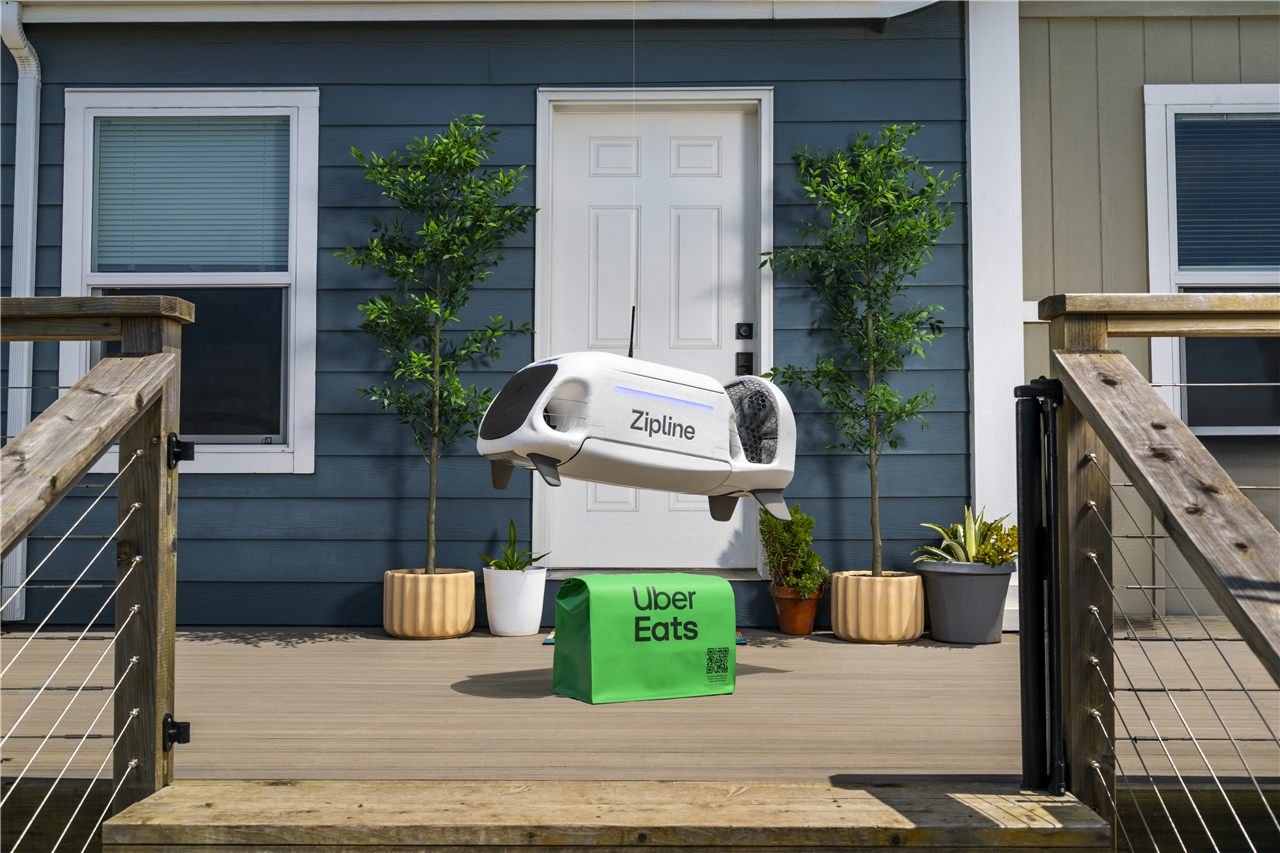
Uber Eats began delivering food by drone on Tuesday, launching a service with autonomous-aircraft company Zipline in Spring, Texas, a suburb north of Houston. Dallas is next, and the two companies plan to expand to dozens of other U.S. cities. The rollout is the first concrete step toward a target the companies set in August: 1 million drone deliveries a day by the end of 2029.
The launch puts Uber, the ride-hailing and delivery giant, directly into a fast-growing contest over who will control the last mile of food and retail delivery. Its main U.S. rival, DoorDash, already sends orders by drone in parts of Texas and North Carolina.
What happened
According to Engadget, Uber Eats users in the Spring area can now tap a dedicated drone icon on the app’s home page to see which restaurants offer the option. Early participants include the sandwich chain Jersey Mike’s and the chicken chain Zaxby’s, along with local restaurants. Drone delivery runs from 8 a.m. to 10 p.m. to start.
Customers choose a drop-off spot and can follow the aircraft’s position in real time. Uber said drone orders carry no extra fees and that customers will not be prompted to leave a tip, Engadget reported.
The service relies on Zipline’s home-delivery drone, known as Platform 2 or P2. Based on figures reported by Engadget and TechCrunch, the aircraft can:
- carry orders weighing up to 8 pounds;
- reach customers up to 10 miles from a restaurant;
- fly in rain and other bad weather at speeds of up to 70 mph;
- stay more than 300 feet in the air while lowering a delivery pod into a yard or driveway.
Uber also said the drones choose the quietest routes based on wind, speed and altitude, an effort to address one of the most common complaints about delivery drones in residential neighborhoods.
Why it matters
Uber and Zipline announced their partnership on Aug. 17, along with a strategic investment by Uber in Zipline whose size was not disclosed, DroneLife reported at the time. Uber has said drones will be one part of a hybrid network that could also use human couriers and sidewalk robots.
“Zipline has built incredible technology, and Uber connects many millions of people with local merchants every day,” Dara Khosrowshahi, Uber’s chief executive, said when the deal was announced. Keller Rinaudo Cliffton, Zipline’s co-founder and chief executive, described the service in more sweeping terms: “Teleportation isn’t science fiction anymore.”
The goal of 1 million deliveries a day is an aspiration, not current scale. Zipline said in August that it had made more than 2.7 million deliveries in total since its founding, according to DroneLife. Reaching Uber’s target would require far more aircraft, launch sites and regulatory headroom than any U.S. drone operator has today.
Competition is also intensifying. DoorDash offers drone delivery in parts of the Dallas-Fort Worth area and in Charlotte, North Carolina, through partners Wing, Flytrex and Manna, and it is developing its own drones, which it plans to launch first in Northern California, Engadget reported. Wing, a subsidiary of Google parent Alphabet, also works with Walmart and plans to expand to another 150 Walmart stores through 2027, according to TechCrunch. Amazon runs its own Prime Air drone program.
Background
Zipline, founded in 2014 and based in California, began commercial flights in 2016 by delivering blood to hospitals in Rwanda. It spent much of its first decade on medical logistics and now serves more than 5,000 hospitals and health facilities across four continents, DroneLife reported. The company builds its own aircraft, launch and landing systems and logistics software.
In recent years Zipline has shifted toward U.S. consumers. Its home-delivery service first operated in Pea Ridge, Arkansas, and the Dallas-Fort Worth area with Walmart and more than a dozen restaurant brands, including Chipotle, Panera, Wendy’s and Little Caesars, TechCrunch reported. About 70% of Zipline’s flights now take place in the United States, according to DroneLife.
In January, Zipline raised $600 million in a funding round that valued it at $7.6 billion, with backers including Fidelity, Baillie Gifford, Valor Equity Partners and Tiger Global, TechCrunch reported. The company said at the time it would use the money to expand into at least four more states in 2026, including operations in Houston and Phoenix, and it has also announced plans for Seattle. Rinaudo Cliffton called 2026 a breakout year, saying autonomous logistics would become “an everyday staple” in several states.
What comes next
Uber has not given a date for the Dallas launch or named the other cities on its list, saying only that expansion will follow Zipline’s own growth into new markets. Texas has become the main testing ground for the industry, with Zipline, Wing, Flytrex and others expanding routine operations there.
How quickly the service spreads will depend on how many restaurants sign up, whether customers embrace the option and how smoothly drone operators can scale within federal aviation rules. None of the reports reviewed detailed the specific regulatory approvals covering the new Uber Eats flights.