UBS CEO Questions Swiss Future as Profit Rises 8% to $2.7 Billion
UBS earned $2.69 billion in the third quarter, in line with forecasts, as its CEO warned Swiss capital proposals threaten its ability to compete.
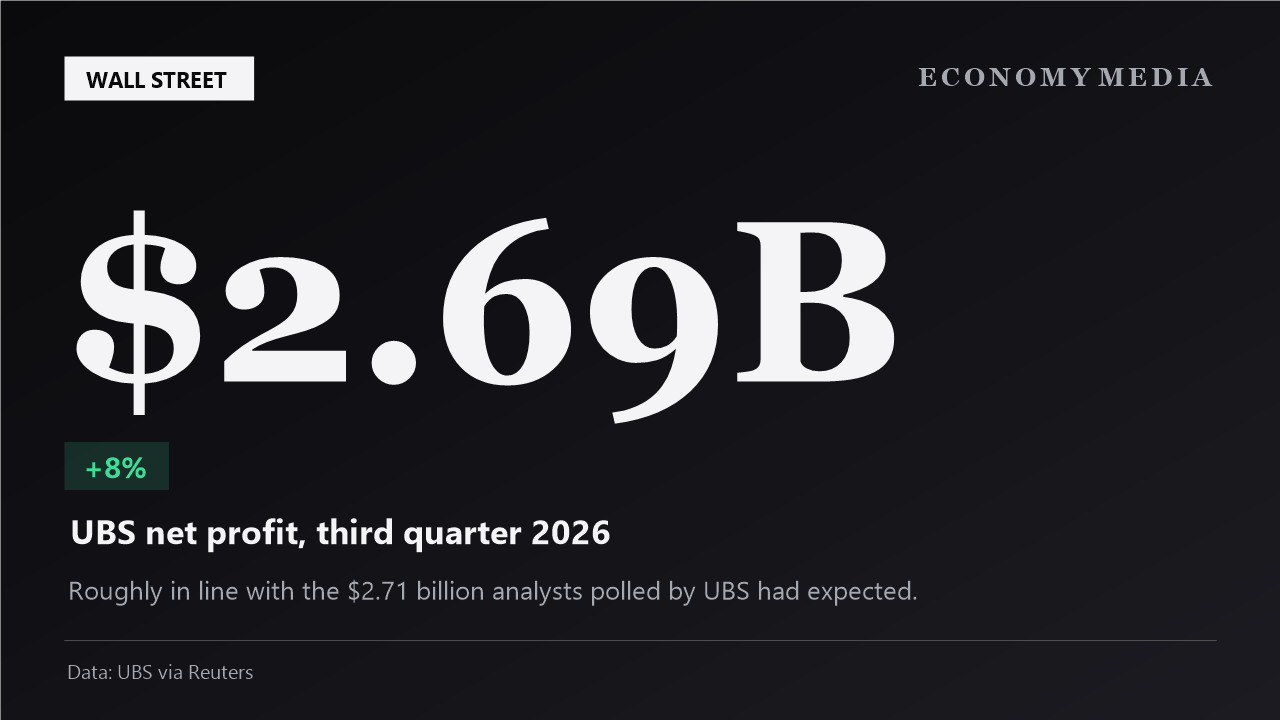
UBS Group, Switzerland’s largest bank, reported third-quarter net profit of $2.69 billion on Wednesday, Oct. 28, 2026, up 8% from a year earlier and roughly in line with forecasts, Reuters reported. But the numbers were overshadowed by Chief Executive Sergio Ermotti’s sharpest comments yet on a proposed overhaul of Swiss banking rules, which he said would force the bank to weigh its long-term ability to compete from its home country.
Analysts polled by UBS had expected net profit of $2.71 billion, according to Reuters. TipRanks reported that UBS shares fell nearly 2% after the release.
What happened
The bank’s results, covering July through September, showed a business still benefiting from strong client inflows and the final stages of its integration of Credit Suisse, the rival lender it took over in a government-brokered rescue in 2023.
- Pretax profit was about $3.6 billion, up 27% from a year earlier, according to TipRanks. On an underlying basis, which strips out integration-related items, pretax profit rose 14% to $4.1 billion, according to an Investing.com account of the earnings call.
- Revenue rose 10% to $13.35 billion, and earnings per share came in at $0.85, TipRanks reported.
- Global Wealth Management, the bank’s flagship division serving wealthy individuals, attracted $55 billion in net new assets, including $18 billion from Asia and $17 billion from the Americas, Reuters reported.
- The cost-income ratio, a measure of efficiency, improved to 72.3% from 77% a year earlier, according to Reuters.
- The common equity tier 1 (CET1) capital ratio, a key gauge of a bank’s financial cushion, rose to 14.7% from 14.4% in the prior quarter.
Analysts at Citi called it “a solid set of results,” Reuters reported.
The fight over capital
The overhaul at issue stems from the collapse of Credit Suisse, which left UBS as a single, much larger bank that Swiss officials consider too big to fail. Lawmakers are considering rules that would require UBS to hold substantially more capital, particularly against its foreign subsidiaries. A parliamentary committee is debating the package, which is expected to reach the lower house of parliament in December, according to Reuters. The upper house put forward proposals last month that UBS considers unacceptable.
On the call with analysts, Ermotti described the September outcome in the upper house as “very concerning” and said the latest proposal “fails to achieve that balance” between financial stability, protection of taxpayers and competitiveness, according to the Investing.com transcript. He said the bank was assessing the long-term consequences for its ability to compete from Switzerland, but saw “no rush” to act because the new requirements would take years to phase in, with the ordinance affecting capital from Jan. 1, 2029.
Asked about the bank’s Swiss identity, Ermotti said clients appreciate its Swiss roots but that “a passport is not enough nowadays.” Reuters quoted him saying of those roots: “it’s not the reason why our clients are banking with us.” He declined to discuss contingency plans before the rules are finalized, and declined to comment when an analyst from Mediobanca raised a possible exit cost, calling such figures speculation.
UBS itself said in its results that it remains “strategically committed to its diversified business model and its global and regional footprint,” according to Reuters. The bank has not announced any plan to relocate, though Reuters noted that its chairman has warned UBS would have to carefully consider its future in Switzerland if the rules are too harsh, and some investors have called for a move.
Why it matters
The dispute pits the Swiss government’s goal of preventing another taxpayer-backed bank rescue against the commercial interests of a lender whose balance sheet is far larger than the Swiss economy’s annual output. UBS has argued that excessive regulation would hamper its growth and international competitiveness, TipRanks noted.
The outcome also bears directly on shareholder returns. UBS bought back $1.8 billion of its own shares in the quarter and now expects to complete its $3 billion repurchase program by February 2027, earlier than the mid-2027 date it had previously given, Reuters reported. The bank has said the pace and size of future buybacks depend on how the Swiss rules turn out.
What comes next
Ermotti said UBS will present refreshed medium-term targets alongside its fourth-quarter results in February, according to the Investing.com transcript. The bank said its Credit Suisse integration remains on track to finish by year-end, with cumulative cost savings now expected at about $13.7 billion by the end of 2026, up from a previous goal of about $13.5 billion. Headcount fell by almost 1,500 full-time positions during the quarter, Reuters reported.
UBS cautioned that investor sentiment remains measured amid macroeconomic volatility, geopolitical tension and political uncertainty. Other major European lenders, including Deutsche Bank and BNP Paribas, are due to report results later this week.