Vertical Data Centers Draw Attention After Kansas City Rejection
Developers are pitching stacked data centers where land is scarce. Kansas City's rejection of a 20-story tower shows how contested the idea remains.
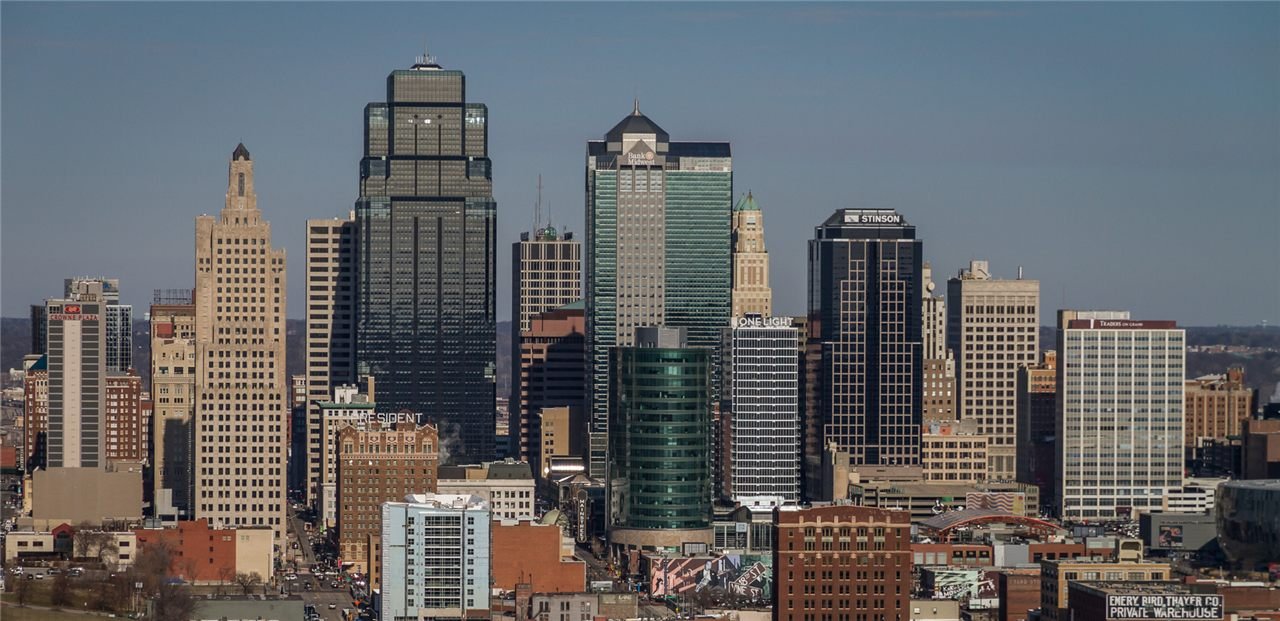
Developers are increasingly proposing data centers that grow upward instead of outward, a response to scarce land and local opposition to the sprawling facilities that power artificial intelligence. The New York Times reported this week that such vertical designs are often the only option in places like Taiwan, while Kansas City recently turned down a 20-story tower.
What happened in Kansas City
The Kansas City Plan Commission, an advisory city body in Missouri, voted 6-0 on Aug. 5 to deny a proposal by Revitalization Unlimited, a Miami-based developer, for a 384-foot data center in the Quality Hill neighborhood, according to KCUR, the city’s public radio station. The plan would have required demolishing the historic Western Newspaper Union building at 934 Central Street.
KCUR reported that 55 people testified during nearly two hours of public comment, and that commissioners said they had received 475 letters opposing the project and none in support. Opponents raised concerns about noise, environmental risks, the loss of a historic building and quality of life. Ethan Starr, executive director of the group Historic Kansas City, said the developer had placed a preservation easement on the building before proposing its demolition.
Commissioner Matt Hasek said the project was not a productive use of downtown space, KCUR reported. Mayor Quinton Lucas wrote on Threads that the developer could ask the City Council to override the recommendation, but said a reversal was highly unlikely and would not have his support.
The developer’s case
Revitalization Unlimited partner Chris Miller asked for a delay so an independent impact study could be completed, and said many of the objections were not founded in fact, according to KCUR. Steve Austin, the company’s founder and chief executive, said in an email to the station that the company was disappointed and that no final decisions had been made.
Data Center Knowledge, a trade publication, described the design by the architecture firm Skidmore, Owings & Merrill as sitting on about 0.23 acres, with only two of its 20 floors holding computing equipment. The rest would house power, cooling and other mechanical systems. The outlet reported a planned 24-megawatt computing load, 30 megawatts of on-site fuel cells as the primary power source, and a total development cost of about $183 million, figures it attributed to Austin.
Austin told the publication that the company seeks no tax abatement and would accept binding conditions on noise, generator hours and public reporting. He said some AI workloads, such as answering user queries, benefit from being close to users because of latency, the delay between a request and a response.
Why it matters
Data centers are in high demand but face growing local resistance, the Times said in its report. Building up rather than out is one way developers hope to fit them into dense cities or land-limited regions. Industry analysts quoted by Data Center Knowledge were cautious. Luis Fernandes, a senior research manager at the research firm IDC, said there is no data suggesting a vertical build would reduce a data center’s overall environmental footprint, and he questioned describing the cooling as closed-loop because the design includes evaporative cooling, which consumes water. Michael Martin of the real estate firm JLL said clients do not typically ask for downtown data centers, and that large AI training facilities tend to favor sites with abundant land and power.
What comes next
The Kansas City developer could still appeal to the City Council, though the mayor has signaled opposition. Local groups including Sunrise Movement KC and KC Data Center Watchdog have said they want a citywide ban on data centers, KCUR reported, and Jackson County has passed a six-month moratorium on new ones that is due to expire in December. Details of the Taiwan proposals referenced by the Times were not independently confirmed for this article.