Zelenskyy Says Starshield Speed Caps Return, Hurting Drone Defense
Ukraine says SpaceX's military satellite network is again capping terminals at about 100 mph, weakening its defense against Russian jet drones.
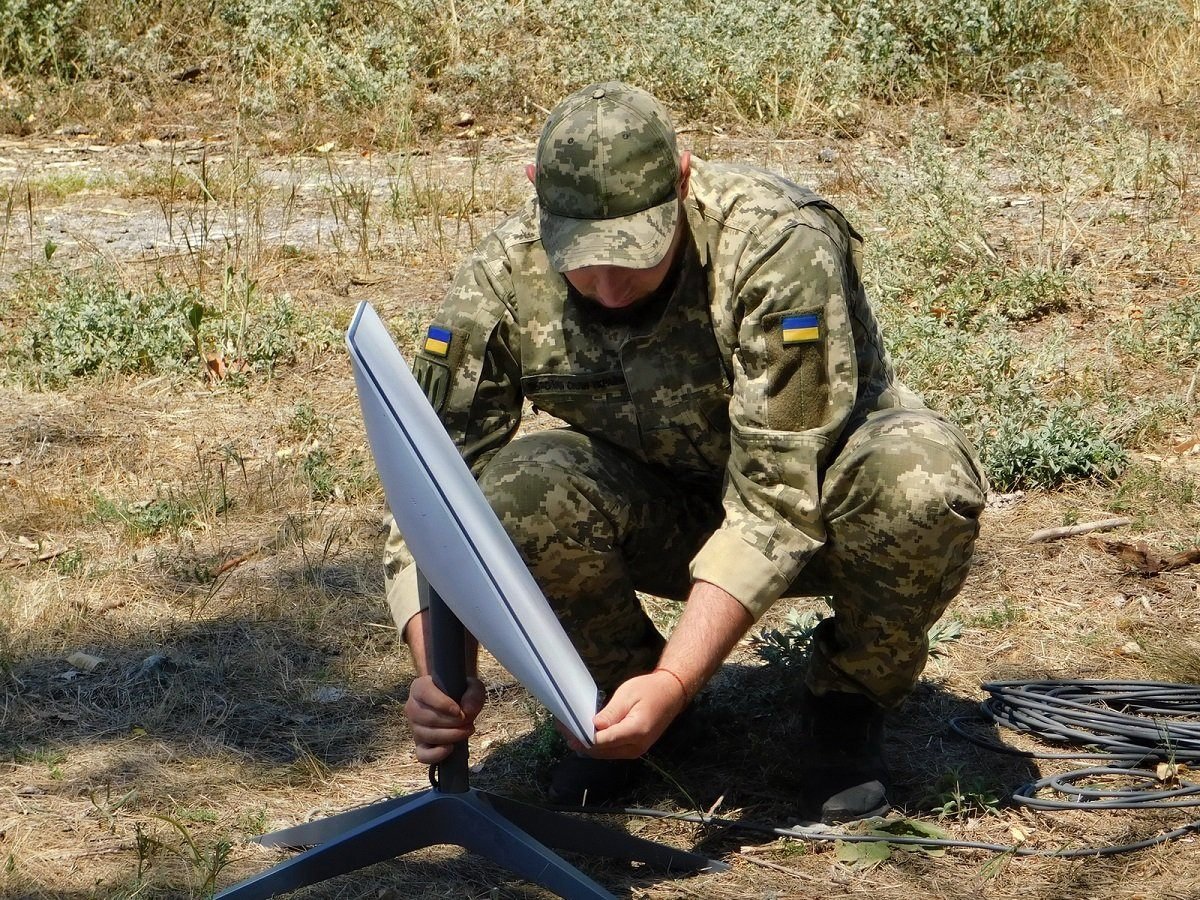
Ukrainian President Volodymyr Zelenskyy said on Thursday that Starshield, the military-grade satellite network built by Elon Musk’s SpaceX, is once again imposing speed limits on Ukrainian equipment, making it harder for the country’s forces to shoot down fast-moving Russian drones. The renewed restrictions, which Zelenskyy described as deliberate rather than technical glitches, come less than a month after a similar disruption was lifted and as U.S. envoys arrived in Moscow for talks with Russian President Vladimir Putin.
What happened
In social media posts early Thursday, Zelenskyy said Ukrainian military units had logged significant disruptions to Starshield for several days, both along the front line and in Russian-occupied areas. After examining the problem, he said, the military concluded that “systematic speed restrictions” were being applied, effectively cutting off terminals moving faster than about 161 kilometers per hour, or 100 miles per hour, according to CNBC and Euronews.
That ceiling matters because Ukraine relies on interceptor drones that must travel at high speed to catch Russia’s jet-powered attack drones. Zelenskyy said the limit had prevented some interceptors from reaching the speeds they need. “Unfortunately, there have already been strikes that got through,” he wrote, according to Euronews. Reuters, in a report republished by The Moscow Times, quoted him as saying the restrictions help “Russians kill more Ukrainians” and carry out more accurate strikes.
Zelenskyy said he had been briefed by Defense Minister Yevhenii Khmara and Commander-in-Chief Mykhailo Drapatyi, and that Kyiv was trying to establish the circumstances with the American side. CNBC said it had asked SpaceX and the White House for comment; none of the reports included a response from either.
Serhii Beskrestnov, a defense technology adviser to Zelenskyy, confirmed to CNBC that speeds for terminals in motion had been limited again. He argued that terms of use could be renegotiated rather than leaving Ukraine without protection of its skies.
A repeat of October’s dispute
The episode closely mirrors one from last month. Overnight on Oct. 13 to 14, Ukrainian units found their terminals dropping connection at roughly 160 kilometers per hour. On Oct. 24, Ukraine’s Defense Ministry said service had been restored, with stable connections at speeds above 400 kilometers per hour, Euronews reported.
Who ordered those limits remains contested, and the accounts do not line up:
- Musk wrote on X that “Starshield systems are owned and controlled by the US government,” and said speed decisions rested with the U.S. military and ultimately the president, according to Euronews.
- Musk later argued that Ukraine had violated Starlink’s terms of service, prompting the company to restrict access, CNBC reported. Ukrainian officials have strongly disputed that claim.
- The Wall Street Journal reported that Musk himself ordered the October restrictions and that President Donald Trump later asked him to reverse them, CNBC said. Trump has denied that the White House ordered the limits, and Secretary of State Marco Rubio said the administration was not responsible.
Reuters reported that the October cap was linked to tension with the Trump administration over Ukrainian strikes on Russian oil refineries. Neither Washington nor SpaceX has publicly accepted responsibility for either round of restrictions.
Why it matters
Starshield is SpaceX’s satellite network for government and national-security customers, built on the technology behind its consumer Starlink internet service. For Ukraine, it has become a backbone of battlefield communications, particularly for drone units. Beskrestnov has noted that commercial Starlink cannot support medium- or long-range drone strikes because it does not operate over Russian territory, which leaves the military version as the critical link.
The dispute highlights how much Ukraine’s defenses depend on a single private American company whose decisions can shift with politics. Ukraine’s Starshield access agreement with Washington runs until mid-2027, and Kyiv wants to extend it, with officials saying talks should begin soon, according to Euronews. Ukraine is also looking at alternatives: on Oct. 22, its Defense Ministry signed a letter of intent with Finnish firms ICEYE, a satellite maker, and Nokia, the telecom equipment company, to explore a sovereign satellite communications system.
Diplomacy in the background
The new limits surfaced a day after U.S.-brokered talks among Ukrainian, Russian and American negotiators in Abu Dhabi, United Arab Emirates, ended without a breakthrough on a ceasefire or territorial questions, including Moscow’s demand that Kyiv give up land it still holds. Reuters described them as the first such meeting since February. An unnamed Ukrainian official told Reuters the satellite disruptions had not come up during those talks and that it was unclear who had made the decision.
On Thursday morning, U.S. special envoys Steve Witkoff and Jared Kushner landed at Moscow’s Vnukovo Airport, where they were met by Kirill Dmitriev, a Kremlin envoy, according to Russian state news agency TASS, as cited by CNBC. They were expected to meet Putin to discuss a lasting settlement of the war, which began with Russia’s full-scale invasion in February 2022. CNBC reported that the envoys were also due to meet Zelenskyy later Thursday on the sidelines of a political summit in Ireland.
Whether the speed caps are lifted again, and who will take responsibility for them, may shape how much trust Kyiv places in U.S.-linked technology as negotiations continue.