BoE’s Lombardelli Says Young Bear Brunt of UK ‘Low-Gear Economy’
Bank of England deputy governor Clare Lombardelli says young people are hit hardest as UK hiring stalls, and won't rule out a December rate hike.
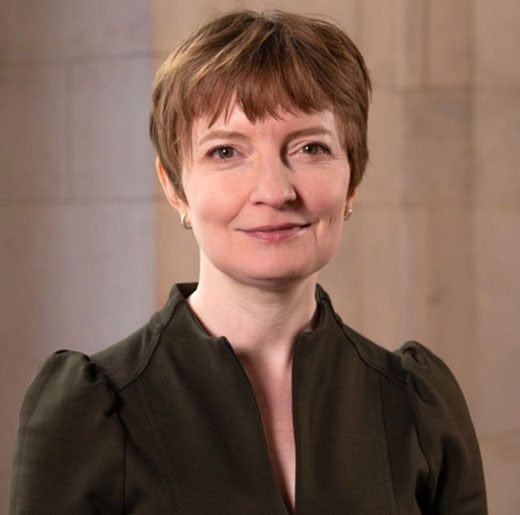
Young people in Britain are paying the highest price for a hiring slowdown driven by the war in the Middle East, according to Clare Lombardelli, the Bank of England’s deputy governor for monetary policy. She also said she would not rule out voting for another interest rate increase in December. Lombardelli made the comments in an interview with The Guardian published Tuesday, Nov. 10, and described the UK as stuck in what she called a “low-gear economy.”
Her comments come a week after the Bank of England, Britain’s central bank, raised its benchmark rate for the first time in more than three years. They also show the bind facing policymakers in many countries this year: an energy price shock is lifting inflation at the same time as it slows the job market.
What she said
Lombardelli told The Guardian that employers are keeping the workers they already have but holding back on new hires. She called this a “low hire, low fire” pattern. “It’s what I call a low-gear economy,” she said, describing a labor market with a sharp drop in hiring but few layoffs.
That pattern hits people who are trying to get a foot in the door hardest. The industries cutting back most on recruitment, especially hospitality and retail, are the ones that usually give young workers their first jobs. Lombardelli said the cost was “falling on young people.” She pointed to a rapid rise in the number of young people struggling to find work.
According to The Guardian, the central bank’s own business surveys found that some employers now consider hiring a young person riskier than it used to be. Many companies are waiting to see whether the uncertainty from the conflict clears before they add staff. “None of us thought we’d be nine months into this conflict,” Lombardelli said.
The numbers behind the slowdown
Figures cited in the coverage show how the job market has cooled in 2026:
- UK unemployment has risen this year to 4.7%, The Guardian reported.
- Youth unemployment has risen faster and is at its highest level since 2015, excluding the Covid pandemic period.
- The number of young people not in education, employment or training, a group officials call NEET, has climbed to almost one million.
- A survey by the Recruitment and Employment Confederation, a UK industry body for recruiters, and the accounting firm KPMG found that permanent hiring fell in October for the first time in four months, Reuters reported. The survey was published Monday.
Other pressures are also weighing on hiring, The Guardian noted. They include higher costs and taxes for employers and weaker consumer spending as households deal with the rising cost of living.
Why a weaker job market may not tame inflation
Normally, rising unemployment eases pressure on prices, because workers have less power to push for raises. Lombardelli suggested that may not happen this time. Employers are still hiring for hard-to-fill roles, so higher joblessness would not necessarily bring down inflation, she said. She called that “a problem.”
The Bank of England is concerned that high inflation, driven up by the war-related jump in energy costs, could become entrenched if strong bargaining power among some workers leads to bigger pay settlements. That concern is behind the bank’s recent move to raise rates even as growth slows.
Reuters reported that the bank’s Monetary Policy Committee, the nine-member panel that sets UK interest rates, voted 8-1 last week to lift Bank Rate from 3.75% to 4%. It was the first increase since August 2023. Lombardelli voted with the majority. According to the meeting minutes cited by Reuters, she said at the time that a further increase would probably be needed soon.
What comes next
Asked about the December meeting, Lombardelli kept her options open. “I think it depends what we see on the conflict and the energy prices,” she said, according to Reuters. “But I wouldn’t rule it out.” She added that she did not yet have enough information to decide. “Every meeting is live for us,” she told The Guardian. She said financial markets put the odds of a December hike at roughly 50-50.
Andrew Bailey, governor of the Bank of England, has also raised the possibility of another increase. The Guardian reported that how the conflict involving Iran plays out is the key factor. Oil prices recently fell below $100 a barrel after Democrats won seats in the US congressional midterm elections, a result some investors believed would limit President Donald Trump’s ability to drag out the conflict. Trump said over the weekend that new strikes on Iran were highly unlikely while talks continue.
Analysts at the currency news site FXStreet read her remarks as slightly dovish overall, meaning less inclined toward higher rates, though she kept the door open to a hike. They noted little reaction in the British pound, which traded near $1.345.
The jobs picture for young people is also on the political agenda. The Guardian reported that the government led by Andy Burnham is expecting a report on young people and work from Alan Milburn, a former Labour cabinet minister, next week. Lombardelli was scheduled to set out her concerns in more detail in a speech in London on Tuesday.