Children’s Place Files for Chapter 11, Seeks Buyer by Dec. 9
The kidswear retailer behind Gymboree filed for bankruptcy in New Jersey and plans a court-run sale of nearly all its assets, with bids due Dec. 9.
The Children’s Place, one of the best-known children’s clothing chains in the United States, has filed for Chapter 11 bankruptcy protection and plans to sell substantially all of its assets through a court-supervised auction. The company said in a statement on Nov. 8 that it filed voluntary petitions in the U.S. Bankruptcy Court for the District of New Jersey, that bids are due by Dec. 9, and that it expects to complete the sale by the end of December, putting the fate of the nearly 60-year-old retailer in the hands of buyers just as the holiday shopping season gets underway.
Its stores and websites, which also sell the Gymboree brand, remain open for now, the company said.
What happened
According to the company’s announcement, which was also filed with the Securities and Exchange Commission, The Children’s Place is pursuing a sale under Section 363 of the U.S. Bankruptcy Code, a provision that lets a company in Chapter 11 sell assets with court approval, often to a buyer that keeps the business running. The retailer said it intends to ask the court to approve a competitive marketing and sale process designed to attract the highest bid, and that it is in talks with several parties about deals that would keep the business going as a going concern.
Rudy Morando, the company’s co-chief restructuring officer, said the filing “marks an important step” toward securing the best path forward for the chain, and pledged what he called “an efficient and transparent sale process,” according to the statement, which FashionUnited also reported.
The process will be funded by a new term loan from the company’s existing secured lenders, the retailer said. Its SEC filing noted that substantially all of the company’s debt went into default and was accelerated upon the filing, though creditors are barred from collecting while the case proceeds under the bankruptcy code’s automatic stay.
The company is also seeking recognition of the U.S. case in Canada so that its Canadian operations can be included in the sale.
What it means for shoppers and workers
The retailer said it would ask the court at a first-day hearing this week for permission to keep paying employee wages and benefits, honor customer programs and pay vendors for goods and services delivered after the filing. Among the other steps it plans to take:
- Running inventory sales across its store fleet, subject to court approval, to raise cash.
- Working under a consulting agreement with a joint venture of GA Group, Tiger Group and SB360 Capital Partners, firms that specialize in retail liquidations and asset sales.
- Keeping its e-commerce sites operating throughout the process.
The company did not say how many stores might close. It ended its most recent reported quarter with 514 stores, according to Debtwire, a financial news service owned by ION Analytics.
Why the chain struggled
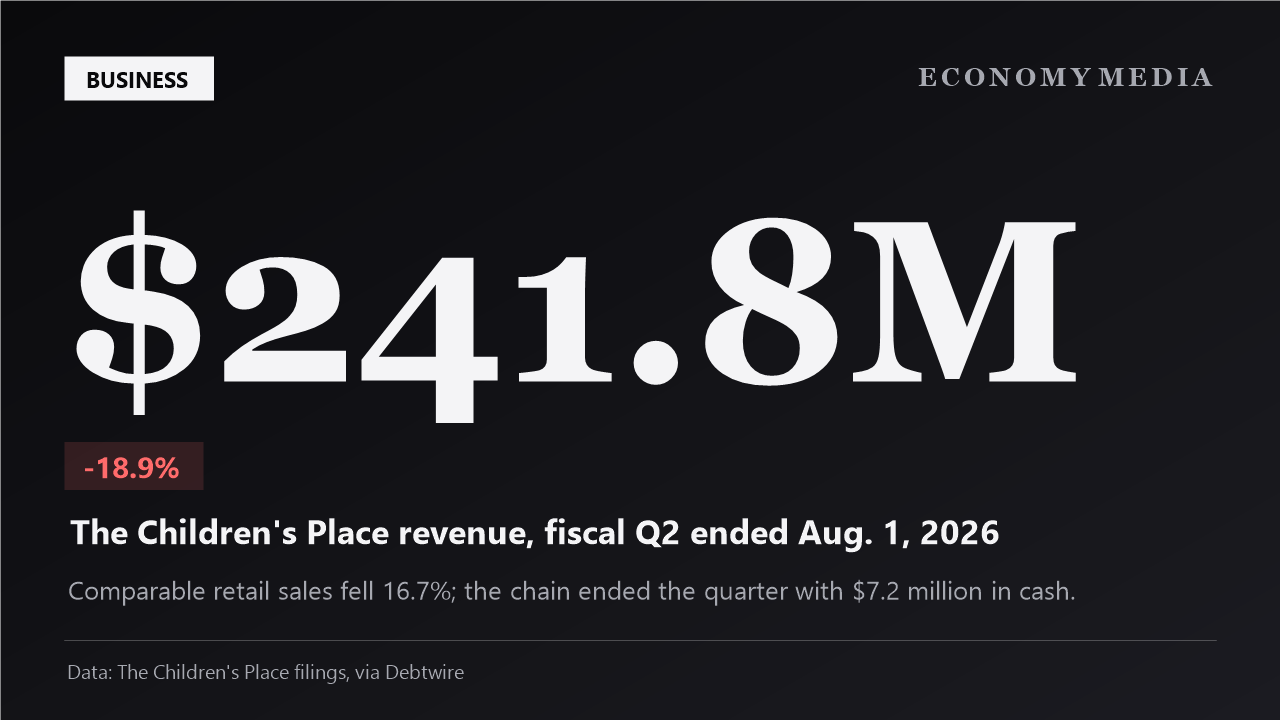
The filing caps a long slide for the Secaucus, New Jersey-based retailer. In its fiscal second quarter, which ended Aug. 1, revenue fell 18.9% from a year earlier to $241.8 million and comparable retail sales dropped 16.7%, Debtwire reported, citing company filings. The company partly blamed a slower-than-expected move to a new e-commerce platform and efforts to clear out older inventory. It finished the quarter with just $7.2 million in cash, according to Debtwire.
The retailer has leaned heavily on Mithaq Capital, a Saudi investment firm that took a majority stake in 2024 and has since provided repeated financing. Debtwire reported that the company drew a further $25 million in September through an unsecured, Shariah-compliant promissory note under a $40 million commitment from Mithaq, which had also agreed to push back maturities on its loans. Late last year, the retailer completed a $450 million refinancing that included a $100 million term loan from SLR Credit Solutions and an extension of a $350 million credit line led by Wells Fargo, Debtwire reported.
The company had been preparing for months. It hired investment bank Cascadia Capital to solicit bids, brought on BRG as financial adviser and White & Case as legal counsel, and added restructuring specialist Elizabeth LaPuma to its board, Debtwire reported in late October, citing people familiar with the matter.
What comes next
Potential buyers had begun circling before the filing. Debtwire reported in October that Catalyst Brands, a collection of legacy retail brands, many acquired through bankruptcy sales, whose investors include Simon Property Group, Brookfield, Authentic Brands Group and Shein, was considering a bid for roughly 200 Children’s Place stores along with its intellectual property. Liquidation firms including Gordon Brothers, GA Group, Hilco Global and Tiger Capital Group were also eyeing the brand and inventory, according to the same report. Those discussions had not been confirmed by the companies, and representatives did not respond to Debtwire’s requests for comment.
Whether the chain survives as an operating retailer, is sold off in pieces, or ends up as a brand name licensed by a new owner will become clearer after the Dec. 9 bid deadline. Until then, the company has said it will keep its stores and websites open while the sale process runs.