Euro Zone Inflation Hits 4% for First Time Since 2023 on Energy Surge
Consumer prices in the 21-nation euro zone rose 4% in October as energy costs jumped 20.8%, strengthening the case for an ECB rate hike in December.
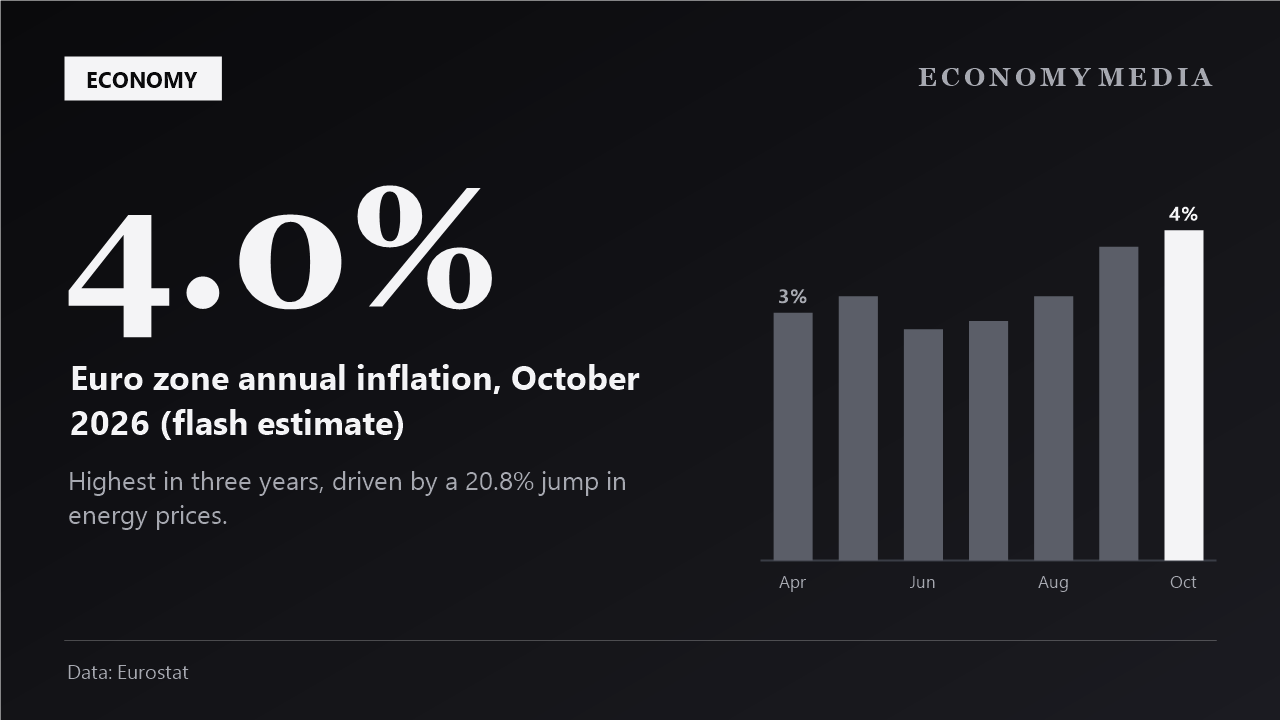
Inflation in the euro zone climbed to 4% in October, the first time it has reached that level in three years, as a steep rise in energy costs tied to the Iran war fed through to households across the 21 countries that use the euro. The flash estimate from Eurostat, the European Union’s statistics agency, released Wednesday, showed annual consumer price growth up from 3.8% in September. The reading matched the forecast of economists polled by Reuters, CNBC reported, and it raises the odds that the European Central Bank will raise interest rates again in December.
What the numbers show
Energy was the main driver. Energy prices rose 20.8% from a year earlier, up from 18.9% in September, according to CNBC. Martin Cid Magazine, a European business publication, noted that energy makes up only about 9% of consumer spending in the bloc, yet it accounted for close to 2 of the 4 percentage points of headline inflation.
Outside energy, the picture was calmer. Core inflation, which strips out energy, food, alcohol and tobacco and is watched closely by central bankers as a gauge of underlying price pressure, held at 2.5%, according to Martin Cid Magazine. Services inflation edged up to 3.3%. CNBC reported that officials described underlying inflation and wage growth as broadly stable.
The rise has been building for months. Eurostat data show the annual rate was 3.0% in April, dipped to 2.8% in June, and then climbed steadily through the summer and early fall as energy costs accelerated.
Every euro zone economy now has inflation above the European Central Bank’s 2% target. Lithuania posted the highest rate at 6.1% and Malta the lowest at 2.3%, CNBC reported. Martin Cid Magazine put Bulgaria, in its first year using the euro, at 6.0%, and said Italy’s rate jumped to 5.6% from 4.2% in a single month as regulated energy tariffs soared. Germany, the bloc’s largest economy, came in at 2.8%.
Why it matters for households
For families, the figures mean that the cost of heating, electricity and fuel is rising far faster than other prices. Europe imports most of its energy, which leaves consumers exposed when global supplies are disrupted, and prices have climbed steadily since the Iran war began, according to CNBC.
Borrowing is also becoming more expensive. The 12-month Euribor, a benchmark interest rate used to price many adjustable-rate mortgages in countries such as Spain, averaged about 3.24% in October, roughly a full percentage point higher than a year earlier, Martin Cid Magazine reported, citing Spanish mortgage trackers.
What comes next for the ECB
The European Central Bank, which sets interest rates for the euro zone, raised rates in June and again by a quarter point in September, lifting its deposit rate to 2.5%, before holding steady in October. Markets had priced in a 71.8% chance of another hike at its final meeting of the year before Wednesday’s release, and that rose to more than 72% afterward, according to CNBC. The meeting concludes on Dec. 17.
Some analysts see limits on how far the central bank can go. Robert Mertens, a senior global capital markets analyst at Validus Risk Management, a financial risk advisory firm, told CNBC that “ongoing turmoil in the French bond market is placing constraints on ECB policy.” He added that if political unrest in France eased, the bank could pursue a more aggressive path of rate increases.
Currency markets reacted quickly. The euro rose 0.6% against the U.S. dollar on Wednesday morning, CNBC reported, as the dollar also weakened during vote counting in the U.S. midterm elections. The yield on Germany’s 10-year government bond was marginally higher.
Several data releases are due before the ECB decides:
- Nov. 18: Eurostat publishes final October inflation figures, which can revise the flash estimate.
- Dec. 1: Eurostat releases its flash estimate for November.
- Dec. 17: The ECB’s last policy meeting of 2026 concludes in Frankfurt.
With core inflation steady at 2.5%, policymakers face a balancing act: whether an energy shock driven by war abroad justifies higher borrowing costs at home, or whether the pressure will fade without broader damage to wages and prices.