Pound Hits Highest Level Since Brexit Vote Ahead of Expected BoE Hike
Sterling's value against a basket of 18 currencies matched its highest level since the 2016 Brexit vote as traders brace for a Bank of England rate rise.
The British pound climbed on Wednesday to its strongest overall level since the United Kingdom voted to leave the European Union in June 2016. The rise came as traders bet that the Bank of England will raise interest rates this week, and as the U.S. dollar weakened after Democrats won control of both chambers of Congress in the midterm elections.
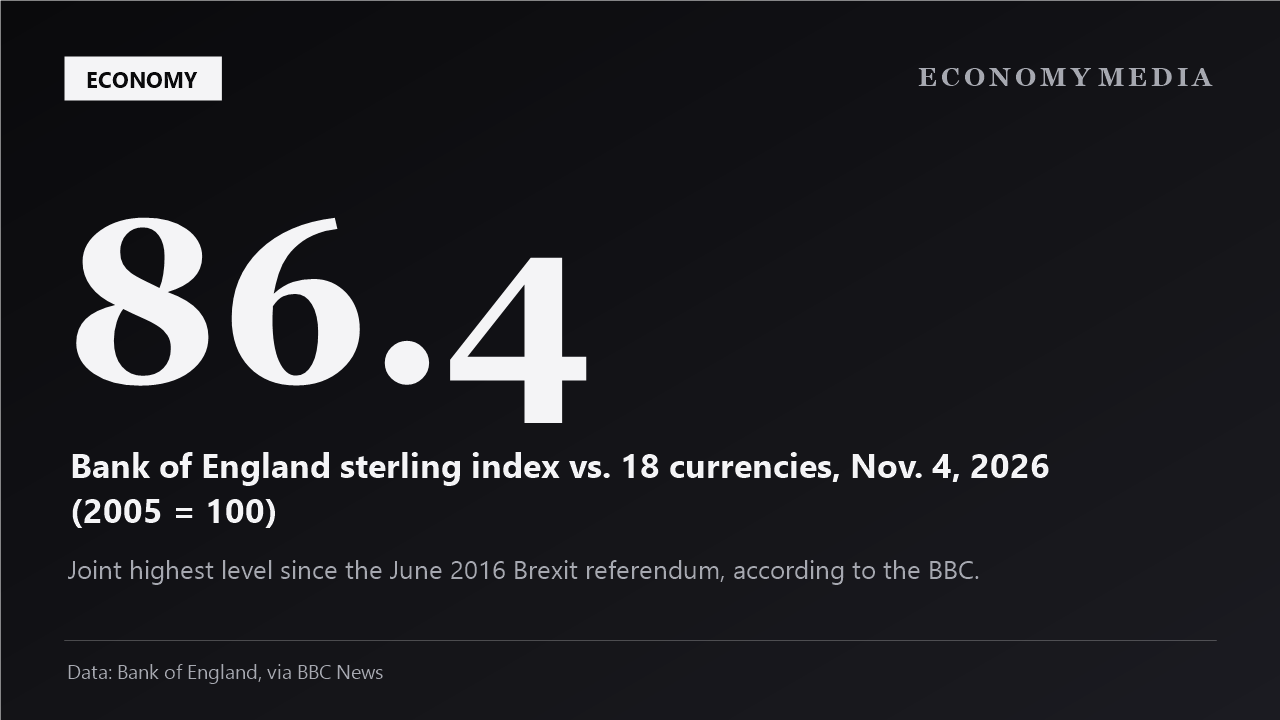
The move is a milestone for a currency that spent much of the past decade under pressure. According to the BBC, the Bank of England’s most closely watched gauge of sterling, which measures the pound against a basket of 18 major currencies, reached 86.4. That ties it for the highest reading since the referendum. The index is set so that 100 equals the pound’s value in 2005, and the central bank is due to confirm the figure officially on Thursday.
What happened
The pound’s gains were broad. Investing.com reported that sterling rose 0.60% against the dollar to $1.3495 by mid-morning in London on Wednesday. Pound Sterling Live, a currency news site, said the pound had touched its best level against the dollar since mid-September and was hovering near 1.20 euros, at about 1.1993.
Part of the move reflected dollar weakness rather than pound strength. The dollar fell after Democrats swept the midterm elections, and the euro also gained against it, rising 0.63% to $1.1262, according to Investing.com. Chris Turner, global head of markets at the Dutch bank ING, described a Democratic Congress as a mild negative for the dollar. He cited possible effects on artificial intelligence spending and the risk of a long government shutdown from next summer. He also called the dollar’s drop tentative and cautioned that a bigger shift might be a 2027 story.
Against the full basket of currencies, however, the BBC said sterling had risen notably in recent weeks against both the euro and the dollar. Some traders told the broadcaster that investors now view Britain differently because of its relative political stability, solid economic growth and improved relations with the European Union.
Why it matters
A stronger currency cuts the cost of goods and services bought from abroad. For British households, that can help ease inflation and make imports and overseas holidays cheaper, the BBC noted. That relief could be welcome: UK economic growth this year has beaten expectations, but higher energy and fuel prices appear to have hurt consumer confidence.
The effect runs the other way for Americans. A firmer pound means U.S. travelers to Britain get fewer pounds for their dollars, and British goods sold in the United States become more expensive in dollar terms. British exporters, by contrast, can find it harder to compete on price overseas.
Jim O’Neill, an economist and former Treasury minister, told the BBC he was not surprised by the rise. He argued that many people had underestimated the UK’s improving economic momentum, and to a lesser degree still do.
Background
Sterling fell sharply after the 2016 Brexit vote. It hit further lows during years of Brexit negotiations, the Covid-19 pandemic and the market turmoil that followed the September 2022 “mini-Budget,” the package of unfunded tax cuts announced by then-Prime Minister Liz Truss’s government. Wednesday’s reading means the pound has, by the Bank of England’s broad measure, recovered all of the ground it lost in the decade since the referendum.
A key reason for the recent rally is the outlook for interest rates. Higher rates tend to attract foreign money into a country’s bonds and savings, which supports its currency. Energy costs have surged since the start of the war involving Iran, pushing up inflation across Europe, and central banks are responding.
What comes next
The Bank of England’s nine-member Monetary Policy Committee, which sets UK interest rates, announces its decision on Thursday. A quarter-point increase to 4% is widely expected. That would be its first rate rise in about three years.
- ING economists James Smith and Michiel Tukker said high energy prices leave the bank little choice but to raise rates. They forecast a 7-2 vote in favor, Investing.com reported.
- They noted that markets have already priced in more than a full percentage point of rate increases. They flagged signals of further hikes in the coming months as the main upside risk for the pound.
- Pound Sterling Live cautioned that the currency could slip after the decision in a “sell-the-fact” move, when traders take profits once an expected event happens, though it expected any dip to be shallow.
Forecasters are not uniformly bullish. A consensus of forecasts compiled by LSEG and cited by HSBC puts the pound at $1.33 by the end of 2026 and $1.34 in the first quarter of 2027, below Wednesday’s level. Pound Sterling Live also reported that analysts expect the pound’s latest gains against the dollar to be short-lived. Much will depend on how far the Bank of England signals it is willing to go, and on whether the dollar’s post-election slide lasts.