Jobless Spells Hit 27 Weeks as US Adds 165,000 Jobs in October
US employers added 165,000 jobs in October, but the average stretch of unemployment rose to 27.1 weeks, longer than most jobless benefits last.
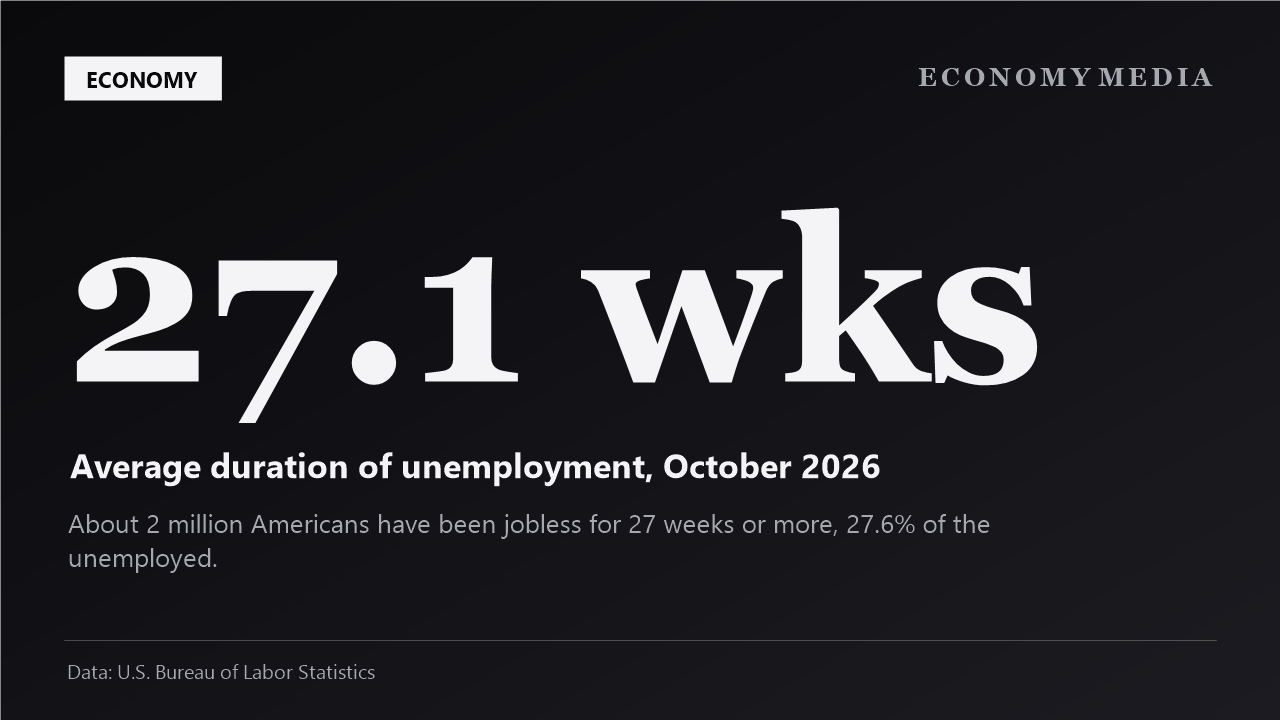
U.S. employers added far more jobs in October than economists expected, but the government’s latest report also showed that Americans who lose their jobs are staying out of work longer than at almost any point in a decade. Nonfarm payrolls rose by 165,000 last month and the unemployment rate slipped to 4.1% from 4.2%, the Bureau of Labor Statistics said Friday. Over the same period, the average stretch of unemployment climbed to 27.1 weeks, or roughly seven months.
What the report showed
The October gain was nearly three times the 59,000 jobs economists had forecast in a Dow Jones survey, CNBC reported. It was also well above the average monthly increase of 48,000 over the previous 12 months, according to the Bureau of Labor Statistics (BLS), the Labor Department agency that compiles the monthly employment report.
The agency also revised earlier months higher. August payrolls now show a gain of 186,000 rather than 133,000, and September’s figure was raised to 60,000 from 29,000. Together, those revisions added 84,000 jobs to the previous tally.
Professional and business services led the October gains with 70,000 jobs, followed by health care with 42,000, transportation and warehousing with 25,000 and manufacturing with 19,000, the BLS said. NBC News noted that general merchandise retailers added 18,000 positions, a possible early sign of holiday hiring, while home building and contracting shed more than 15,000 jobs as high interest rates weighed on residential real estate.
Average hourly earnings for private-sector workers rose 0.4% in October to $38.00 and were up 3.1% from a year earlier. NBC News pointed out that this pace trails inflation, which stood at 3.7% in the most recent consumer price index released Oct. 14.
A longer wait for work
Beneath the strong headline, CNBC highlighted a less encouraging trend. The average duration of unemployment reached 27.1 weeks in October, which CNBC said was the longest outside the pandemic period since 2016. About 2 million people had been jobless for 27 weeks or more, according to the BLS, making up 27.6% of all unemployed workers, the highest share since late 2021. The agency described the number of long-term unemployed as little changed over the month.
The timing matters for households because most state unemployment benefits run out after 26 weeks. “Now, the average unemployed person takes longer to find a job than their benefits would last,” Cory Stahle, a senior economist at the hiring platform Indeed, told CNBC. He also cautioned that the duration data “can be noisy from month to month.” CNBC noted that benefit exhaustion may help explain why claims for jobless aid have remained low even as job searches drag on.
Economists often describe the current market as “low-hire, low-fire”: companies are reluctant to lay off staff but are not adding many workers either, which makes it harder for those without a job to land one. Diane Swonk, chief economist at the accounting firm KPMG, told NBC News that “the problem is the low rate of turnover.” Researchers at the Federal Reserve Bank of Richmond wrote earlier this year that long spells of joblessness can become self-reinforcing, CNBC reported, and other research has tied extended unemployment to depleted savings, lower lifetime earnings and poorer mental health.
Why it matters
Many analysts read the report as a sign of resilience. Seema Shah, chief global strategist at Principal Asset Management, told CNBC the data was “a strong rebuttal” to fears of a meaningful slowdown, and Jennifer Timmerman, a senior investment strategy analyst at Wells Fargo, told NBC News it added to evidence of labor-market stability. Heather Long, chief economist at Navy Federal Credit Union, said the labor market was on firmer footing than a year ago, CNBC reported, but she wrote on X that inflation has wiped out wage gains for seven straight months, according to NBC News.
There were other soft spots. The number of people working part time because they could not find full-time jobs, or because their hours were cut, climbed by 339,000 to 4.8 million, the BLS said. Labor force participation held at 61.9%.
What comes next
The stronger-than-expected hiring increased bets that the Federal Reserve will raise interest rates at its Dec. 8-9 meeting to fight inflation. CNBC, citing CME Group’s FedWatch tool, put the odds of a quarter-point hike at 76.8% after the release, while NBC News described them as nearly 80%. Treasury yields rose following the report, CNBC said. The next monthly jobs report, covering November, will be among the last major data points Fed officials see before that decision.