Retailers Turn to Entertainment as Gap Leads ‘Fashiontainment’ Push
From Gap's boy band deal to in-store simulators, retailers are building entertainment arms to win shoppers' attention. Experts say product still matters most.
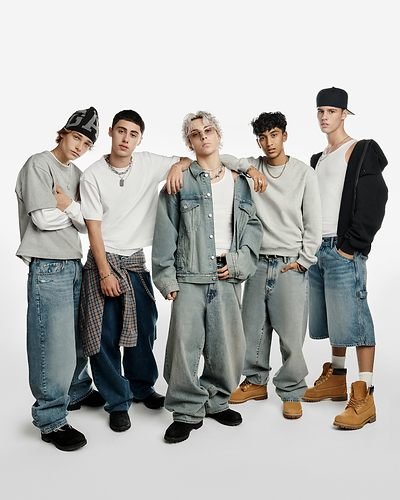
Retailers are increasingly behaving like media companies, building entertainment divisions, producing content and staging live events in a race for shoppers’ attention, CNBC reported Saturday. Gap Inc., the San Francisco-based owner of Gap, Old Navy, Banana Republic and Athleta, has become one of the clearest examples, creating a chief entertainment officer role this year and signing a multi-year partnership with a boy band. Industry advisers say the shift reflects changes in how younger consumers shop, though they caution that entertainment cannot rescue weak products.
What is happening
In January, Gap named Pam Kaufman, a former Paramount executive, to the newly created post of chief entertainment officer, according to Retail Dive. Kaufman, who started on Feb. 2 as an executive vice president reporting to Gap Inc. Chief Executive Richard Dickson, was most recently president and CEO of international markets, global consumer products and experiences at Paramount. Her mandate covers an entertainment, content and licensing platform spanning music, television, film, sports, gaming and collaborations.
Gap calls the strategy “fashiontainment.” Dickson, who previously served as president and chief operating officer of toymaker Mattel during the era that produced the blockbuster “Barbie” film, has framed the idea simply. “Brands are stories, and we are the storytellers,” he said at a Goldman Sachs consumer and retail conference in September, as quoted by CNBC.
The platform’s first major activation, announced in September, is a multi-year deal with Just Your Type, or JYT, a five-member boy band signed to Wexler Records and Republic Records, Retail TouchPoints reported. The arrangement includes:
- A co-produced, multi-episode docuseries following the band’s career milestones.
- A national mall tour pairing live performances with activations at select Gap stores.
- A capsule clothing collection co-designed by the band members.
- Gap outfitting the group for select performances.
The deal builds on Gap’s earlier “Better in Denim” campaign featuring the girl group Katseye, as well as Old Navy’s collaboration with Disney, Retail Dive noted. “Beloved brands have value beyond the products they sell,” Kaufman said in a statement to CNBC.
Why retailers are making the bet
Gap is not alone. CNBC pointed to Dick’s Sporting Goods, which has added interactive activities and simulators to its stores, and to Coach and Ralph Lauren as brands investing heavily in experiential retail. Data from AlixPartners, a consulting firm, showed experiential retailers such as Coach and Ralph Lauren recorded close to a 10% year-over-year increase in average basket size, according to CNBC.
Bryan Eshelman, who leads the retail practice at AlixPartners, told CNBC that shopping has shifted from a task to be completed toward something closer to a form of entertainment. Analysts cited by CNBC also pointed to consolidation in the traditional entertainment industry and the rise of independent creators, which have opened room for companies outside the studio system to make content.
Alex Michael, a senior managing director at LionTree, an investment and advisory firm, argued that intellectual property is gaining value because it is tied to audiences. “The hardest thing to find and to get is audience these days,” he told CNBC. Jeff Goldstein, co-lead of AlixPartners’ media and entertainment practice, said retail content and in-store experiences can feed the same self-reinforcing “flywheels” that entertainment companies try to build.
The idea has deep roots. Procter & Gamble helped pioneer branded entertainment in the 1930s, sponsoring radio dramas that gave rise to the term “soap opera,” CNBC noted. Mattel’s “Barbie” movie showed more recently how a consumer brand can translate into box-office success.
The limits of glitz
Experts were clear that entertainment is no substitute for the basics. “You can’t mask bad product at a bad price with no inventory with glitz and glamour,” Eshelman told CNBC.
Gap’s own results illustrate the mixed picture. In its fiscal second quarter, Gap Inc.’s net sales fell 2% to $3.7 billion, with comparable sales down 1%, according to figures cited by Retail TouchPoints. The namesake Gap brand, the main focus of the entertainment push, was a bright spot, with net sales up 9% to $844 million and comparable sales up 10%. Old Navy’s sales fell 4%, and Athleta’s dropped 12%.
Jessica Ramírez, co-founder and managing director of The Consumer Collective, a retail research firm, told Retail Dive earlier this year that hiring an entertainment executive was the right move for Gap as the brand regains cultural momentum and improves its products.
What comes next
The JYT mall tour and capsule collection are rolling out during the holiday shopping season, giving Gap an early test of whether fan engagement translates into store traffic and sales. For the wider industry, the question is whether content and experiences become a lasting part of retail strategy or a costly marketing layer. Advisers quoted by CNBC suggested the winners will be companies that pair compelling stories with the right products, prices and inventory.