Rivian, Lucid, Scout CEOs Not Counting on Democrats to Revive EV Aid
Leaders of three US electric vehicle makers say they are planning without federal EV incentives, even as Democrats prepare to take control of Congress.
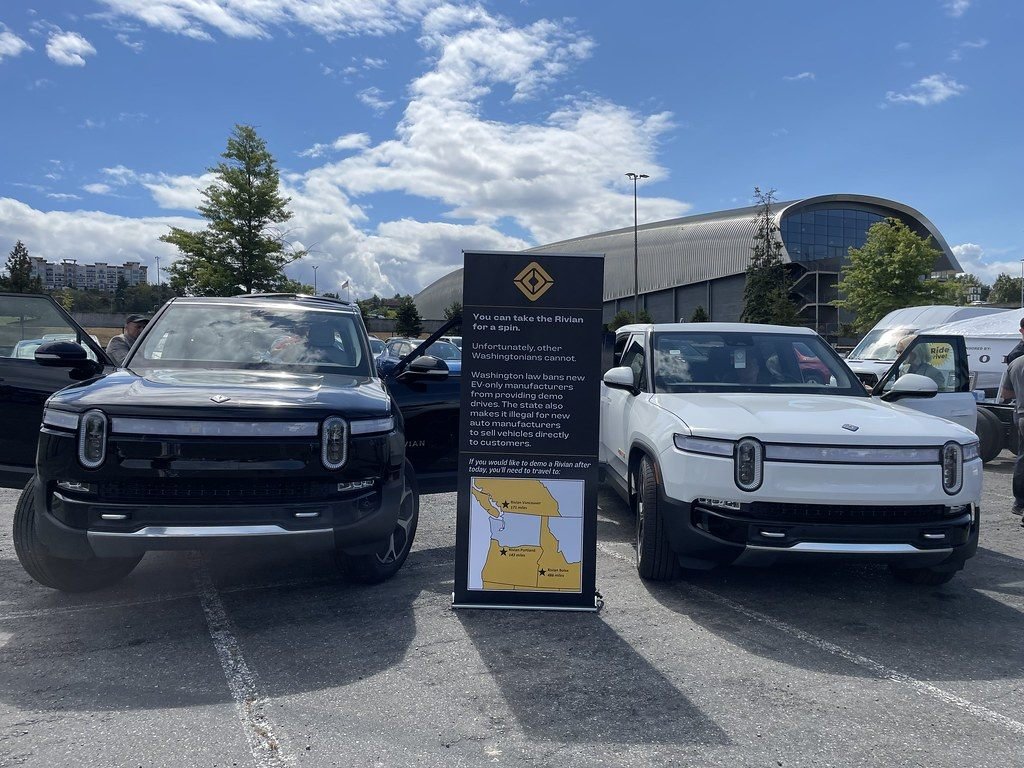
The chief executives of three American electric vehicle makers say they are not building their plans around a return of federal EV incentives, even though Democrats are expected to take control of Congress in January after this month’s midterm elections. The leaders of Rivian Automotive, Lucid Group and startup Scout Motors told CNBC they would welcome any new support from Washington but are preparing to operate without it.
What the executives said
Scott Keogh, an auto industry veteran who is chief executive of Scout Motors, told CNBC the company was designed so that it would not have to rely on legislation or “count on things that may or may not be there.” If lawmakers do offer help, Keogh said he would rather see it aimed at manufacturing than at buyers, telling the network, “I always prefer it on the production side.”
RJ Scaringe, chief executive of Rivian, said he hopes Congress and President Donald Trump can find common ground, but signaled low expectations. “We try not to plan for those sort of things,” he said on Nov. 6, adding that he anticipates “a lot of challenges getting things done,” according to CNBC.
Silvio Napoli, chief executive of Lucid, a luxury EV maker whose largest backer is Saudi Arabia’s Public Investment Fund, said the company is planning for the worst-case scenario. “Anything positive, we’ll take it,” he told CNBC.
Why federal support disappeared
The Trump administration and the Republican-led Congress rolled back many of the climate and EV policies put in place under President Joe Biden. The 2025 tax and spending package known as the One Big Beautiful Bill Act ended the federal tax credit of up to $7,500 for new electric vehicles and the $4,000 credit for used EVs for vehicles acquired after Sept. 30, 2025, according to Electrek and GCN. A separate credit for home charging equipment expired on June 30, 2026.
The end of the credits produced a sharp boom-and-bust cycle. Shoppers rushed to buy before the deadline, making the third quarter of 2025 the best quarter on record for U.S. EV sales, with market share above 10% for the first time, Electrek reported. Sales then fell. Cox Automotive, the auto industry data and services firm, reported 262,649 EVs sold in the U.S. in the third quarter of 2026, up 6.1% from the prior quarter but down 39.5% from a year earlier, for a 6.4% share of new-vehicle sales.
Price remains a hurdle. Cox Automotive data cited by CNBC put the average new EV price at more than $54,800 as of September, compared with just over $51,100 for the overall new-vehicle market in August. “Incentives can help accelerate adoption, but the industry can’t build its long-term strategy around them,” Stephanie Valdez Streaty, an analyst at Cox Automotive, told CNBC.
Democrats’ plans and the limits they face
Some Democrats have moved to bring the credits back. Rep. Greg Landsman, an Ohio Democrat, introduced the 21st Century Vehicle Choice Act on Oct. 22. The bill would restore the new-EV credit and double its maximum to $15,000, raise the used-EV credit to $8,000, increase the home charger credit and make all three permanent, while lowering income limits so fewer high earners qualify, according to GCN and Electrek. Landsman said in a press release that lawmakers “have to make life more affordable and give folks more choices.”
GCN, citing Politico, reported that more than 160 House Democrats support a separate bill that would restore the original $7,500 credit, but that House Minority Leader Hakeem Jeffries of New York is not a cosponsor and party leaders have not committed to the idea. Critics also question the policy itself. Adam Michel, director of tax policy studies at the libertarian Cato Institute, said in a statement reported by GCN that “the credit is not good policy.”
The broader political math is also difficult. According to CNBC, House Democrats plan to focus first on restoring expired enhanced health insurance subsidies, reversing Medicaid cuts signed into law last year, overseeing the administration and addressing affordability, with EVs a lower priority. Electrek noted that any bill reviving the credits would still need the signature of President Trump, who signed the repeal, making a quick return unlikely.
What comes next
Some policy experts still expect a debate. Rachel McCleery, executive director of the Coalition for Reimagined Mobility at SAFE, a policy organization, and a former senior adviser at the U.S. Treasury, told CNBC that “bringing down the cost of vehicles for U.S. consumers is top of mind for Democratic policymakers,” and that discussions over EV and supply chain incentives are likely.
For now, automakers are adjusting on their own. Several have cut prices to offset the lost credit, Electrek reported, including Hyundai, which lowered prices on some 2026 Ioniq 5 trims by nearly $10,000. Rivian, Lucid and Scout say their strategies assume no help is coming, and that any new federal support would be a bonus rather than a foundation.