Roy Cooper Wins North Carolina Senate Seat, a Key Pickup for Democrats
Former Gov. Roy Cooper defeated Republican Michael Whatley, flipping the open North Carolina Senate seat and becoming the state's first Democratic senator since 2008.
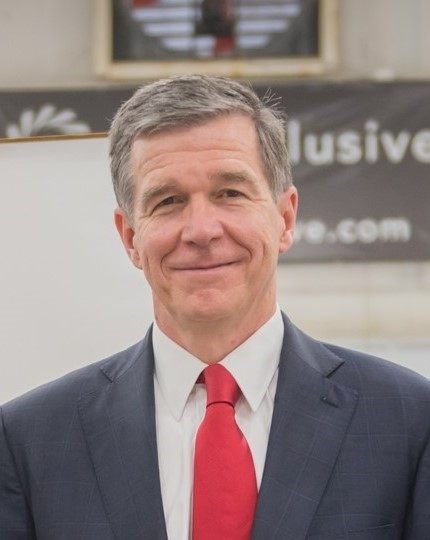
Roy Cooper, the Democratic former governor of North Carolina, won the state’s open U.S. Senate seat on Tuesday, defeating Republican Michael Whatley, a former chairman of the Republican National Committee, and handing Democrats their first Senate pickup of the 2026 midterm elections. The Associated Press called the race shortly after polls closed, according to NPR and WUNC, North Carolina’s public radio station, and NBC News and CBS News also projected Cooper as the winner.
Cooper will be the first Democrat elected to the Senate from North Carolina since 2008. He will succeed Thom Tillis, the Republican senator who chose not to seek reelection.
What happened
Early returns showed Cooper with a wide lead. With about 65% of the expected vote counted, NBC News reported Cooper at 63.7%, or roughly 1.66 million votes, against Whatley’s 34.6%, or about 901,000 votes. Two minor candidates, Shannon Bray and Michael Dublin, together drew under 2%. WUNC put Cooper’s share at about 67% in the first returns. Those figures come from partial counts and are likely to change as more ballots are tallied.
The outcome was not the close fight many observers expected when the race began. CBS News noted that Whatley had never run for office before and got into the race after President Donald Trump encouraged him to. WUNC reported that Whatley did not lead in any public poll.
The campaign
Cooper served two terms as governor, from 2017 until early 2025. Before that, he was the state’s longest-serving attorney general. WUNC reported that he campaigned mainly on affordability, including a stop series he called the “Make Stuff Cost Less tour.” He criticized the Trump administration’s tariffs and the war with Iran and talked up public education and Medicaid expansion. He also pledged to work across party lines. “I’m going to be a strong, independent senator for North Carolina,” he said, according to the station.
Whatley, who chaired the North Carolina Republican Party before leading the national party during the 2024 election, focused his campaign on crime and immigration, WUNC reported. He attacked Cooper over a legal settlement from the COVID-19 pandemic that led to the release of some state prisoners. Cooper’s campaign, in turn, cast Whatley as a former lobbyist for “big oil” and a rubber stamp for the president. Polls cited by WUNC showed voters cared most about the economy, not crime.
Spending in the race came in lower than predicted. About $90 million went to advertising, according to the ad-tracking firm AdImpact as cited by WUNC, well short of the hundreds of millions some analysts had forecast. Cooper and national Democratic groups heavily outspent Republicans. In the closing weeks, national Republican groups, including a major super PAC, pulled their television ads from North Carolina and moved the money to other states, according to WUNC and NBC News.
Trump and Vice President JD Vance held several rallies in the state late in the race. A Republican strategist told WUNC the visits probably helped turn out the party’s base but were not enough to rescue Whatley. At an October rally, Trump appeared to concede the likely outcome, telling the crowd that Cooper was “going to become your senator,” NBC News reported. NBC also reported that Whatley struggled to separate himself from an unpopular president at a time when voters had soured on the economy and the war with Iran.
Why it matters
Republicans came into Election Day with a 53-47 Senate majority. To take control, Democrats need a net gain of four seats, according to CBS News, and North Carolina counts toward that total. Other closely watched Senate races had also been called by early evening:
- In Georgia, Sen. Jon Ossoff won reelection over Republican Rep. Mike Collins.
- In New Hampshire, Rep. Chris Pappas kept an open Democratic seat by defeating former Republican Sen. John Sununu.
- In Florida, Republican Sen. Ashley Moody won a special election to keep the seat she was appointed to in 2025.
Several races that could decide the chamber, including contests in Maine, Michigan, Ohio, Texas, Iowa, Kansas and Alaska, were still undecided or had not yet been called, according to CBS News.
What comes next
Cooper is expected to take office in January when the new Congress is sworn in. Elsewhere in North Carolina, the AP projected that Democrat Jamie Ager would flip the 11th Congressional District, a western seat held by Republican Rep. Chuck Edwards, WUNC reported. Edwards had suspended his campaign after the House Ethics Committee recommended he be censured over his conduct toward female staff.
Turnout before Election Day was high. About 2.8 million ballots were cast early, a 31% increase over the 2022 midterms, according to Chris Cooper, a political scientist at Western Carolina University, as cited by WUNC. The State Board of Elections extended voting hours at five precincts in four counties because of voting interruptions. The U.S. Justice Department sent federal election monitors to several counties. The board said their presence should not be read as a sign of problems.