Trump Says Iran War Will Be ‘Wrapped Up Soon’ as Qatar Presses Deal
Qatari mediators returned to Tehran on Friday as Trump predicted a quick end to the war, while reports described US preparations for possible new strikes.
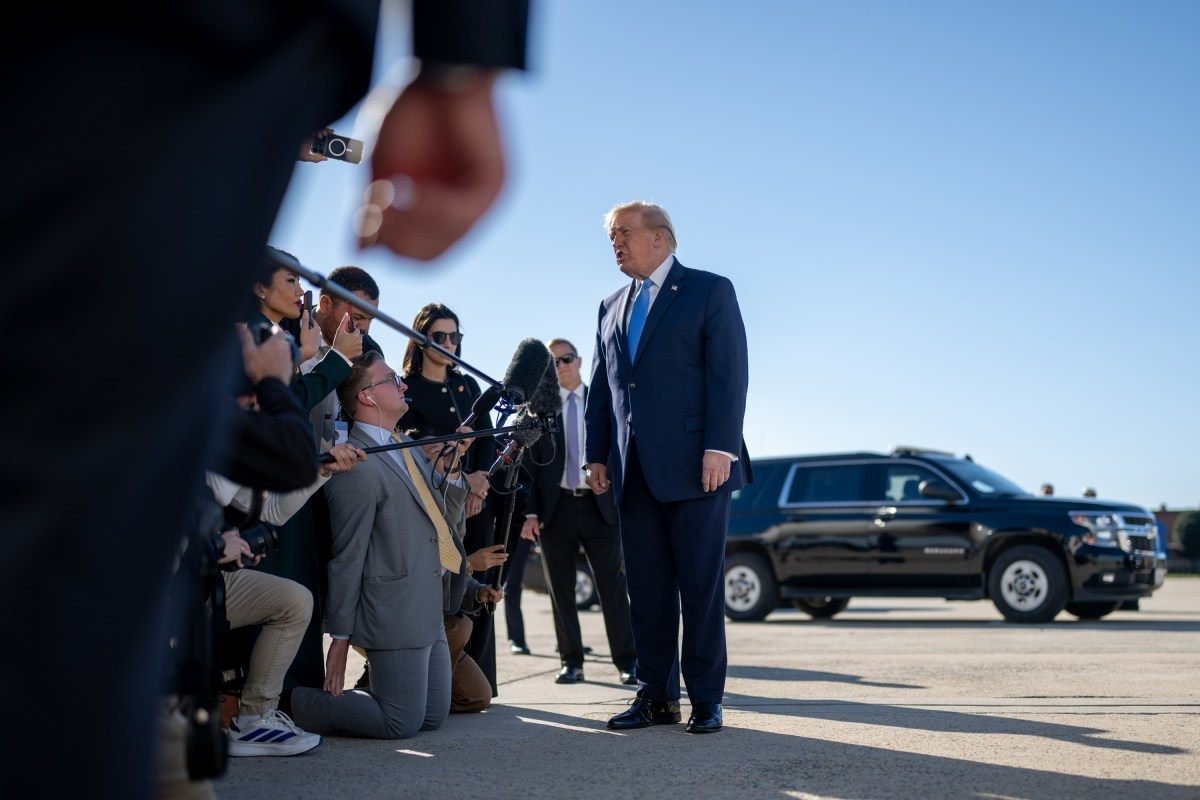
Donald Trump, the US president, said Friday that the war with Iran is “going to get wrapped up soon,” offering no details on how, as Qatari mediators returned to Tehran with changes to a draft agreement, CBS News reported. The remarks came four days before the Nov. 3 midterm elections and amid multiple news reports that Washington is preparing for the possibility of renewed strikes if diplomacy fails.
What happened
Speaking to KCMO, a Kansas City radio station, Trump said the United States needs “a guarantee there’ll never be a nuclear weapon,” according to CBS News. The Qatari delegation in Tehran is led by a senior adviser to the country’s prime minister and foreign minister, and the talks are being coordinated with the United States, the network reported.
Accounts of the negotiations differ. A source quoted by CBS News cited “indications of progress” and said an Iranian response is expected by the weekend. Earlier in the week, however, a senior Iranian official told Reuters that Qatar had brought ideas that were “unacceptable rather than a new peace proposal,” and that Tehran would show no flexibility on its nuclear program, according to Iran International, a Persian-language news outlet based outside Iran.
Iran International cited Reuters as saying the draft sets out a seven-day timeline of daily confidence-building steps by each side, with several countries serving as guarantors.
The positions on each side
The main dispute is over what comes first. Washington wants Iran’s nuclear program on the table from the start, according to CBS News. Iran wants the United States to lift its naval blockade of Iranian ports and drop sanctions on its oil and gas sales, and Tasnim, a semi-official Iranian news agency, also lists access to frozen foreign assets among Tehran’s core demands.
Mohammad Bagher Ghalibaf, the speaker of Iran’s parliament, has said progress depends on seven conditions, including guarantees against further US and Israeli strikes, Al Jazeera reported, citing Tasnim. Abbas Araghchi, Iran’s foreign minister, said Tehran “continues to give diplomacy a chance to succeed,” according to CBS News.
A separate channel has drawn conflicting descriptions. The New York Times reported that JD Vance, the US vice president, sent a letter through Qatari mediators to Mohsen Rezaei, secretary of Iran’s Supreme National Security Council, proposing direct talks led by Vance, according to Al Jazeera. Trump denied that the outreach is meant to revive wider peace talks and said it concerns only getting medical aid into Iran, CBS News reported. Tasnim said Iran had not replied.
Preparations for possible strikes
The diplomacy is unfolding alongside reported military planning. The Wall Street Journal reported that Washington warned several Gulf Arab states to prepare for a possible short, intense campaign after the election, and that Trump has not made a final decision, according to Iran International. Al Jazeera cited the New York Times as reporting that the United States and Israel drew up joint attack plans for after the vote.
Asked on Wednesday whether he would rule out strikes after the midterms, Trump told reporters, “I can’t tell you that,” adding that “anything is possible,” Iran International reported. The White House declined to comment on what it called sensitive military plans “that may or may not exist,” while saying that Trump “keeps all options on the table” to keep Iran from obtaining a nuclear weapon.
Chris Murphy, a Democratic US senator, said he had been briefed on the plans and called them “insane,” according to Al Jazeera. Vance told Fox News that Trump would “never” allow the conflict to become “a forever war,” Al Jazeera reported.
Analysts interviewed by Al Jazeera were skeptical of a quick settlement. Andreas Krieg, an associate professor of security studies at King’s College London, said he expects little to change before the election, followed by a sharp rise in the risk of war.
Background
The war began on Feb. 28, when the United States and Israel attacked Iran in strikes that killed Ayatollah Ali Khamenei, then the country’s supreme leader, Al Jazeera reported. Iran responded by blockading the Strait of Hormuz, a vital route for global oil shipments, and energy prices have surged. Brent and West Texas Intermediate crude, the two main oil benchmarks, were each up about 70% from a year earlier, according to CBS News.
The Pentagon’s count of US service members who have died since the war began now stands at 23, CBS News reported: 11 killed by enemy fire and 12 in nonhostile circumstances.
Shipping in the strait remains under threat. CBS News reported the following recent developments, some of which rest on Iranian claims alone:
- Iran’s navy and its Islamic Revolutionary Guard Corps, an elite military force, said four tankers hit mines on Thursday and two more caught fire after hitting mines on Friday.
- The UK Maritime Trade Operations center, which tracks incidents at sea, said a projectile struck a tanker Thursday evening on a southern route encouraged by the United States, with no injuries reported.
What comes next
The immediate test is Tehran’s reply to the revised Qatari draft, which the source cited by CBS News expects by the weekend. Wolfgang Pusztai, a security analyst and former Austrian defense attaché, told Al Jazeera that a large US attack is unlikely before the midterms but that he expects a major wave of strikes from mid-to-late November if negotiations stall.