Supreme Court Refuses to Revive Trump Limits on Trans Inmate Care
The justices left in place a lower-court order requiring federal prisons to keep providing gender-affirming care while a legal challenge continues.
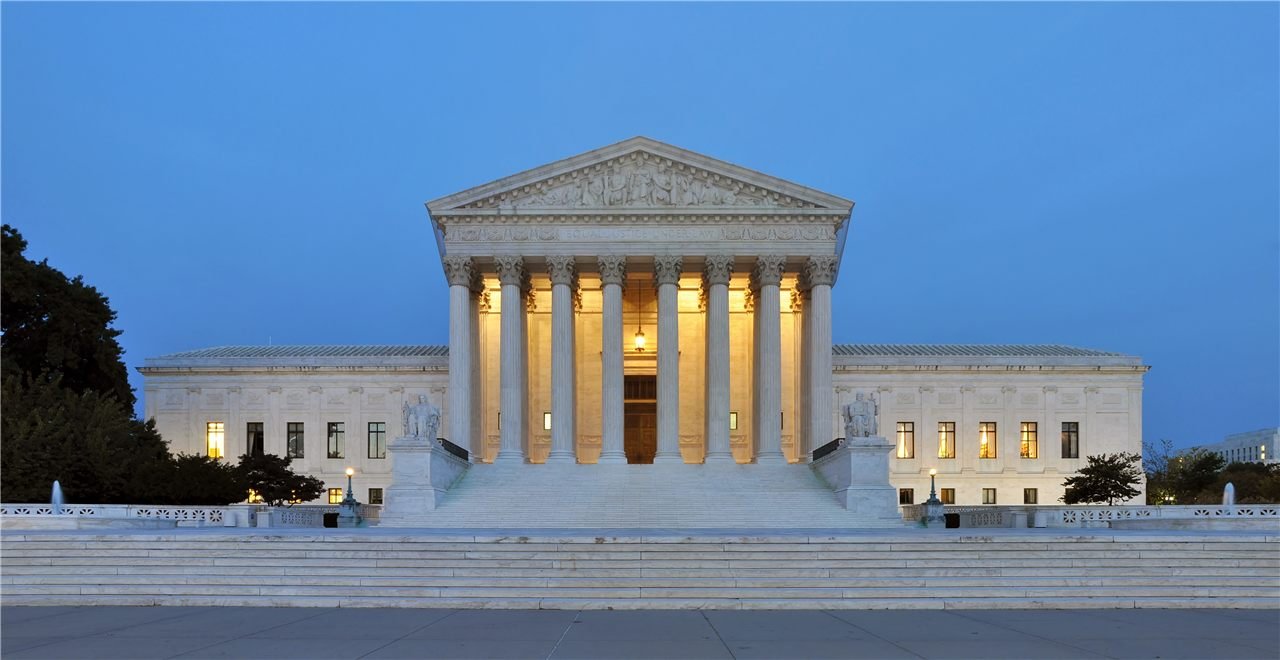
The US Supreme Court on Wednesday refused to let the Trump administration enforce a federal prison policy that would end hormone therapy and other gender-related treatment for transgender inmates. The decision leaves a lower-court order in place while the legal fight continues. In a brief, unsigned order, the court denied the Justice Department’s emergency request to put the policy into effect, CBS News reported. Justices Samuel Alito and Clarence Thomas said they would have granted it.
What the court did
The case, known as Trump v. Kingdom, reached the high court on its emergency docket. That track lets the justices decide whether a policy can take effect while lawsuits move through the lower courts, without first ruling on whether the policy is lawful. In practice, Wednesday’s order means the Federal Bureau of Prisons, the Justice Department agency that runs the federal prison system, must keep providing care such as hormone therapy for now.
The court gave no reasons, which is common for emergency orders. According to CBS News, the order did not address the underlying legal questions, which remain before the lower courts.
The ruling stood out because the court has often sided with the administration on transgender issues. The Associated Press noted that the conservative-majority court has upheld state bans on certain medical treatments for transgender minors and state limits on transgender athletes in women’s sports. In shorter-term emergency orders, it has also let the administration move ahead with policies on transgender military service and passports.
The policy at issue
The prison policy grew out of an executive order President Donald Trump signed on the first day of his second term in January 2025. The order directed the Bureau of Prisons to revise its medical rules so that federal funds are not spent “for the purpose of conforming an inmate’s appearance to that of the opposite sex,” the AP reported.
Under the resulting policy, as described by CBS News and the AP, the bureau would:
- stop providing gender-transition surgeries and hormone therapy for gender dysphoria, the distress some people feel when their gender identity differs from their sex assigned at birth;
- place inmates already on hormones on a plan to taper them off the treatment;
- end social accommodations such as binders, breast padding, wigs and makeup;
- continue to offer mental health therapy.
A bureau memo cited the executive order and said the change reflected the “latest scientific information,” CBS News reported. In its filing to the Supreme Court, the government said the bureau had determined that such surgeries, hormone treatments and accommodations “could no longer be justified as treatment for gender dysphoria,” according to the AP. Solicitor General D. John Sauer, who represents the federal government before the Supreme Court, argued the policy was needed to “maintain institutional security.”
Estimates of how many people would be affected vary. The AP reported that the bureau said in 2025 that it was providing hormone therapy to more than 600 inmates. The plaintiffs said the policy would end treatment for nearly 1,000 people, according to CBS News.
The challenge and the lower courts
The lawsuit was brought by a transgender woman and two transgender men held in federal prisons. They are represented by lawyers including Li Nowlin-Sohl of the American Civil Liberties Union (ACLU). US District Judge Royce Lamberth of Washington, DC, who was appointed by President Ronald Reagan, blocked the policy and later issued an updated injunction keeping it on hold.
In one of his rulings, Lamberth found the government had likely violated federal law. He wrote that “the court does not wade into the culture war being waged against transgender individuals,” CBS News reported. The AP reported that he also noted the bureau did not dispute that gender dysphoria can lead to severe effects, including depression, anxiety and suicidal thoughts.
A divided three-judge panel of the US Court of Appeals for the DC Circuit declined to lift the injunction by a 2-1 vote. According to CBS News, the majority said the bureau had not adequately weighed its own experience providing such care under its earlier policy, and that the government had not made a strong showing that it would win the case.
The two sides disagree sharply on the facts. The government told the justices that the bureau had properly considered its past experience and that security concerns justified the change. Its filing pointed to staff time spent protecting inmates who “appear more feminine,” The Advocate reported. The inmates’ lawyers argued that the government offered no evidence on whether the treatments work or cause harm, and cited no specific security incident linked to them. In their brief, they wrote that transgender people are vulnerable to being targeted whether or not they receive such care. They noted that the bureau has provided hormone therapy to people already on it when they enter custody since at least 1992. The ACLU has also argued that withholding the care amounts to cruel and unusual punishment.
What comes next
The case now goes back to the lower courts, and Lamberth’s injunction stays in force in the meantime. The ACLU said it would keep defending its clients. Nowlin-Sohl called the decision critical for transgender people in federal custody and described denial of the care as “a violation of their fundamental constitutional rights,” according to CBS News. The administration can continue to defend the policy in the lower courts, and the dispute could return to the Supreme Court later in the case.