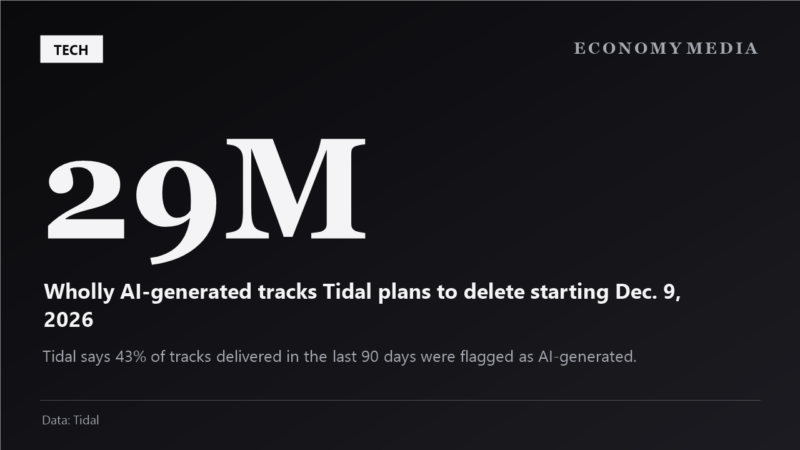
Tidal to Ban Fully AI-Generated Music, Remove 29 Million Tracks
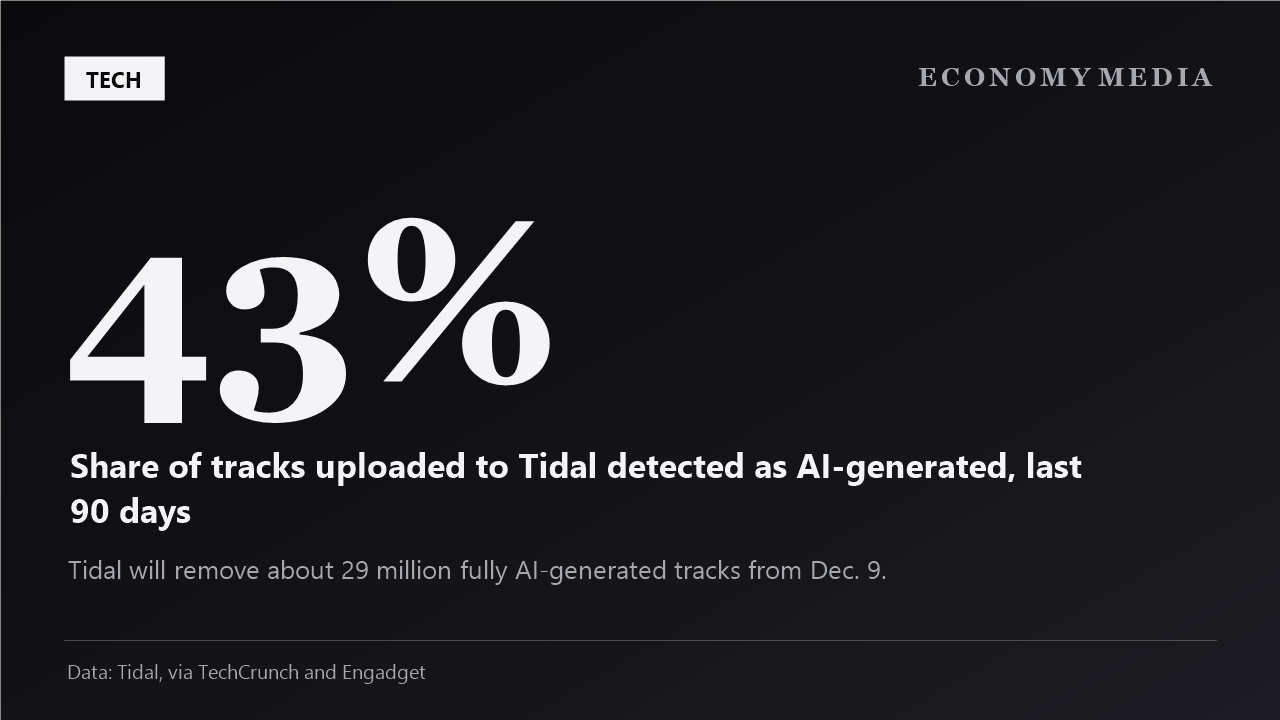
Tidal will begin removing fully AI-generated songs on Dec. 9 and reject new ones, saying they made up 43% of recent uploads.
Tidal, the music streaming service owned by Block, said it will ban fully AI-generated music from its platform starting Dec. 9 and will delete an estimated 29 million tracks, according to reports from TechCrunch and Engadget published Tuesday.
Songs made with AI assistance, but not generated entirely by AI, will still be accepted, TechCrunch reported.
What happened
Robert Anderson, who leads Tidal’s music operations, announced the policy in a post on X. He said the company had earlier tagged and demonetized wholly AI-generated tracks, but that this had not been enough. Over the past 90 days, 43% of the tracks delivered to Tidal were detected as AI-generated, according to the company.
Tidal expects the purge to remove roughly 29 million songs, and it expects to reject about 80,000 to 85,000 tracks per day going forward, both outlets reported. TechCrunch said Tidal will bar distribution services, the companies that deliver music to streaming platforms on behalf of artists and labels, from submitting 100% AI-generated tracks, and will reject submissions whose metadata shows they were made fully with AI.
Tidal said about 27 million tracks, or 6.3% of its catalog, are currently fully AI-generated, and that 96% of those have no streams, TechCrunch reported. Engadget quoted Anderson as saying 96% of AI-generated songs receive zero plays. The reports do not explain the gap between the 27 million figure and the roughly 29 million tracks expected to be removed, and TechCrunch said the deletions would be completed by the end of the year.
In a post on X cited by TechCrunch, the company said that at this scale, “the authentic music and artists” subscribers want to discover “get buried.”
Why it matters
Streaming services have been struggling with a surge of low-quality, machine-made uploads that critics call “AI slop.” Tidal began tagging fully AI-generated tracks and cutting off their royalties in June, a step that TechCrunch said did not prove enough of a deterrent.
Anderson said Tidal is the first music streaming service to ban such music outright and urged other services to follow, Engadget reported. TechCrunch described Tidal as one of the first major platforms to do so after Bandcamp, which already prohibits music generated wholly or in substantial part by AI, according to Engadget.
Other services have taken softer approaches. TechCrunch reported that Deezer will add a toggle letting users filter out AI music, while Spotify and YouTube Music label it. Engadget said Spotify has said it will keep removing spam from recommendations, and that Apple Music labels AI-made songs.
What comes next
The removals are scheduled to begin Dec. 9. It is not yet clear how Tidal will classify borderline cases, such as songs where AI played a large but partial role, or what recourse artists will have if their work is wrongly flagged. Tidal has not detailed how its detection works beyond the use of submission metadata, according to the reports reviewed. The Verge also reported on the plan, citing Anderson, though that article could not be independently reviewed for this report.
Whether larger rivals such as Spotify, Apple Music or YouTube Music will adopt similar bans remains unknown. None had announced such a move in the reports reviewed.