UK Backs Core of Milburn Plan to Tackle Youth Jobs Crisis
Nearly 1 million young Britons are out of work, school and training. A review urges new benefits for under-25s and cash for employers who hire them.
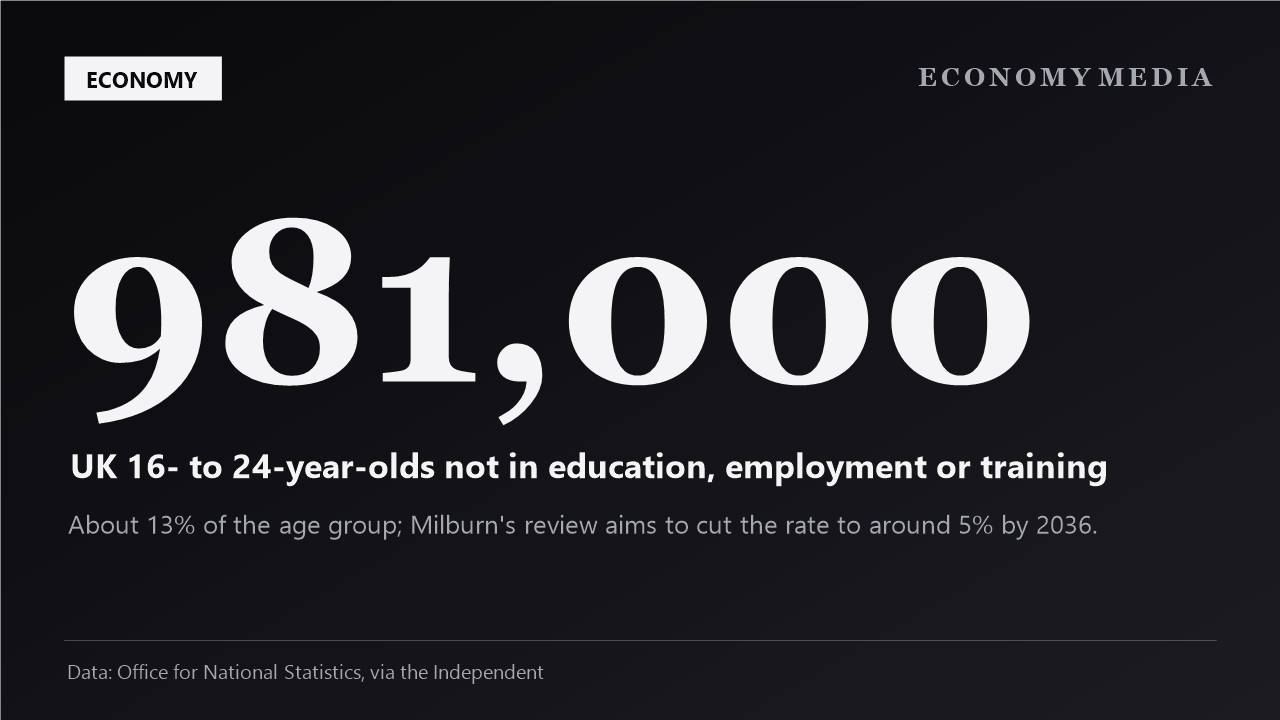
The British government said Tuesday it agrees with the core principles of a major review into why nearly 1 million young people are out of work, education and training, and will set up a new unit reporting directly to the prime minister to tackle the problem. The report, led by Alan Milburn, a former Labour health secretary, calls for an entirely new benefit system for under-25s, cash incentives for employers who hire young people, and a 10-year push to cut the share of young people left outside work and study to around 5% by 2036.
What happened
The final report of the review, titled “From a Welfare State to a Working State,” was published on Nov. 17, a year after the government commissioned it. It focuses on so-called NEETs, the term used in Britain for 16- to 24-year-olds who are not in education, employment or training. According to the Independent, which ran live coverage of the launch, 981,000 young people fall into that group, about 13% of the age bracket, and Milburn warned the figure could climb to 1.25 million by 2031 without action.
“A lost generation is not a fact of life. It is a choice,” Milburn said, according to the Independent.
Prime Minister Andy Burnham called the report a “watershed moment” but did not immediately commit to its full spending plans, the newspaper reported. Pat McFadden, the work and pensions secretary, accepted several recommendations, including legal rights to an offer of work or learning and personalized support, and said a fuller response would follow in the new year. The government also pledged a locally led youth service shaped by mayors, according to LGIU, a local government think tank, which said a white paper is expected in early 2027 with legislation later that year.
What the report proposes
The review’s main recommendations, as summarized by Policy Connect, a cross-party think tank, and other outlets, include:
- A single “Youth Allowance” for under-25s, paid at the under-25 universal credit rate, replacing the health top-up in universal credit, Britain’s main working-age benefit, and Personal Independence Payment, a disability benefit.
- A £3,000 payment to employers who hire a young person who has been out of work or study for six months, with extra premiums for small firms and for young people facing bigger barriers, such as care leavers and disabled people.
- A gradual cut in employer National Insurance, a payroll tax, for workers aged 21 to 24, starting in retail and hospitality, which Policy Connect said provide 37% of jobs held by 16- to 24-year-olds.
- A paid six-month job offered after 12 months out of work or study, rather than the current 18 months.
- A Youth Opportunity Service in every part of England by 2029, giving each young person a named adviser within 14 days and a plan within four weeks.
- An extra 150,000 18- to 24-year-olds in further education each year and a large expansion of apprenticeships.
Sources gave slightly different numbers for some details. Policy Connect reported a target of 270,000 under-25 apprenticeship starts a year by 2036, while the Independent cited a doubling to 215,000. Policy Connect also noted that the report’s own modeling reaches a rate of 6.8% by 2036, with the rest of the path to 5% depending on economic growth that was not modeled.
Why it matters
The review put the cost of youth inactivity at around £125 billion a year, and said Britain spends £25 on benefits for young people for every £1 it spends on helping them into work, a ratio Milburn wants to rebalance to 2 to 1, the Independent reported. The plan calls for up to £5.8 billion a year in new employment spending over a decade, offset by £3.6 billion a year in welfare savings and £2.4 billion from extra tax and fewer benefit claims, leaving a net saving of around £200 million a year. Milburn asked for an initial £500 million from April.
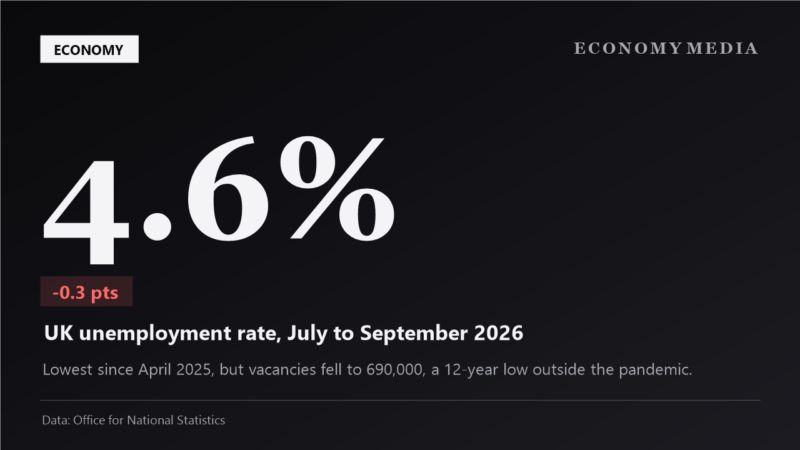
The report landed on the same day as fresh labor market data. The Office for National Statistics said unemployment fell unexpectedly to 4.6% in the three months to September, but the jobless rate for 16- to 24-year-olds stood at 15.1%, and job vacancies fell to their lowest level in 12 years outside the pandemic period.
Reaction and what comes next
The proposals drew a mixed response. The Trades Union Congress, Britain’s main union federation, called the report a “generational chance,” according to the Independent. Kemi Badenoch, leader of the opposition Conservative Party, predicted “just more bluster and hot air” from the government, while Helen Whately, the Conservatives’ work and pensions spokeswoman, accused ministers of “cherry picking.”
The welfare changes are likely to be the hardest sell. The Institute for Fiscal Studies, an economic research group, warned that many people with less severe disabilities would likely see large income losses at first, and the New Economics Foundation, a progressive think tank, argued there is little evidence that health benefits push young people out of work. Policy Connect noted that welfare proposals have already divided Labour lawmakers after the government scaled back earlier welfare plans in 2025. Key funding decisions will depend on the 2027 Spending Review, LGIU said.