UK Inflation Climbs to 3.6% as Diesel Hits Record High
UK consumer prices rose 3.6% in the year to October, a one-year high, as record diesel prices fed through and energy bills look set to jump in January.
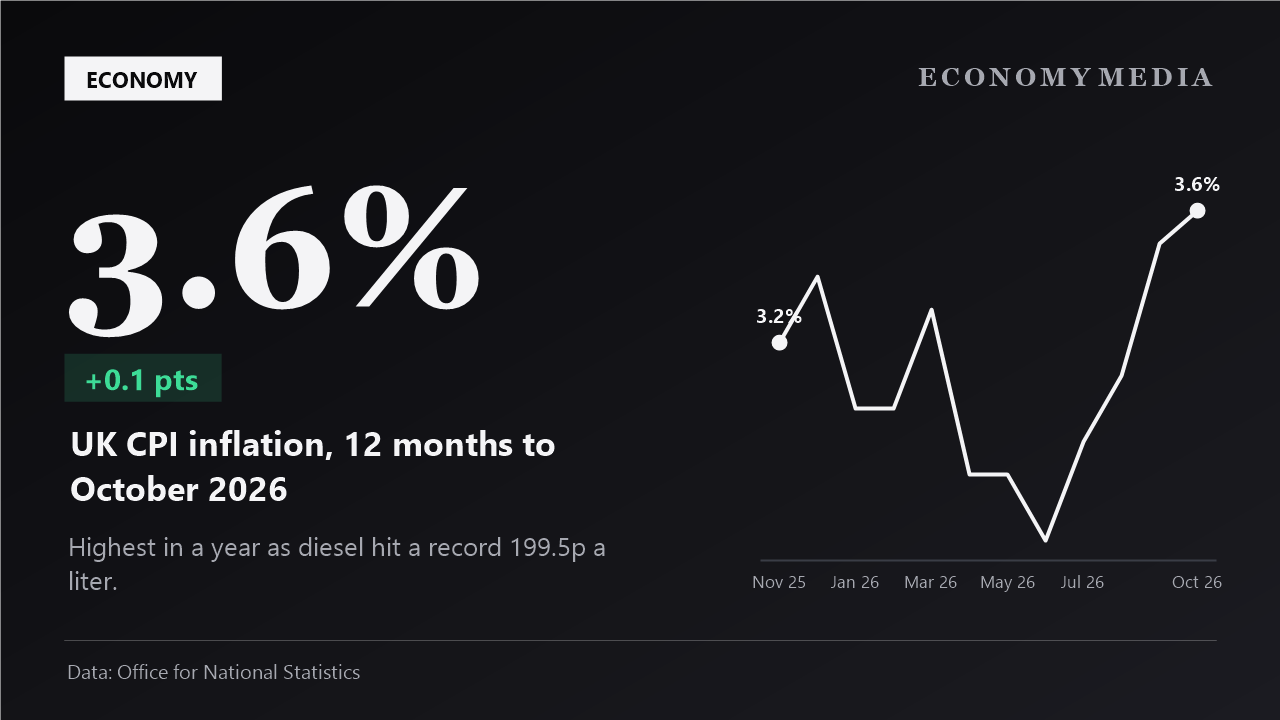
Inflation in the United Kingdom rose to 3.6% in the 12 months to October, its highest level in a year, as petrol and diesel prices surged in the fallout from the war involving Iran, the Office for National Statistics (ONS), Britain’s official statistics agency, said on Wednesday. The figure was up from 3.5% in September and matched the forecasts of economists polled by Reuters, CNBC reported. It adds pressure on households that are also bracing for a sharp rise in home energy bills from January, and on the Bank of England, which raised interest rates earlier this month.
What happened
The consumer prices index, the main measure of inflation, rose 0.5% between September and October alone, according to the ONS. The agency said transport was the largest upward driver, adding 1.06 percentage points to the annual rate, with motor fuels doing most of the work.
Fuel prices overall were 33.2% higher than a year earlier, the steepest annual increase since July 2022. The average price of diesel rose 7 pence a liter during October to 199.5p, the highest since the ONS began keeping records in January 1996. Petrol, known as gasoline in the US, averaged 174.7p a liter, the most since August 2022.
Other parts of the basket moved in different directions:
- Core inflation, which strips out energy, food, alcohol and tobacco, was 2.8%, little changed from September.
- Services inflation, closely watched by the central bank, held roughly steady at 3.7%, while goods inflation climbed to 3.5% from 3.2%.
- Food prices rose just 0.8% over the year, a relatively mild pace for shoppers.
- Alcohol and tobacco inflation jumped to 4.5% from 2.5%.
- Restaurants and hotels, at 3.4%, were the biggest offsetting factor, easing from 3.8%.
Electricity prices actually dipped 0.8% over the month, the ONS said, partly because the government cut value-added tax on household electricity from 5% to zero on Oct. 1.
Why it matters for households
Inflation had eased to as low as 2.6% in June, ONS figures show, before climbing again over the summer. CNBC noted that the UK, as a net importer of energy, is especially exposed to outside shocks, and linked the latest surge to disruption of shipping through the Strait of Hormuz since the conflict between the United States and Iran began in late February. Brent crude, the international oil benchmark, has fallen back from wartime highs above $100 a barrel but remains elevated, the network said.
More pain is on the horizon. A typical household energy bill in Great Britain is forecast to rise by about £443 a year, or roughly 26%, to around £2,166 from January, the BBC and the Guardian reported. That compares with the current cap of £1,723 for a typical dual-fuel household paying by direct debit, set by Ofgem, the energy regulator, which caps the unit prices suppliers can charge. Forecasts vary: International Business Times noted that estimates published in September ranged from about £1,872 from the consultancy Cornwall Insight to £2,165 from the supplier EDF. Ofgem is due to confirm the January-to-March cap by Nov. 25.
What comes next for interest rates
The Bank of England, which targets inflation of 2%, raised its key interest rate earlier in November for the first time in three years and has warned that inflation could reach 5% by the middle of 2027, CNBC reported. Andrew Bailey, governor of the Bank of England, said in the bank’s latest Monetary Policy Report that without “real progress towards settling the conflict in the Middle East,” the risks to energy prices and inflation are “to the upside.”
Financial markets are pricing in roughly an 80% chance of another rate increase at the bank’s final meeting of the year in December, according to CNBC. Scott Gardner, an investment strategist at JPMorgan Personal Investing, told the network that policymakers will remain wary of price pressures that could persist, though he noted that a recent drop in oil prices following the US midterm elections could ease future readings. How quickly fuel costs settle, and how large January’s energy bill increase turns out to be, are likely to shape the outlook for British borrowers and savers in the months ahead.