UK Minister Backs Legal Right to Job Help for Young People
Britain's work and pensions secretary wants job support for under-25s written into law, days before a review proposes deep changes to youth benefits.
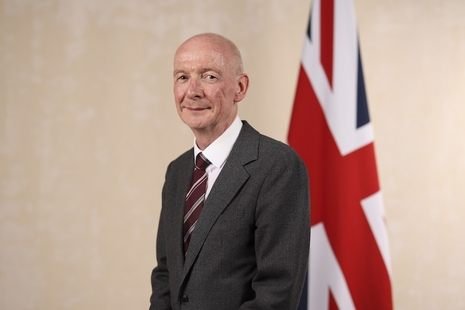
Britain’s top welfare minister said Sunday that young people should have a legal guarantee of help finding work, days before a government-commissioned review is expected to propose both a new duty on the state to offer jobs or training to under-25s and the removal of the main sickness and disability benefits for that age group.
Pat McFadden, the U.K.’s Work and Pensions Secretary, told the BBC that the support now on offer to young jobseekers is too “vague” and “needs to be more firm,” adding that he believes “we need some legislative underpinning to this.” He said any such guarantee would have to be drafted carefully, the BBC reported.
What happened
McFadden was speaking on the BBC’s Sunday politics program hosted by Laura Kuenssberg, alongside Alan Milburn, a former Labour health secretary who has spent the past year leading an independent review of why so many young people in Britain are out of work. Milburn’s final report is due to be published on Tuesday, according to the BBC and the trade publication Personnel Today.
The review is expected to recommend that people under 25 be guaranteed a job placement or training to help them into permanent work. Milburn wants a new “duty on government” to provide opportunities such as apprenticeships, college places, job coaching or a job, paired with stronger obligations on young people to take them up, the BBC said.
The more contentious part of the package concerns benefits. According to the BBC and Personnel Today, the review is expected to say that under-25s should no longer receive the health element of universal credit, Britain’s main means-tested benefit for people who are out of work or on low incomes, or Personal Independence Payment (PIP), the main disability benefit in England and Wales. Proposed changes reported ahead of publication include:
- A basic allowance paid at the standard universal credit rate for most young claimants.
- A new “additional cost allowance” for some young people to cover day-to-day costs linked to a health condition or disability.
- A separate, higher-rate benefit for those with more severe disabilities who cannot work.
- A risk of losing some benefits for young people who do not take part in the support offered.
McFadden confirmed that some current claimants would receive less once they are reassessed and moved onto a new system, while those with long-term disabilities would receive more, the BBC reported. The precise financial impact will not be clear until the government publishes legislation, Personnel Today noted.
Why it matters
The proposals are aimed at what Milburn’s interim report, published on May 27, called a growing crisis of young people not in education, employment or training, known in Britain as “NEETs.” That report put the number at nearly one million, and the Youth Futures Foundation, a charity focused on youth employment, cited official figures of about 1,012,000, FE News reported. The Learning and Work Institute, a policy research group, said the NEET rate of 13.5% was the highest since 2013.
The interim review warned that without reform the share could climb from one in eight young people to one in six within five years, or roughly 1.25 million people. It also found that in 2024-25 the government spent about £25 on benefits for every £1 it spent on employment support for young people, and that six in ten young people had never held a job, compared with about four in ten two decades ago. “This is not a failure of young people. It is a failure of a system stuck in the past,” Milburn wrote, according to FE News.
About four million people claim PIP in England and Wales, of whom roughly 430,000 are aged 16 to 24, Personnel Today reported. For households that depend on those payments, the changes could mean less money at the start of a claim. Milburn has acknowledged as much, telling The Times that the reforms would not be “pain-free,” according to Personnel Today.
Competing views
Milburn argued on Sunday that money should be shifted from benefits toward work support and said he wants “billions” more spent over the next decade. He cautioned that a lasting reduction in welfare spending cannot be achieved in two or three years and that “crude cuts” would bring other costs. He also said temporary programs such as the Covid-era Kickstart wage-subsidy scheme had been less effective at reducing long-term joblessness.
Helen Whately, the opposition Conservative Party’s spokesperson on work and pensions, rejected the idea of a legal guarantee, saying it “doesn’t make sense.” She argued that cutting employer taxes and regulation would do more to create “real jobs,” the BBC reported.
Criticism is also coming from within the governing Labour Party. Bell Ribeiro-Addy, a Labour member of Parliament, told BBC Radio 4’s Today program: “I don’t think you get a disabled young person into work by taking away the money that helps them get into work,” Personnel Today reported. Labour lawmakers blocked an earlier plan to cut benefits last year, and the BBC noted that reduced entitlements could again prove controversial. A government spokesperson said ministers would “always ensure there is a safety net for the most vulnerable and those who are unable to work.” Personnel Today reported that Prime Minister Andy Burnham is expected to back the proposals.
What comes next
Separately from the review, the government is widening a program that offers jobless under-25s subsidized six-month jobs paid at the minimum wage. Starting next April, eligible claimants will receive an offer after 12 months of unsuccessful job searching, down from 18 months, the BBC reported. It is the program’s second expansion this year, after the maximum age was raised from 21 to 24.
Milburn also urged ministers to “look very carefully” at Labour’s election pledge to phase out the lower minimum wage for 18- to 21-year-olds, saying it has imposed significant costs on employers. Once the final report is out on Tuesday, attention will turn to how much of it the government adopts and whether it can win over its own lawmakers.