Sanders Pushes to Scrap Social Security Tax Cap, Add $2,400 in Benefits
Bernie Sanders, set to lead the Senate's Social Security panel, wants the wealthy taxed on more of their pay to extend solvency and raise benefits.

Sen. Bernie Sanders, the Vermont independent who caucuses with Democrats, says his top priority as the incoming head of the Senate’s Social Security subcommittee will be to raise benefits by at least $2,400 a year and keep the program solvent “for generations.” He would pay for it by making high earners pay Social Security tax on much more of their income. The plan has drawn quick pushback from Republicans, and some financial experts doubt it would fix the program’s long-term money problems on its own.
What Sanders is proposing
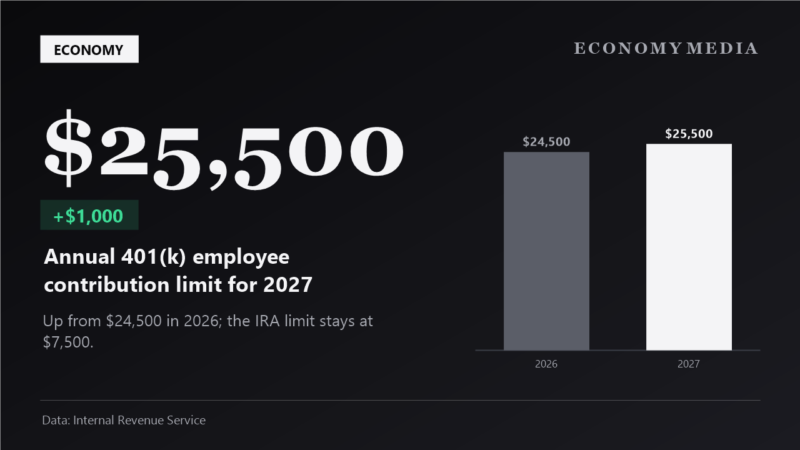
In a post on X on Nov. 7, Sanders said he would reach those goals “by scrapping the cap & demanding that the wealthy pay their fair share of taxes,” according to MarketWatch and Newsweek, which both reported the post. The “cap” is the taxable maximum: the yearly limit on wages subject to the Social Security payroll tax. Workers pay 6.2% of their wages and employers pay a matching 6.2%, but nothing is collected on earnings above the limit. That limit is $184,500 in 2026 and will rise to $192,300 in 2027.
Sanders’ main legislative vehicle is the Social Security Expansion Act, which he introduced in February 2025 with Sen. Elizabeth Warren, a Massachusetts Democrat, and other Democrats, Newsweek reported. According to Newsweek, the bill would:
- Raise benefits by $2,400 a year, or about $200 a month, for current and future recipients.
- Apply the payroll tax to wages above $250,000, and to investment income such as capital gains and dividends above that level.
- Base annual cost-of-living adjustments on the CPI-E, an experimental Consumer Price Index for the elderly designed to better track what older Americans spend money on.
Accounts of the plan differ on one key detail. MarketWatch described Sanders’ goal as removing the taxable maximum so that high earners pay the tax on all of their pay. The bill as Newsweek described it does not tax every dollar. Wages between the current cap and $250,000 would stay untaxed, creating what analysts often call a “donut hole.”
In an August letter to fellow Democrats, Sanders cited a 2023 analysis by the Social Security Administration’s Office of the Chief Actuary, the agency’s in-house team of forecasters. That analysis found such changes could keep the program solvent for 75 years while still paying for the higher benefits, Newsweek reported.
Why it matters for households
Because the 6.2% tax stops once a worker’s pay passes the cap, where the cap sits decides how much the highest earners pay into the system. For retirees and people close to retirement, the stakes are bigger. The program’s main trust fund is projected to run dry in late 2032. After that, incoming payroll taxes would cover only about 78% of scheduled benefits, which means an automatic cut of roughly 22% unless Congress acts, according to both outlets.
Alex Beene, a financial literacy instructor at the University of Tennessee at Martin, told Newsweek that the depletion date is only about six years away. Because Washington moves slowly, he said, proposals need to advance soon. He added that removing the cap probably would not be a permanent fix on its own, and that a higher retirement age or benefit cuts may eventually be needed. Still, he said, proposals like this one move the conversation forward.
Kevin Thompson, chief executive of the financial advisory firm 9i Capital Group, told Newsweek that scrapping the cap “would certainly help address some of Social Security’s funding issues.” He questioned whether higher benefits make sense before the solvency problem is solved, saying he is “not convinced expanding benefits is necessary” while that work is unfinished.
The opposition
Republicans have long opposed the bill because of the tax increases that would fund it. Sen. Bill Cassidy, an outgoing Louisiana Republican, argued on X that the plan would hit people who are not rich. “Do the math,” he wrote, according to MarketWatch, saying it would put a 12.4% tax on people far from being millionaires or billionaires. He gave the example of a married couple who both work as intensive-care nurses.
Cassidy has offered a different approach. He would put $1.5 trillion over five years into an investment fund held for 70 years, MarketWatch reported. He projects the fund would grow an average of 8.5% a year over 75 years and could cover up to 75% of the trust fund’s projected shortfall. Other ideas being discussed in Washington include raising the full retirement age or cutting benefits. Sanders has said he opposes both.
What comes next
Sanders is expected to take over the Senate Finance Subcommittee on Social Security, Pensions and Family Policy when the new Congress meets in January, after Democrats’ gains in this month’s midterm elections. He would replace Sen. Chuck Grassley, an Iowa Republican. The post would give him more power to hold hearings and shape the debate, though any change to Social Security would still need to pass the full Congress and be signed by the president. Neither outlet reported a timeline for votes on the bill. Sanders’ press office did not immediately respond to MarketWatch’s request for comment.