Walmart Raises Full-Year Outlook as Online Sales Jump 17%
Walmart beat third-quarter forecasts and raised its full-year sales and profit outlook, as e-commerce, advertising and memberships kept growing.
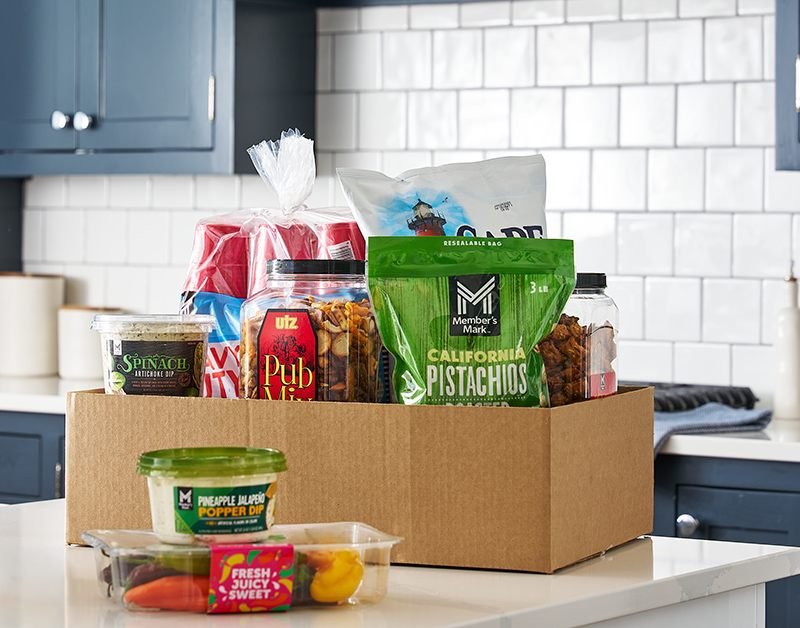
Walmart raised its full-year sales and profit forecasts on Thursday after a third quarter in which online orders, advertising and membership fees all grew quickly. The company, the largest retailer in the United States, said it is still trying to keep shelf prices low even though diesel and transportation costs have climbed.
Revenue for the quarter that ended Oct. 31 rose 5.2% to $188.84 billion. Adjusted earnings came to 65 cents a share. Both figures were slightly ahead of what analysts surveyed by LSEG had expected, $187.27 billion and 64 cents, CNBC reported.
What happened
Walmart now expects full-year net sales, measured in constant currency, to grow 4.9% to 5.2%. Its previous range was 4% to 5%. It also lifted its forecast for adjusted earnings per share to $2.84 to $2.89, from $2.80 to $2.87, and now sees adjusted operating income rising 8% to 8.6%. The company’s earnings release, filed with the U.S. Securities and Exchange Commission, shows this is the second time this fiscal year that Walmart has raised its outlook. In February it had guided to earnings of $2.75 to $2.85 a share.
“We delivered strong results, growing our core business and gaining market share,” John Furner, Walmart’s chief executive, said in the release. He added that the company’s omnichannel model, the mix of physical stores and online services, “gives us room to do even more.”
Highlights from the quarter included:
- Walmart U.S. net sales of $125 billion, up 3.6%, with comparable sales excluding fuel up 2.9%, in line with StreetAccount estimates cited by CNBC.
- Sam’s Club U.S., Walmart’s membership warehouse chain, grew net sales 10% to $25.9 billion, with comparable sales excluding fuel up 4.9%.
- Walmart International net sales of $35.9 billion, up 7% as reported. The company said the timing of the Big Billion Days sale at Flipkart, its Indian e-commerce unit, held back growth by about 5 percentage points and should help the fourth quarter instead.
- Global membership fee revenue up 17%.
Operating income rose 16% to $7.77 billion. Net income attributable to Walmart, however, fell about 19.5% to $4.95 billion, or 62 cents a share. The filing attributes the drop mainly to investments: a $341 million loss on equity and other investments this year, compared with a $2.08 billion gain in the same quarter last year.
Why it matters
Online orders were the main source of growth. Global e-commerce sales rose 17%, led by orders that stores filled for pickup and delivery. U.S. e-commerce at Walmart grew 23% and Sam’s Club’s grew 30%, according to the company.
Advertising, a high-margin business that sells ad space on Walmart’s websites and apps, kept expanding. CNBC put U.S. advertising growth at 37%. Walmart said its U.S. ad business, Walmart Connect, grew 36% when sales from VIZIO, the TV maker it acquired, and Vibe are excluded.
John David Rainey, Walmart’s chief financial officer, told CNBC the company continues to “gain share while continuing to improve the profitability of our digital businesses.” He said faster delivery and lower prices were driving growth in online orders. Rainey said he is “optimistic” about consumer spending this holiday season and that the fourth quarter was “off to a pretty good start,” though he added that the company is keeping some “flexibility” in its guidance.
Fuel costs and prices
Furner told CNBC that diesel costs have run higher than the company expected, and that tariff refunds have helped offset them and keep prices low. “The reality is that increases in diesel fuel and transportation, they do work their way into cost of goods,” he said. He added that Walmart hopes those costs ease soon and will keep prices “as low as we can.”
Walmart’s own materials say price investments in the quarter were funded by tariff refunds the company received. The sources give slightly different counts of price cuts. CNBC reported rollbacks on nearly 8,000 products, while Walmart’s release cites about 7,700 U.S. rollbacks. Neither source said how much the company received in refunds during the quarter.
What comes next
In late October, Walmart introduced a $120-a-year bundle that combines its Walmart+ delivery subscription with Sam’s Club Plus membership. Furner told CNBC the bundle has brought about two million new people to Sam’s Club since it launched. The filing warns that the way the bundled fee is split between the two businesses will weigh on Sam’s Club operating income growth until the third quarter of next fiscal year.
Furner also pointed to early results from Sparky, Walmart’s AI shopping assistant. He said customers who use it fill baskets about 40% larger on average, and the company said U.S. usage was up 129% from a year earlier. The holiday quarter, Walmart’s biggest of the year, will test whether online growth and price cuts can keep outpacing rising freight costs.