ECB President Christine Lagarde to Step Down Nine Months Early
Christine Lagarde will leave the European Central Bank on Feb. 7, 2027, opening a race to lead the eurozone's monetary policy before France's election.
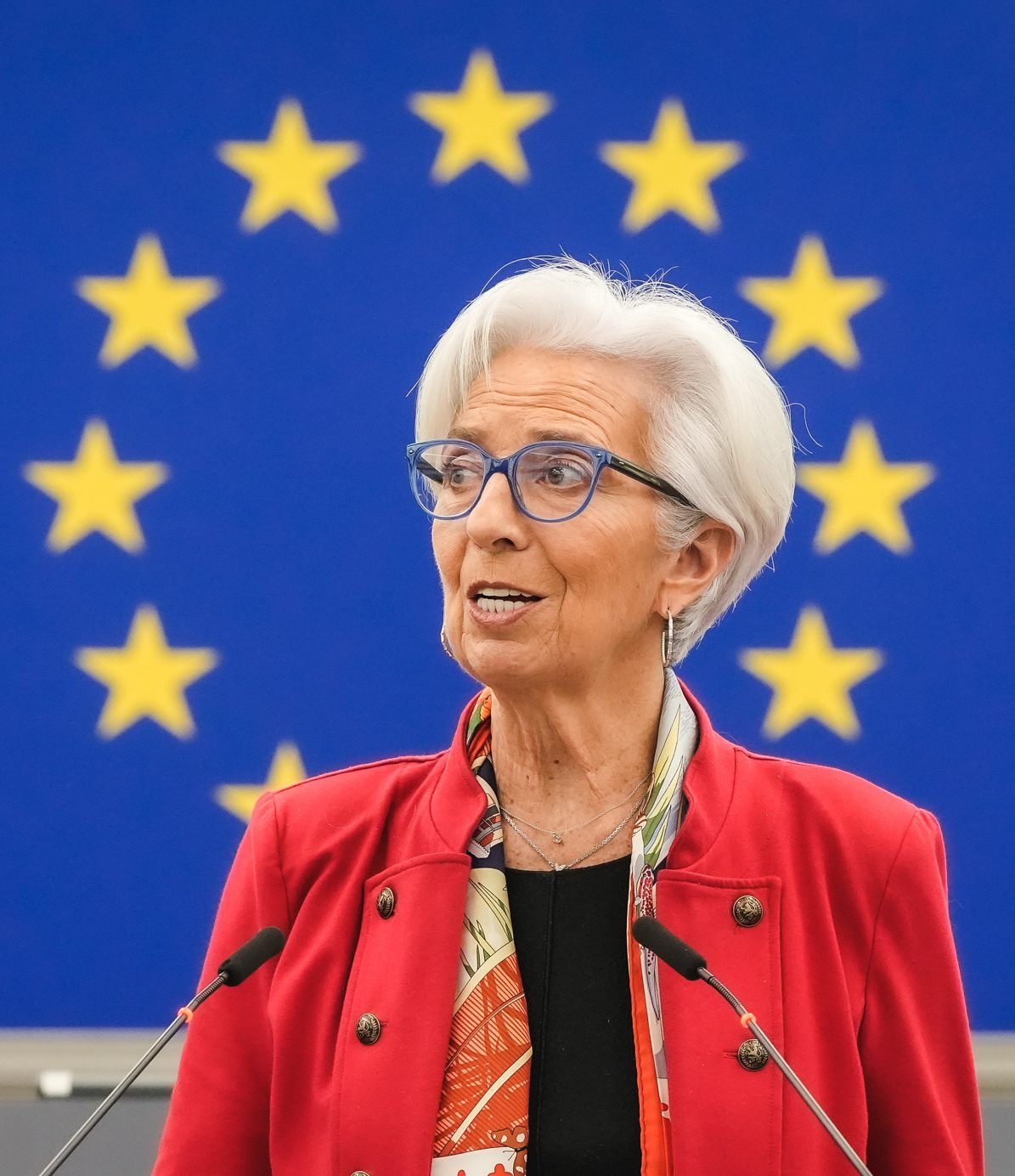
Christine Lagarde, president of the European Central Bank, will leave her post on Feb. 7, 2027, about nine months before her eight-year term was due to end, the bank announced Thursday. The move ends months of speculation about her plans and starts the search for a new leader of the institution that sets interest rates for the countries that use the euro.
What happened
In a brief statement released in Frankfurt on Oct. 29, the ECB said Lagarde had informed its Governing Council, the body of national central bank governors and executive board members that sets eurozone monetary policy, of her decision. She also told António Costa, president of the European Council, the forum where the heads of government of the European Union’s member states meet.
According to the ECB, Governing Council members responded with a long standing ovation and thanked her for her service. The bank said her successor will be appointed by the European Council under Article 283 of the Treaty on the Functioning of the European Union, the provision that governs nominations to the ECB’s executive board. France 24 reported that Costa said the selection process would begin immediately, and that he praised what he called Lagarde’s “steady and determined stewardship” in helping protect the stability of the euro area.
Neither the ECB statement nor the reports from Reuters and France 24 gave an official reason for the early departure. Lagarde’s term had been scheduled to run until the end of October 2027.
The announcement landed on a busy day for the bank. Reuters noted that it came only hours before the ECB’s scheduled interest rate decision and Lagarde’s regular press conference that afternoon.
Why it matters
The ECB president is one of the most influential economic officials in the world. The bank’s decisions on borrowing costs affect mortgage rates, business loans and savings for households across the eurozone, and they ripple into global currency and bond markets, including in the United States, where the euro-dollar exchange rate shapes the cost of imports and the competitiveness of American exporters.
The timing of the handover has drawn particular attention because of politics in France, the eurozone’s second-largest economy. France holds a presidential election in April 2027. France 24 reported that eurosceptic candidates from the far right and far left are leading opinion polls.
When the Financial Times first reported in February that Lagarde was weighing an early exit, the stated rationale was that leaving ahead of the French vote would allow French President Emmanuel Macron, who cannot seek a third term, and German Chancellor Friedrich Merz to oversee the choice of her successor, Euronews reported at the time. Euronews said there were concerns in Brussels and Paris that a eurosceptic government in Paris, with Marine Le Pen, leader of the far-right National Rally, and party president Jordan Bardella polling strongly, could stall appointments to key EU institutions.
At that point, an ECB spokesperson told Euronews that no decision had been taken and that Lagarde remained focused on her mission. The bank has not tied Thursday’s announcement to the French election.
Background
Lagarde, a former French finance minister and former managing director of the International Monetary Fund, took over at the ECB in November 2019. Her tenure spanned the Covid-19 pandemic and the surge in inflation that followed Russia’s full-scale invasion of Ukraine in 2022, which sent energy prices sharply higher across Europe, France 24 noted.
Her next move has not been confirmed. Reuters and France 24 both reported that she has been seen as a likely candidate to lead the World Economic Forum, the Geneva-based organization that hosts the annual Davos meeting. France 24 also reported that Lagarde told the French newspaper La Croix last month that running for president of France would “not be a good idea.”
Her exit follows another high-profile departure in French central banking. Euronews reported in February that François Villeroy de Galhau, governor of the Bank of France, had announced his own early resignation, reportedly for similar reasons.
What comes next
EU leaders now have a little more than three months to agree on a replacement. The European Council must make the appointment, typically after consulting the European Parliament and the ECB’s Governing Council.
No official candidates have been announced. In its February report, Euronews pointed to two names that had featured in a Financial Times survey of economists:
- Klaas Knot, former president of De Nederlandsche Bank, the Dutch central bank, who was described as a consensus-builder likely to appeal to Berlin.
- Pablo Hernández de Cos, former governor of the Bank of Spain and head of the Bank for International Settlements, the Basel-based organization often called the central bank for central banks.
Whoever is chosen will inherit a eurozone economy that has struggled with weak growth and persistent inflation pressures, and will face the task of steering monetary policy through an uncertain stretch for energy prices and European politics.