UK Watchdog Cuts 2027 Growth Outlook to 1% as Healey Delivers Budget
Britain's budget watchdog cut its 2027 growth forecast to 1% and warned of falling living standards as John Healey presented his first budget.
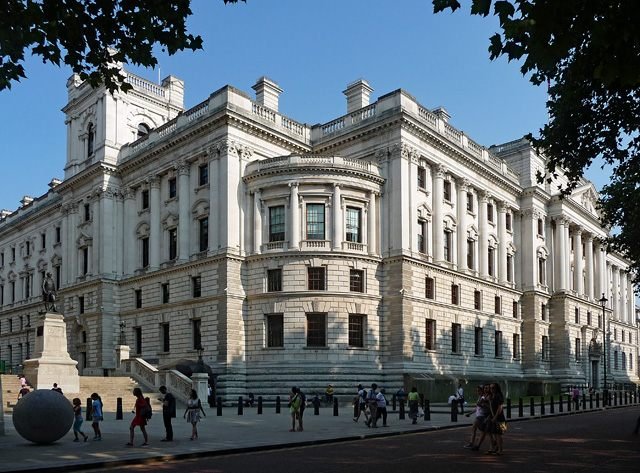
Britain’s economy will grow by just 1% next year, down from the 1.6% expected in the spring, according to new forecasts published Wednesday alongside the first budget of John Healey, the UK’s chancellor of the Exchequer, the country’s finance minister. The Office for Budget Responsibility (OBR), the government’s independent fiscal watchdog, blamed much of the downgrade on the war involving Iran, which has driven up energy prices and is expected to push household incomes lower in 2027.
Healey responded with a package aimed at cushioning households, including a one-off £100 energy payment for about 20 million homes, funded in part by a temporary rise in taxes on banks. But economists and the watchdog itself said the outlook for living standards remains bleak.
What the forecasts show
Reuters reported that the OBR nudged its estimate for growth this year up to 1.2% from 1.1%, while cutting 2027 to 1% from 1.6% in its March outlook, which was prepared before the Iran war began. The Guardian put the earlier 2027 figure at 1.5% in its article text, a small discrepancy between outlets. Growth is then projected to recover to 1.6% in 2028, 1.8% in 2029 and 1.7% in 2030, according to Reuters.
The bigger concern is for households. The Guardian reported that the OBR now expects real household disposable income, a measure of what people have left to spend after taxes and inflation, to fall 0.6% in 2027, a sharp reversal from the 0.6% rise it predicted in March. By 2029, income per person is on track to be only about 1% above its 2019 level, before the pandemic.
David Miles of the OBR called it “a pretty grim picture,” according to the Guardian and HuffPost UK, and noted that such a long stretch of near-zero growth in living standards is “pretty unusual in the history of the UK.”
Energy shock drives the downgrade
Inflation is now forecast at 3.5% for 2026, far above the 2% the OBR expected in March, the Guardian reported. Since the war began in late February, oil has climbed from about $70 a barrel to more than $115, and gas prices have nearly tripled, according to the newspaper.
The watchdog also warned that the public finances are exposed to energy markets. If prices peak higher and stay elevated, borrowing next year could be £17 billion above its central forecast, while a gentler price path could reduce it by £12 billion. The government’s fiscal headroom, its cushion against its main borrowing rule, has shrunk to £15 billion from £23.6 billion left by Healey’s predecessor, Rachel Reeves, in the spring, and debt interest costs are £14 billion higher than expected, the Guardian said.
What the budget offers households
The measures announced by Healey, who serves in the Labour government of Prime Minister Andy Burnham, include:
- A £100 energy payment for about 20 million households in council tax bands A to D, the lower property-value bands, at a cost of £2.6 billion.
- Scrapping standing charges, the fixed daily fees on gas bills, which HuffPost UK said would save 60% of homes up to £45 a year.
- Extending a VAT cut on energy bills and a freeze on fuel duty until July, according to LabourList, a Labour-focused news site.
- A 3.9% rise in the National Minimum Wage and National Living Wage.
- A defense spending target of 3% of GDP by 2030, with major funding decisions deferred to a later spending review.
To help pay for the energy support, the government is raising the surcharge on bank profits, although outlets described the details differently. LabourList reported that the surcharge would return to 8% from 3% and raise about £2 billion, while other reports described a smaller, time-limited increase.
Reaction and what comes next
Healey said Britain had “beaten the forecasts this year” and argued it could do so again, HuffPost UK reported. The Guardian noted that the UK posted the strongest growth in the Group of Seven large economies in the first half of 2026, helped by investment in artificial intelligence.
Critics were less convinced. Helen Miller, director of the Institute for Fiscal Studies, a London-based economic research group, described the package as “lots of fiddling, short-term things,” according to HuffPost UK. Ruth Curtice, chief executive of the Resolution Foundation, a think tank focused on living standards, said the Treasury had “spread the jam thin” and warned that the reduced headroom leaves little protection against further inflation shocks from the war.
HuffPost UK also reported that early forecasts suggest household energy bills could rise by about £400 from January, meaning the £100 payment may offset only part of the increase. With growth slowing and prices still elevated, the budget’s success will depend heavily on the path of global energy markets in the months ahead.