India’s Voter Roll Purge Strikes 130 Million Names, Fueling Protests
About 130 million names have been struck from India's voter rolls in a revision critics call the largest disenfranchisement in history. The government defends it.
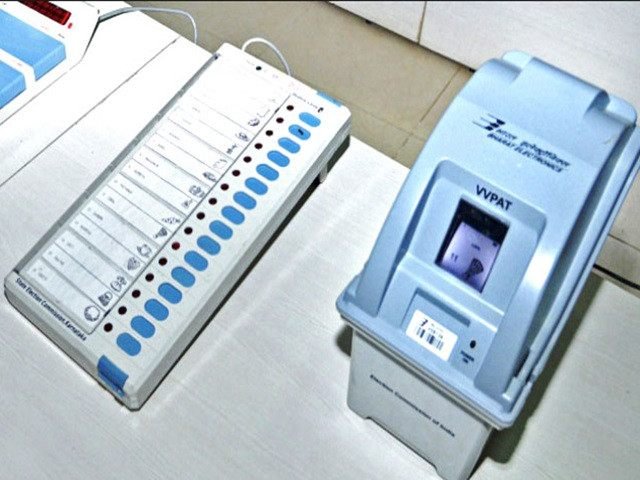
A sweeping review of India’s electoral rolls has removed an estimated 130 million names from the lists of eligible voters, setting off near-daily protests and what Reuters described as the biggest challenge yet to Prime Minister Narendra Modi’s government. The deletions, carried out under a process known as the Special Intensive Revision, or SIR, have left people across the world’s most populous democracy trying to prove they are alive, still live where they always have, or are entitled to vote at all.
What happened
The SIR is a door-to-door re-verification of voter lists run by the Election Commission of India, the body that organizes the country’s elections. It began in June 2025 and has since been rolled out in phases across states. According to NPR, the roughly 130 million deletions come from a roll that once listed about 980 million voters. That estimate was compiled by Yogendra Yadav, an elections specialist and prominent critic of Modi’s Bharatiya Janata Party (BJP), and NPR noted that the BJP itself has cited the figure as authoritative in defending the exercise.
NPR called the purge the largest disenfranchisement in history by raw numbers, while noting that, as a share of the population, Jim Crow laws in the United States excluded a higher proportion of people.
Voters have been removed for a range of reasons. Reuters reported that removals ranged from “logical discrepancies” in paperwork to people being wrongly recorded as dead. NPR described residents deleted for allegedly moving even after signing forms with officials, voters asked for documents never previously required, such as proof that parents or grandparents voted more than two decades ago, and people flagged over small differences in the spelling of their names.
The human toll
In New Delhi alone, draft rolls published on August 31 showed 4.2 million voters struck off, Reuters reported. One of them, a 53-year-old tailor, was listed as dead and told Reuters he had voted for 35 years but “nobody listens.” He has been losing his daily wage of 250 rupees, about $2.63, while visiting offices to prove he is alive. A volunteer with the nonprofit group Jan Sarokar told the agency that about 2,000 of roughly 9,000 voters in the tailor’s block had been removed.
NPR spoke with a 27-year-old widow living under a Delhi flyover whose community lost about 500 adult voters. She fears losing a monthly stipend of about $25 and free food staples. “They’ll cut us off from everything slowly,” she said. Sunil Kumar, a senior election official in the area, told NPR his department was working to restore the community to the rolls.
Many of those affected worry the consequences reach beyond the ballot box. NPR reported that officials in some BJP-ruled states have vowed to remove deleted voters from welfare programs, and some people told Reuters they had been asked to reapply as new voters rather than have their old registrations restored.
Competing claims
The Election Commission says the revision is meant to clean up the rolls by removing duplicate, deceased, relocated and otherwise ineligible voters, and that anyone wrongly excluded can file claims, submit documents and appeal before the lists are finalized. In September, after a public outcry, the commission said it had acted with “complete integrity” and that officers would help reinstate people who had been deleted, according to NPR. After weeks of protests, it also ordered fresh verification in some states, including Delhi, Reuters reported. The commission did not respond to a Reuters request for comment.
The BJP has argued in a video on its YouTube channel that the removed names belonged to people who had died, were registered twice, had moved or were otherwise absent. Amit Shah, India’s home minister, has said the revision aims to detect, delete and deport “infiltrators,” a term NPR noted is often used as a coded reference to Muslims from neighboring Bangladesh.
Opposition parties allege that Gyanesh Kumar, the chief election commissioner, manipulated the revision to benefit the BJP. Both the commission and the party deny the accusation. Critics also object to the process itself. S.Y. Quraishi, who served as chief election commissioner from 2010 to 2012, told NPR the revision reverses the normal relationship between voters and the state, while Kaustubh Chaturvedi, a lawyer who has filed several petitions against it, argued that the burden of proof has been shifted onto citizens.
Protests and the courts
Opposition parties and youth groups have staged near-daily demonstrations in New Delhi and other cities, and police have responded with force, Reuters reported. Protesters are demanding Kumar’s resignation and a rollback of the revision. In an essay for Time, constitutional lawyer Gautam Bhatia wrote that more than 7,000 people, including opposition leaders, lawyers and journalists, were detained around one planned protest in the capital this month, and that authorities deployed over 20,000 police and paramilitary personnel and suspended mobile internet.
Legal challenges have so far failed to halt the process. Bhatia, a critic of the revision, wrote that India’s Supreme Court set up tribunals staffed by judicial officers to hear appeals from excluded voters and ultimately upheld the exercise this year, affirming the commission’s broad powers. He noted that in the eastern state of West Bengal, where about 9 million people were excluded before this year’s state election, around 90% of appeals that were decided resulted in voters being restored.
With claims and appeals still being processed in many states, the final number of people permanently removed remains unclear. For millions of Indians, the immediate task is more basic: getting back onto a list many had been on for decades.