638,000 Medicare Users Will Have No Advantage Drug Plan Option in 2027
Insurer pullbacks leave 193 U.S. counties with no Medicare Advantage drug plan for 2027, and the average beneficiary has fewer choices.
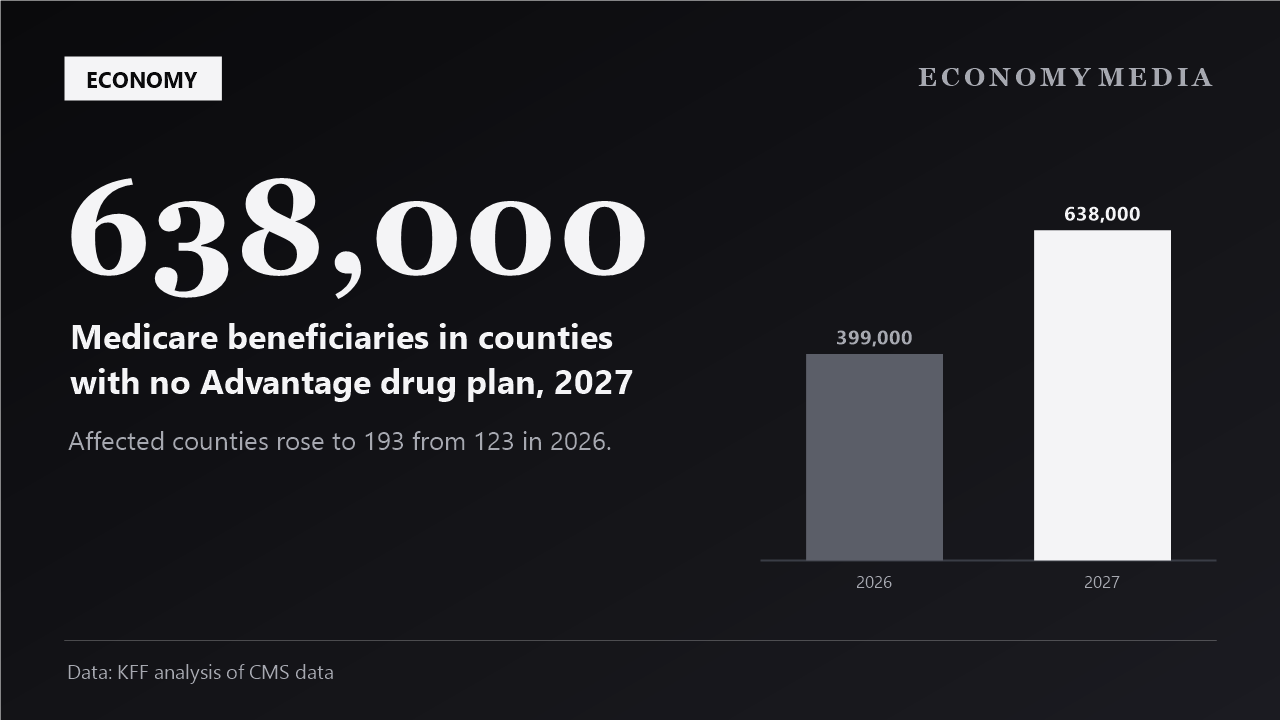
About 638,000 people on Medicare live in places where no Medicare Advantage plan with prescription drug coverage will be open to general enrollment in 2027, according to an analysis of federal plan data by KFF, the nonpartisan health policy research group. The number of affected counties jumped to 193 from 123 this year, as major insurers shrink their footprints. Most other beneficiaries will also see fewer plans to choose from, with less than two weeks left in the annual enrollment window.
Medicare Advantage is the private-insurer alternative to traditional, government-run Medicare. Insurers are paid by the federal government to deliver Medicare benefits, and most of these plans bundle in Part D prescription drug coverage, often with no premium beyond the standard Part B premium. That all-in-one package is what is now disappearing in a growing number of mostly rural areas.
What happened
KFF’s review of 2027 plan data from the Centers for Medicare & Medicaid Services (CMS), the federal agency that runs Medicare, found that the 193 counties without a Medicare Advantage drug plan are spread across 16 states and U.S. territories other than Puerto Rico. The states are Alaska, California, Colorado, Idaho, Kansas, Minnesota, Montana, Nebraska, Nevada, New Hampshire, North Dakota, Oklahoma, Oregon, South Dakota, Utah and Vermont. New Hampshire, North Dakota and Oklahoma are new to the list this year.
The affected population grew by 239,000 people from 399,000 in 2026, KFF said. About 110,000 of them are in Alaska, where no such plans are offered for general enrollment, as was also the case this year. In 187 of the counties, no Medicare Advantage plan of any kind will be sold to the general public. In the other six, which are Boyd County in Nebraska and Aurora, Beadle, Bon Homme, Brown and Charles Mix counties in South Dakota, the only option will be a plan that does not cover prescription drugs.
Beneficiaries in those areas can still use traditional Medicare and buy a separate drug plan.
Fewer choices almost everywhere
Shrinking options are not limited to the counties left with none. In a separate analysis published Oct. 1, KFF found the average Medicare beneficiary can choose among 28 Medicare Advantage drug plans in 2027, down from 32 in 2026 and a peak of 36 in 2024. Counting plans with and without drug coverage, the average falls to 35 from 39. Texas saw the steepest drop, losing nine options on average, followed by Illinois and Ohio with eight each.
KFF also found that 259 counties will have plans from only one insurer, up from 180, and that the average beneficiary can pick plans from seven companies, one fewer than this year.
Healthcare Dive, a trade publication, reported in September that the total number of Medicare Advantage plans nationwide edges down to 5,532 in 2027 from 5,553, citing its own review of CMS data. It said analysts at the investment firm Stephens found that every major insurer cut its count of individual plans, while special needs plans, which serve people with chronic illnesses or low incomes, kept growing.
Which insurers are pulling back
The retreat is broad. According to KFF, Health Care Service Corporation, a large Blue Cross Blue Shield insurer, is leaving 498 counties and entering none, while Centene is exiting 359. UnitedHealth Group, the biggest player, is leaving 228 counties and will offer plans in about 70% of counties, down from nearly 80%. Molina Healthcare and Group 1001 are leaving the market for these plans entirely. One company is moving the other way: Devoted Health is entering 342 counties.
KFF noted that exiting companies often do not say why they are leaving. Lisa Gill, an analyst at J.P. Morgan, said the data point to most companies “trimming their footprints and creating disruption” in the 2027 enrollment period. Insurer projections cited by the publication put Medicare Advantage enrollment at 34 million next year, roughly 2 million fewer than now.
What it means for households
Costs are shifting as well. Whit Mayo, an analyst at the investment bank Leerink Partners, estimated that the average maximum out-of-pocket limit in these plans rises 10% and Part D drug deductibles climb 30%, Healthcare Dive reported. CMS has offered a rosier picture, saying average premiums weighted by enrollment will fall to $12.00 a month from $14.37, that more than 99% of beneficiaries can get at least one Medicare Advantage plan, and that about eight in 10 enrollees can stay in their current plan at the same or a lower premium. “The strong 2027 outlook means Medicare beneficiaries will continue to have access to affordable coverage and broad plan choice,” the agency said. Healthcare Dive noted that the premium figure includes lower-cost special needs plans and understates changes for plans open to everyone.
The open enrollment period, when beneficiaries can change their coverage for the coming year, runs through Dec. 7. Marketing of 2027 plans began Oct. 1, according to KFF.