October Inflation Report Could Seal a December Fed Rate Hike
Tuesday's October CPI is the last inflation reading before the Fed's Dec. 9 meeting. Markets already see a rate hike as likely.
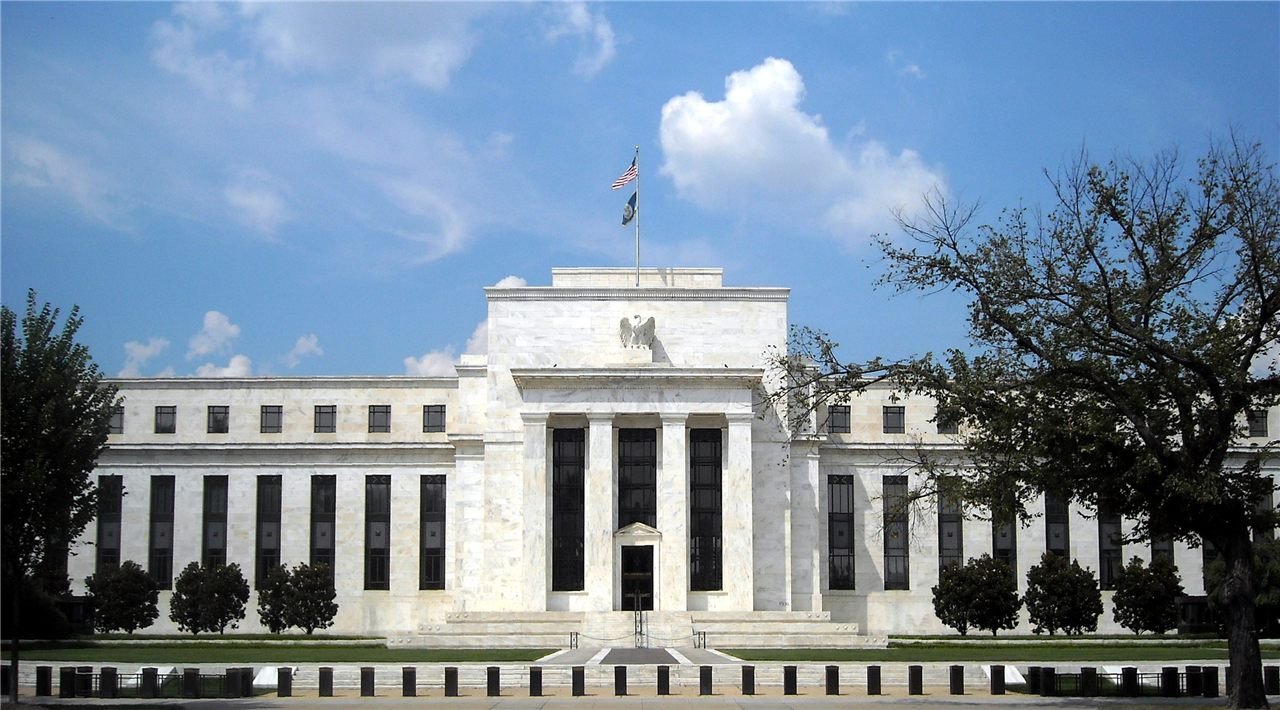
Tuesday’s report on US consumer prices for October is shaping up as the deciding piece of evidence for whether the Federal Reserve raises interest rates again before the end of the year. Strong hiring last month and inflation that is still running well above the central bank’s target have pushed market bets on a December hike sharply higher. Economists expect prices to have risen about 0.3% in October, half the pace recorded in September.
What is expected
The Bureau of Labor Statistics, the Labor Department agency that compiles the consumer price index (CPI), is scheduled to publish the October figures on Tuesday morning. It is the last inflation reading officials will see before the Fed’s Dec. 9 policy decision, TipRanks noted in a market preview published Monday.
According to that preview, forecasters expect:
- Headline CPI to rise 0.3% from September, after a 0.6% jump the month before.
- Core CPI, which leaves out volatile food and energy prices, to climb 0.2%, down from 0.3% in September.
- A slightly softer headline gain of about 0.24%, according to the Cleveland Fed’s Inflation Nowcasting model, a running estimate published by the Federal Reserve Bank of Cleveland.
Commerzbank, the German bank, has penciled in a similar headline increase, according to FXStreet, a financial news site that summarized the bank’s research.
There is an unusual gap in this month’s report. TipRanks noted that the release will not include an official year-over-year headline inflation rate for October. Price survey data for October 2025 was never collected because of last year’s government shutdown, which leaves no starting point for the annual comparison. The most recent annual figure is September’s 3.7%, far above the Fed’s 2% goal.
Why it matters for the Fed and for households
Unusually for the past few years, the central question for the Fed is not when to cut rates but whether to raise them again. The Fed lifted its benchmark rate by a quarter of a percentage point in September, its first increase in roughly three years. At its Oct. 28 meeting it held the federal funds rate in a range of 3.75% to 4%. In its statement, the Fed’s rate-setting Federal Open Market Committee said that “inflation remains elevated” and that it “will deliver price stability.”
That October pause was not unanimous. The vote was 10-2. Lisa Cook, a member of the Fed’s Board of Governors, and Beth Hammack, president of the Federal Reserve Bank of Cleveland, both dissented because they wanted a quarter-point increase at that meeting, according to the published statement.
Friday’s jobs report added to the pressure. Employers added 165,000 jobs in October, well above the roughly 60,000 economists had forecast. The unemployment rate edged down to 4.1% from 4.2%, and average hourly pay rose 0.4% on the month and 3.1% from a year earlier, TipRanks reported. After that release, market-implied odds of a December hike rose above 65%, the outlet said. Other market previews published Monday put the probability closer to 75% to 80%.
Commerzbank said the jobs data strengthened its view that the Fed will raise rates again in December “because of inflation risks,” and it expects another 25-basis-point increase, FXStreet reported. The bank also pointed out that 16 of the 18 Fed officials who submitted rate projections in September anticipated at least one more hike this year.
For households, higher rates generally feed through to borrowing costs on credit cards, auto loans and other variable-rate debt, while savers may earn more on deposits. Energy prices are part of the backdrop. Gasoline averaged roughly $4.15 a gallon in early November, and Brent crude, the global oil benchmark, traded near $98 a barrel on Monday, TipRanks said. Fuel costs drove much of September’s jump in prices.
How markets could react
Investors are watching Tuesday’s report closely after a rough week for stocks. The S&P 500 fell 2.68% in the week ended Friday, and the tech-heavy Nasdaq Composite lost 3.37%, according to TipRanks. The yield on the 10-year Treasury note was near 4.92%.
Analysts quoted in the preview laid out two broad scenarios. A monthly increase above 0.3% could lead traders to fully price in a December hike. That could lift the dollar and weigh on interest-rate-sensitive technology shares. A cooler reading, on the other hand, could pull Treasury yields lower and spark a relief rally. The forecasts and scenarios come from analysts, and the actual figures could differ.
What comes next
Several Fed officials were scheduled to speak Monday, including Michelle Bowman, the Fed’s vice chair for supervision; Austan Goolsbee, president of the Federal Reserve Bank of Chicago; and Thomas Barkin, president of the Federal Reserve Bank of Richmond. Investors will listen for hints about how much weight the committee will give a single month of data.
After Tuesday’s CPI report, policymakers will have only a few more data releases before they gather in December. At that meeting the Fed will also publish updated economic projections. The US bond market is set to close early on Wednesday for Veterans Day.