UK Energy Bills to Rise 26% in January as Gas Prices Surge
Ofgem will lift its price cap 26% from Jan. 1, taking a typical British household's energy bill to £2,166 a year as gas prices surge.
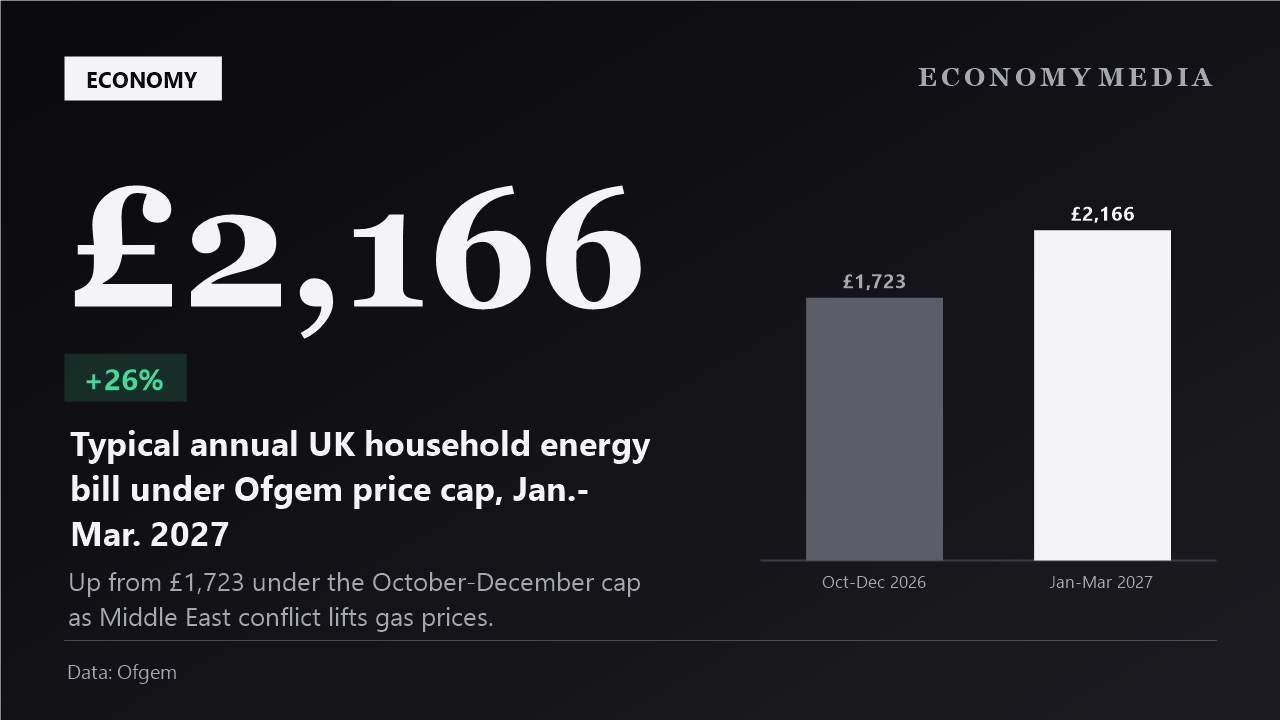
Households in Britain face a sharp jump in energy costs this winter after Ofgem, the government regulator that sets a ceiling on what suppliers can charge most homes, said Wednesday that its price cap will rise 26% for the three months from Jan. 1 to March 31, 2027. For a typical home paying for gas and electricity by direct debit, the cap works out to £2,166 a year, up from £1,723 under the current cap, the regulator said, blaming the continuing conflict in the Middle East for pushing up international gas prices.
What happened
The increase is far steeper on the gas side of the bill. Ofgem said gas bills under the January cap will rise 33% compared with the October-to-December period, while electricity bills will rise 19%. Wholesale gas prices have roughly tripled since the Middle East conflict began, including in the last few months, the regulator said in its announcement.
The cap does not limit a household’s total bill. It sets a maximum price per unit of energy and a maximum daily standing charge, a fixed fee paid regardless of how much energy a home uses. According to figures Ofgem published alongside the decision, the average electricity unit rate for direct-debit customers will climb from 26.32 pence per kilowatt-hour to 32.69 pence, and the gas unit rate will rise from 7.97 pence to 10.96 pence. Daily standing charges are almost unchanged.
Why it matters for households
Ofgem said about 20 million households on standard variable tariffs, the default deals whose prices move with the cap, will be affected. Around 10 million households on fixed-price deals will not see the increase while their fixed contracts last.
The burden varies by how people pay. Octopus Energy, one of Britain’s largest suppliers, said in a post on its website that a typical prepayment-meter customer would see a rise of about £430 a year, or 25.6%, to £2,108, while customers who pay on receipt of a bill would face an increase of about £467, or 25.1%, to £2,328. Octopus said £404 of the £443 rise in the typical direct-debit bill came from higher wholesale costs, citing Ofgem’s breakdown.
Neil Kenward, Ofgem’s director general for markets, acknowledged the strain. “We know this price increase will be a worry for many households as winter approaches,” he said in a statement. The regulator said it was writing to suppliers to remind them of their obligations to help customers who struggle to pay, and that it is stepping up its monitoring over the winter.
Greg Jackson, chief executive of Octopus Energy, called it an “eye-watering price cap rise” and “a heavy blow for families.” Octopus said the higher cap would also lift the profit margin suppliers are allowed to earn, worth roughly £11.5 million extra for the company between January and March, and pledged to return that sum to customers through support and rewards for using less energy.
Government support and caveats
Some measures will soften the blow, though not erase it:
- The government has said around 20 million households will receive £100 toward their energy bills from January, according to Ofgem.
- There is no value-added tax on electricity from Oct. 1, 2026, to June 30, 2027, Ofgem said; gas still carries 5% VAT.
- Octopus noted that the government announced in its October budget plans to abolish gas standing charges, asking Ofgem to make the change by the end of 2027.
Ofgem also changed how it calculates a typical bill. In July it lowered its estimate of typical household consumption after finding homes now use about 7% less electricity and 17% less gas than at its previous review. On the old 2023 consumption basis, the regulator said, the typical bill would have risen from £1,935 to £2,451. Adjusted for inflation, the new cap is 31.8% higher than in the same period of 2026, Ofgem said.
What comes next
Ofgem resets the cap every three months to track the cost of supplying energy, and the next period begins April 1. Octopus said the January figure reflects wholesale prices averaged between Aug. 19 and Nov. 17, and pointed to tight global gas supplies, historically low gas storage in Europe heading into winter and forecasts of colder weather as factors behind the jump. The supplier cautioned that the outlook beyond April is highly uncertain, leaving the path of bills dependent largely on how the conflict in the Middle East and the global gas market develop.