US Consumer Confidence Jumps to 103.3 After Midterm Elections
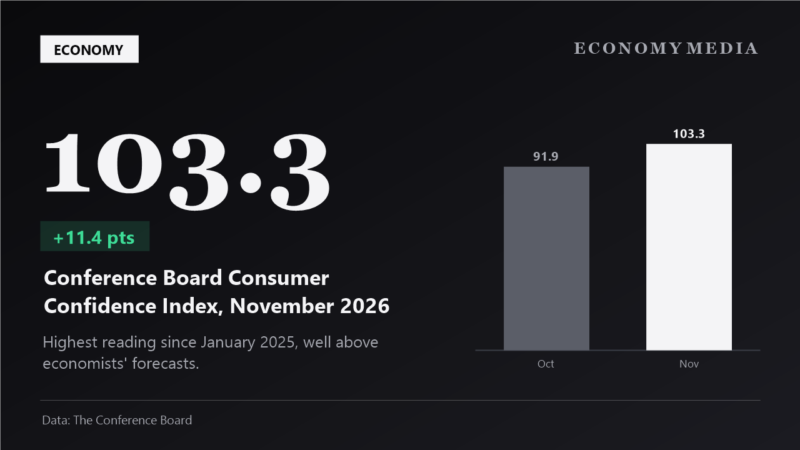
The Conference Board's index rose 11.4 points to 103.3 in November, its highest since January 2025, though Americans still expect 5.7% inflation.
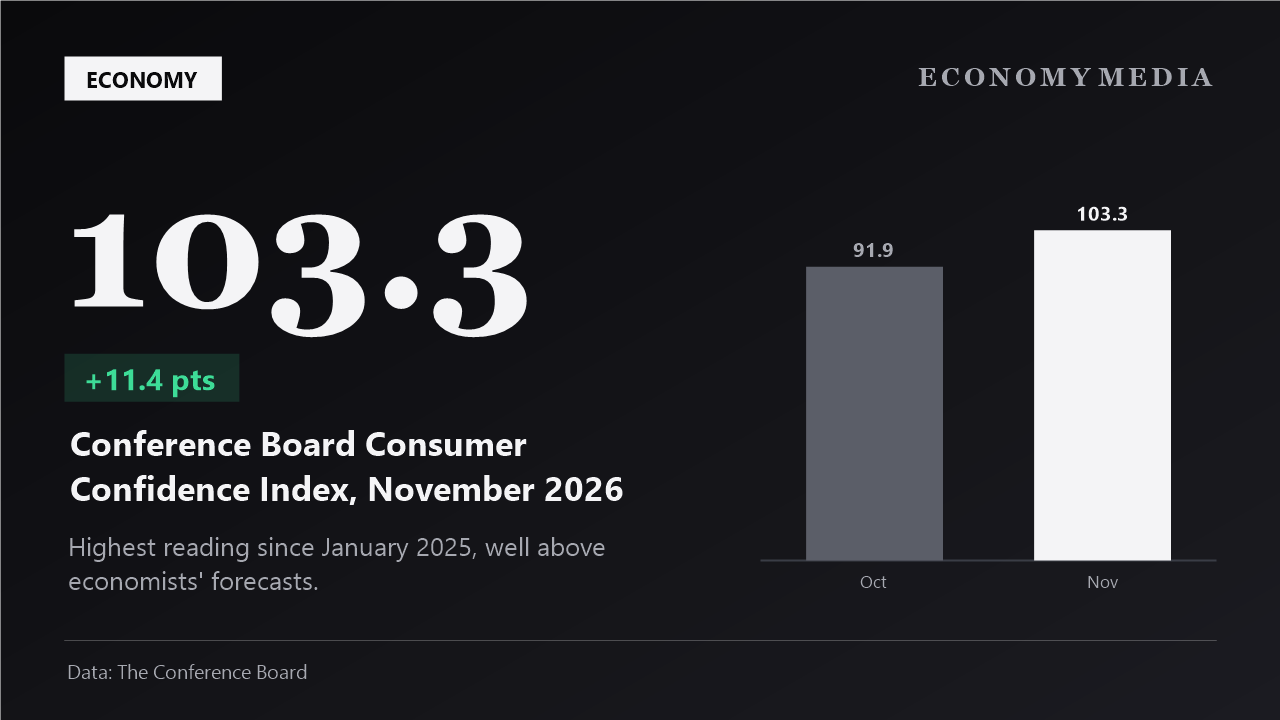
American consumers grew sharply more upbeat in November. The Conference Board’s Consumer Confidence Index jumped 11.4 points to 103.3, its highest reading since January 2025, according to figures released Tuesday. The New York-based business research group pointed to easing uncertainty after the midterm elections and brighter views of the job market, though worries about high prices have not gone away.
The increase far outpaced forecasts. Economists polled by Reuters had expected a reading of 92.5, and CNBC put the Dow Jones consensus at 92.2. StockAnalysis.com, citing a Bloomberg survey, said the result beat every economist’s estimate. The board also revised October’s reading up to 91.9 from the 91.7 it first reported, Reuters said.
What the survey showed
Gains were broad. The Present Situation Index, which tracks how consumers rate current business and job conditions, climbed 13.7 points to 132.8. The Expectations Index, which measures the six-month outlook for income, business and jobs, rose 9.9 points to 83.6, StockAnalysis.com reported.
Views of the labor market did much of the work. According to CNBC, the share of respondents who said jobs were “plentiful” rose to 30.8% from 26.2%, while the share saying jobs were “hard to get” fell 3 percentage points to 18.4%. That widened the gap between the two answers, a closely watched gauge of labor market health, to 12.4 percentage points.
Why the mood shifted
Fergus McCormick, senior economist for global indicators at the Conference Board, said confidence “rallied again in November, potentially due to lower uncertainty following the midterm elections,” Reuters reported. Democrats took control of Congress from President Donald Trump’s Republican Party in the Nov. 3 vote.
The partisan split was striking. Confidence among Democrats and independents improved sharply, while confidence among Republicans slipped slightly, though it remained the highest of the three groups, CNBC reported. The University of Michigan’s separate November consumer survey, released Friday, showed a 7.3% increase from October with a similar partisan divide, CNBC added.
McCormick also said that written comments from respondents were slightly less negative than in previous months, according to Reuters. Consumers still voiced frustration with high prices and rising costs, he said, but some expressed hope for the broader economy.
Inflation worries persist
The rebound comes from a low base. StockAnalysis.com noted that the index sank in September to its lowest level since April 2014, below even its readings during the Covid-19 pandemic. November marked a second straight monthly gain.
Prices remain the main sore spot for households. Consumers expect inflation to average 5.7% over the next 12 months. That figure has declined for two consecutive months but remains high, according to CNBC. Inflation has now run above the Federal Reserve’s 2% target for roughly five and a half years, and cost of living was a central issue in the midterm campaigns.
Most respondents still expect interest rates to rise, StockAnalysis.com reported. That matches signals from the central bank. CNBC said the Fed is expected to raise its benchmark rate by a quarter percentage point at its next meeting, about two weeks away.
What it means for households
For families heading into the holiday shopping season, the survey points to:
- Greater confidence about finding and keeping jobs, which tends to support spending.
- Ongoing strain from prices, with consumers still expecting inflation well above the Fed’s goal.
- Borrowing costs that could climb further if the Fed raises rates again.
Sentiment surveys do not always translate directly into spending, and November’s figures are preliminary. The Conference Board collected responses from Nov. 1 to Nov. 17 and is scheduled to publish its next reading on Dec. 29.