US Consumer Confidence Surges to 103.3 After Midterm Elections
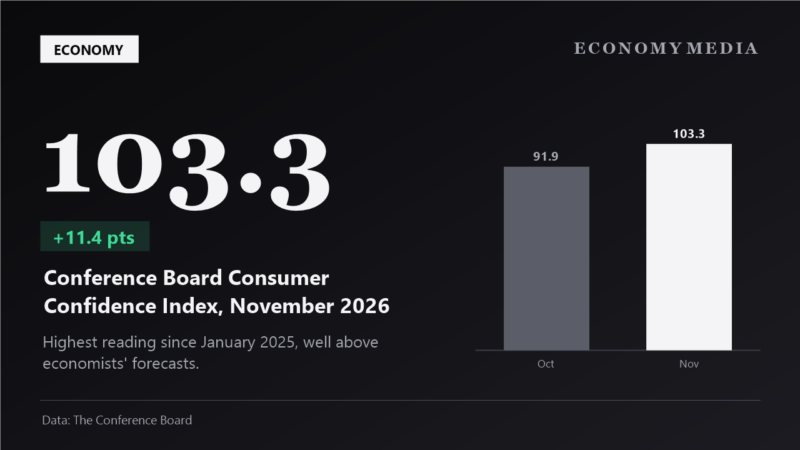
The Conference Board's index jumped 11.4 points to 103.3 in November, its highest since January 2025, though price worries persist.
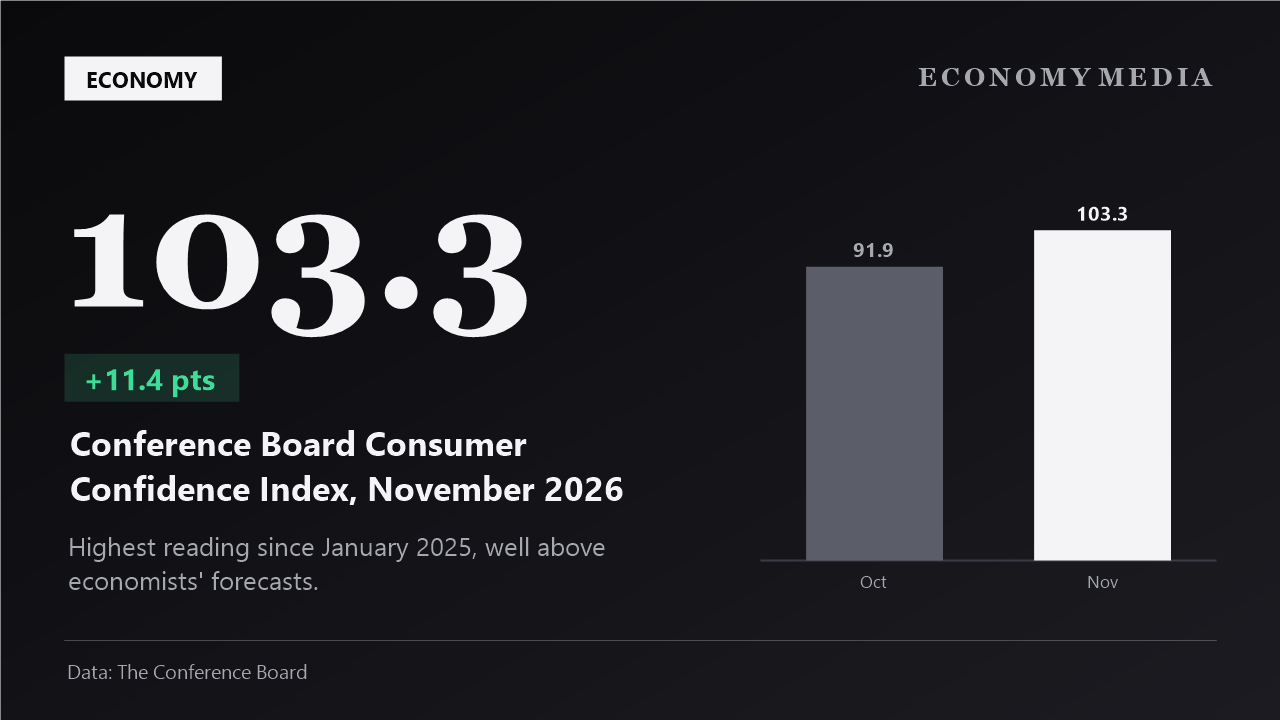
American consumers grew sharply more optimistic in November. The Conference Board’s consumer confidence index jumped 11.4 points to 103.3, the private research group said Tuesday. That is the highest reading since January 2025 and far above what economists expected. The survey found brighter views of jobs and business conditions after this month’s midterm elections, but households are still frustrated with high prices.
What happened
The Conference Board is a nonprofit business research organization that has tracked American sentiment since the 1960s. It said its index rose to 103.3 in November from 91.9 in October. Reuters reported that October’s figure was revised up from a previously reported 91.7. Economists polled by Reuters had expected a November reading of about 92.5. CNBC cited a Dow Jones consensus forecast of 92.2. Either way, the jump far exceeded expectations.
Both parts of the index improved. The Present Situation Index, which measures how consumers view current business and job conditions, climbed 13.7 points to 132.8. The Expectations Index, which tracks the short-term outlook for income, business and jobs, rose 9.9 points to 83.6. The figures are preliminary and based on responses collected from November 1 to November 17.
“Consumer confidence rallied again in November, potentially due to lower uncertainty following the midterm elections,” Fergus McCormick, senior economist for global indicators at the Conference Board, said in the release, according to Reuters. He added that write-in responses were slightly less negative than in previous months.
A brighter view of the job market
Some of the biggest gains came in how people see the labor market. The share of consumers who said jobs were “plentiful” rose to 30.8% from 26.2% in October. The share who said jobs were “hard to get” fell to 18.4% from 21.4%. Economists watch the gap between those two answers, known as the labor differential, as an early sign of where unemployment is heading. It widened to 12.4 percentage points.
Consumers were also less gloomy about future hiring. According to the Conference Board, 19.3% expected fewer jobs in the months ahead, down from 25.7% in October. Views of current business conditions improved too. More respondents said they were thinking about a vacation in the next six months, and plans to buy cars, homes and big-ticket items improved slightly.
Why it matters for households
Consumer spending makes up most of the U.S. economy, so rising confidence ahead of the holiday shopping season is welcome news for retailers. The survey also shows how much politics now shapes economic mood. CNBC reported that confidence improved sharply among Democrats and independents after the November 3 elections, in which Democrats won control of Congress. Confidence among Republicans fell slightly but stayed the highest of the three groups. The Conference Board said gains were largest among Gen Z consumers and higher-income households.
Not every measure improved. Consumers expected 5.7% inflation over the next 12 months. That was the second straight monthly decline, but it is still well above the Federal Reserve’s 2% target. Expectations for household income growth slipped slightly. Respondents also still expect interest rates to rise over the coming year. McCormick said consumers “continued to express frustration with high prices and rising costs,” though some comments cited hope for the overall economy.
What comes next
The Conference Board’s findings match other recent surveys. CNBC noted that the University of Michigan’s November sentiment survey, released Friday, showed a 7.3% increase from October with a similar partisan split.
Attention now turns to the Federal Reserve, which CNBC said is expected to raise its benchmark interest rate by a quarter percentage point at its meeting in two weeks as it keeps fighting inflation. That inflation has run above the Fed’s target for about five and a half years. Higher borrowing costs could test whether November’s burst of optimism lasts into the new year, especially for households carrying credit card or other variable-rate debt.